Menu
Store
Blog
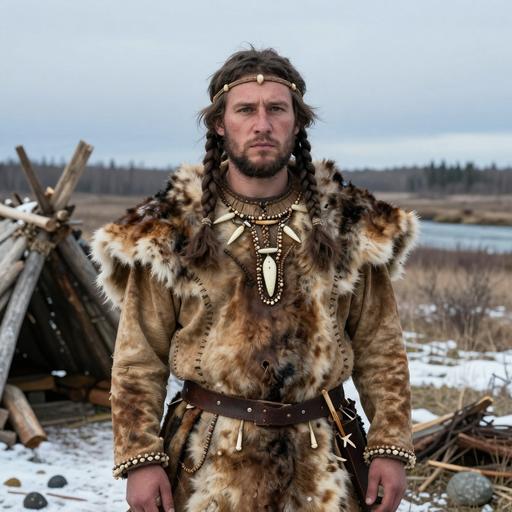
Portrait reconstruction of Sunghir2
Ancient Individual

A man buried in Russia in the Pleistocene era

Sunghir2
33833 BCE - 31486 BCE
Male
Sunghir 2 Site, Russia
Russia
Scroll to begin
Chapter I

Identity

The biological and cultural markers that define this ancient individual

Sample ID

Sunghir2

Date Range

33833 BCE - 31486 BCE

Biological Sex

Male

mtDNA Haplogroup

U2

Y-DNA Haplogroup

C-Y37021

Cultural Period

Sunghir 2 Site, Russia

Chapter II

Place

Where this individual was discovered

Country Russia
Locality Sunghir
Coordinates 56.1761, 40.5025
Chapter III

Time

When this individual lived in the broader context of human history

Sunghir2 33833 BCE - 31486 BCE
Chapter IV

Story

The narrative of this ancient life

The Sunghir site, located near Vladimir, Russia, is one of the most significant Upper Paleolithic archaeological sites, offering profound insights into the life and culture of prehistoric human societies in Eastern Europe. The site dates back approximately 28,000 to 30,000 years ago and is associated with the Gravettian culture, one of the prominent Upper Paleolithic cultures known for its sophisticated art and advanced tool-making techniques.

Geographical and Archaeological Context

The Sunghir site is situated on the banks of the Klyazma River in the Russian plains. The region, during the Upper Paleolithic, would have had a cold, tundra-like climate, with vast plains supporting herds of large mammals such as mammoths, bison, and reindeer, which were crucial for human subsistence.

The site consists of several burials and an open-air settlement area. Archaeological excavations at Sunghir have revealed remnants of dwelling structures, a variety of tools, and a significant number of symbolic and ornamental artifacts, providing insight into the complex social structures and belief systems of its inhabitants.

Human Burials and Social Implications

Sunghir is renowned for its elaborate burials, which provide valuable information about the social and spiritual life of its people. The most notable burials include an adult male, known as Sunghir 1, and two children, Sunghir 2 and Sunghir 3, which were buried together.

Sunghir 2 and Sunghir 3 Burial: The burial of the two children, estimated to be 10 and 12 years old, is particularly remarkable. The children were laid to rest head-to-head in a single grave, covered with thousands of meticulously crafted ivory beads, an indication of the time and effort invested in their burial preparation. The grave goods also included artfully carved ivory animals, a lance made from a mammoth tusk, and a range of other personal ornaments.

These grave goods suggest a society with complex social stratification and possibly ascribed status, where certain individuals, regardless of age, were afforded significant symbolic importance. The presence of such elaborate burials indicates not only a rich spiritual life but also the ability of these societies to engage in practices that required considerable resources and collective effort.

Material Culture

Sunghir has yielded a wealth of artifacts that illuminate the material culture of its inhabitants. The site has produced a variety of stone tools, including blades, scrapers, and burins, characteristic of the Upper Paleolithic tool technology. These tools exemplify the advanced craftsmanship and technological proficiency of the Sunghir people.

Beyond utilitarian tools, Sunghir is also famous for its artistic and decorative objects. The extensive use of mammoth ivory for crafting personal ornaments signifies the community's intricate craftsmanship and aesthetic sensibilities. The production of these items likely played a significant role in social and possibly spiritual expression, indicating that these societies placed importance on personal adornment and artistic expression.

Symbolism and Spirituality

The symbolic significance of the ornaments and the context of the burials at Sunghir suggest a society with a rich spiritual and ritual life. The presence of numerous beads, pendants, and other decorative items, often fashioned from materials brought from distant locations, points to a cultural emphasis on symbolism and perhaps early forms of long-distance exchange or trade networks.

The careful arrangement and inclusion of grave goods also imply beliefs in an afterlife or a spiritual realm, highlighting the role of ritual in Paleolithic communities. Such practices would have served to reinforce social cohesion, identity, and continuity within the group.

Conclusion

The Sunghir site provides a fascinating window into the Upper Paleolithic era in Eastern Europe, revealing a complex, socially stratified society with rich spiritual and artistic traditions. The elaborate burials, sophisticated tool technology, and symbolic artifacts collectively demonstrate the advanced cognitive and cultural capabilities of the Sunghir people, offering invaluable insights into human prehistory. The archaeological findings from Sunghir continue to inform and challenge our understanding of early human societies, contributing significantly to the broader narrative of human evolution and cultural development.

Chapter V

Genetics

The genetic ancestry of this ancient individual

Ancient Genetic Admixture

This analysis compares the DNA profile of Sunghir2 with ancient reference populations, showing the genetic composition in terms of prehistoric ancestral groups.

Neolithic Farmers 29.5%
Western Steppe Pastoralists 27.7%
Ancient Asians 21.6%
European Hunter-Gatherers 9.7%
Ancient Africans 6.1%
Ancient Oceanians 5.4%

Modern Genetic Admixture

This analysis compares the DNA profile with present-day reference populations, showing what percentage of genetic makeup resembles modern populations from different regions.

Europe 58.3%
Eastern European 24.6%
Southern European 17.4%
Iberian 16.0%
Sardinian 1.3%
Northwestern European 16.4%
Northwestern European 11.7%
Scandinavian 4.3%
Asia 24.4%
Central Asian, Northern Indian & Pakistani 19.7%
Indian 19.7%
Chinese & Southeast Asian 4.7%
Tibetan 2.5%
Indonesian Khmer Thai Myanma 2.2%
Africa 9.5%
North African 4.0%
North African 4.0%
West African 2.4%
Ghanaian, Liberian, Sierra Leonean 2.4%
Congolese & Southern East African 1.6%
South East African 1.6%
African Hunter-Gatherer 1.6%
Oceania 5.5%
Melanesian 5.5%
Papuan 5.5%
America 2.3%
America 2.3%
Native American 2.3%

Closest Modern Populations

These are the modern populations showing the closest statistical alignment to A man buried in Russia in the Pleistocene era, ranked by genetic distance. Lower distance values indicate closer statistical similarity.

1
Roma Bilbao
9.2704
2
Roma Granada
9.3164
3
Roma Porto
9.7738
4
Roma Balkans
9.9237
5
Roma Madrid
10.1140
6
Tatar Kazan
10.6408
7
Tajik Tajikistan Ayni
10.6569
8
Tatar Lipka
10.7294
9
Tajik Tajikistan Hisor
10.7895
10
Roma Barcelona
10.8667
Chapter VI

Context

Other ancient individuals connected to this sample

Sources

References

Scientific publications and genetic data

Scientific Publication

Ancient genomes show social and reproductive behavior of early Upper Paleolithic foragers

Authors Sikora M, Seguin-Orlando A, Sousa VC
Abstract

Present-day hunter-gatherers (HGs) live in multilevel social groups essential to sustain a population structure characterized by limited levels of within-band relatedness and inbreeding. When these wider social networks evolved among HGs is unknown. To investigate whether the contemporary HG strategy was already present in the Upper Paleolithic, we used complete genome sequences from Sunghir, a site dated to ~34,000 years before the present, containing multiple anatomically modern human individuals. We show that individuals at Sunghir derive from a population of small effective size, with limited kinship and levels of inbreeding similar to HG populations. Our findings suggest that Upper Paleolithic social organization was similar to that of living HGs, with limited relatedness within residential groups embedded in a larger mating network.

G25 Coordinates

The G25 coordinates for sample Sunghir2 can be used for detailed admixture analysis in our G25 Studio tool.

Sunghir2,0.04726338,0.01973472,-0.00343634,0.05330034,0.01262468,-0.0060368,-0.00833056,0.002494,0.02331358,0.00696834,-0.00325172,-0.00065844,-0.0007021,-0.00574154,-0.00092554,-0.0064786,-0.00184578,3.72E-06,-0.00231866,-0.00367424,0.00276436,0.00266506,-0.0059608,0.00305838,0.0014693
Analyze in G25 Studio
Use code for 40% off Expires Feb 27