Menu
Currency
Main
Store
Blog

Loading Report

Preparing your ancestry journey

Connecting to ancient matches...

Preparing your report

Skip to main content
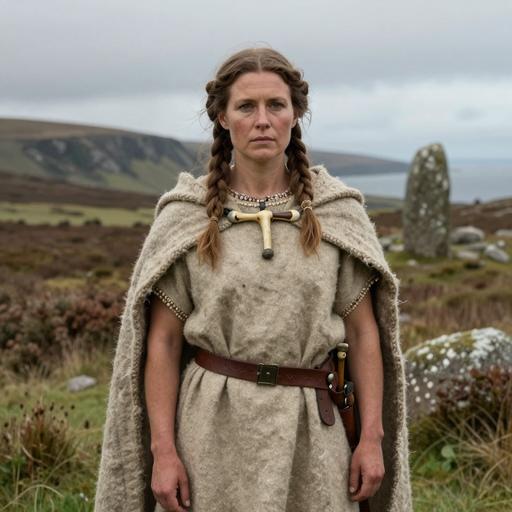
Portrait reconstruction of A woman buried in United Kingdom in the Copper Age era
Ancient Individual

A woman buried in United Kingdom in the Copper Age era

A woman buried in United Kingdom during the Megalithic Scotland

A fragment of the ancient world, preserved across millennia in strands of DNA.

bal004
3368 BCE - 3103 BCE
Female
United Kingdom
Scroll to begin
Chapter I

Identity

The biological and cultural markers that define this ancient individual

Sample ID

bal004

Date Range

3368 BCE - 3103 BCE

Cultural Period

Megalithic Scotland

Biological Sex

Female

mtDNA Haplogroup

H1

Y-DNA Haplogroup

N/A (Female)

Chapter II

Place

Where this individual was discovered

Country United Kingdom
Locality Scotland. Ross and Cromarty. Balintore
Coordinates 57.7570, -3.9120
Chapter III

Time

When this individual lived in the broader context of human history

bal004 3368 BCE - 3103 BCE
Chapter IV

Story

The narrative of this ancient life

The Megalithic period in Scotland, often associated with Celtic culture, is a fascinating era characterized by the construction of large stone monuments known as megaliths. These impressive structures date back primarily to the Neolithic and early Bronze Age periods, roughly between 4000 BCE and 1500 BCE, though their influence and legacy continued into later periods.

Landscape and Geography

Megalithic sites are scattered across the diverse landscapes of Scotland, from the windy Outer Hebrides to the lush Central Lowlands and the rugged Highlands. The natural environment played a crucial role in shaping the cultural expressions of the people during this period. The availability of different types of stone, such as sandstone, granite, and limestone, which are prevalent in various parts of Scotland, influenced the construction techniques and styles.

Types of Megalithic Structures

  1. Standing Stones and Stone Circles: Scotland is famous for its standing stones, such as those at the Ring of Brodgar and the Callanish Stones. These circles and alignments often have astronomical significance and were possibly used for ceremonial or ritual purposes. The precise reasons for their construction remain a source of intrigue and scholarly debate.

  2. Chambered Cairns and Passage Graves: These are burial monuments featuring stones arranged to form chambers and passages. Notable examples include Maeshowe in Orkney, where intricate stonework and alignments with celestial events such as the winter solstice are observed. The interior chambers, often richly adorned, suggest significant ritualistic functions associated with death and ancestry.

  3. Henges and Stone Rows: Unlike the monumental circles, henges typically consist of a circular ditch with a bank and occasionally feature internal stone settings. Their purpose varies from open-air gathering places to sites of ceremonial importance. Stone rows, on the other hand, usually connect to larger monument complexes and might have served as processional routes or territorial markers.

Cultural and Social Context

The society that built these structures is believed to have been largely agrarian, relying on farming, fishing, and hunting. The construction of megalithic monuments indicates a sophisticated understanding of engineering and logistics, suggesting the presence of organized societies with social hierarchies capable of mobilizing labor.

The influence of Celtic culture on later interpretations of these monuments is significant, though the extent of such influence during their initial construction phase is debated. By the Iron Age, distinctly Celtic languages and cultures had emerged in Scotland, often overlaying earlier prehistoric traditions with new mythologies and societal changes.

Spiritual and Astronomical Significance

Megalithic structures often have alignments to significant solar and lunar events. Such alignments underscore the importance of astronomic observations for agricultural cycles and spiritual rituals. The monuments are believed to reflect cosmological worldviews where the landscape was seen as a living, interconnected system imbued with spiritual significance.

Legacy and Influence

The endurance of these monuments has made them central to Scotland's cultural heritage, captivating both locals and visitors. They continue to inspire modern artistic, cultural, and spiritual expressions, contributing to our understanding of continuity and change in Scottish history.

Archaeological Investigations

Ongoing archaeological studies aim to uncover more about the chronological development, societal organization, and cultural practices of the megalithic builders in Scotland. Technological advancements, such as LIDAR and ground-penetrating radar, enable researchers to discover new sites and better understand already known ones.

Conclusion

Megalithic Scotland represents a profound intersection of landscape, culture, and spirituality. The structures left behind by these early societies continue to evoke a sense of mystery and wonder, offering a tangible link to Scotland's ancient past and the people who shaped it. While much about these monuments remains enigmatic, they undeniably form a crucial part of Scotland's historical narrative, reflecting both the past’s complexity and its enduring influence on subsequent cultural developments.

Chapter V

Genetics

These comparisons show genetic similarity, not identity or origin. The populations listed are those whose genomes show statistical alignment to this ancient individual.

Similarity reflects shared history, not shared identity. These are analytical comparisons, not claims about who this person was.

Modern Genetic Admixture

This analysis compares the DNA profile with present-day reference populations, showing what percentage of genetic makeup resembles modern populations from different regions.

Europe 98.0%
Southern European 97.4%
Iberian 38.6%
Italian 33.9%
Sardinian 24.9%
Northwestern European 0.6%
Africa 1.7%
North African 1.7%
North African 1.7%

Closest Modern Populations

These are the modern populations showing the closest statistical alignment to A woman buried in United Kingdom in the Copper Age era, ranked by genetic distance. Lower distance values indicate closer statistical similarity.

1
Sardinian
2.8106
2
French Corsica
5.6877
3
Spanish La Rioja
6.0754
4
Spanish Castilla La Mancha
6.3527
5
Spanish Castello
6.4066
6
Spanish Menorca
6.4393
7
Spanish Pirineu
6.4473
8
Spanish Murcia
6.4610
9
Spanish Aragon
6.4821
10
Spanish Andalucia
6.4856
Context

Related Samples

This individual exists within a broader network of ancient samples. No ancient genome stands alone.

Sample ID Culture/Period Date Location Action
bal004 Megalithic Scotland 3368 BCE Scotland. Ross and Cromarty. Balintore, United Kingdom View
mid001 Megalithic Scotland 3364 BCE Scotland. Orkney. Rousay. Midhowe, United Kingdom View
mid002 Megalithic Scotland 3623 BCE Scotland. Orkney. Rousay. Midhowe, United Kingdom View
lai001 Megalithic Scotland 3367 BCE Scotland. Orkney. Knowe of Lairo, United Kingdom View
ans017 Megalithic Ansarve, Sweden 3328 BCE Ansarve, Sweden View
ans014 Megalithic Ansarve, Sweden 3336 BCE Ansarve, Sweden View
ans008 Megalithic Ansarve, Sweden 3342 BCE Ansarve, Sweden View
ans016 Megalithic Ansarve, Sweden 2879 BCE Ansarve, Sweden View
ans003 Megalithic Ansarve, Sweden 3525 BCE Ansarve, Sweden View
ans005 Megalithic Ansarve, Sweden 3500 BCE Ansarve, Sweden View
prs016 Megalithic Ireland 3651 BCE Primrose Grange, Ireland View
prs002 Megalithic Ireland 3785 BCE Primrose Grange, Ireland View
prs013/014 Megalithic Ireland 3605 BCE Primrose Grange, Ireland View
prs008/009 Megalithic Ireland 3508 BCE Primrose Grange, Ireland View
prs006/011 Megalithic Ireland 3633 BCE Primrose Grange, Ireland View
prs012 Megalithic Ireland 3771 BCE Primrose Grange, Ireland View
prs017 Megalithic Ireland 3779 BCE Primrose Grange, Ireland View
prs010 Megalithic Ireland 3640 BCE Primrose Grange, Ireland View
prs003/015 Megalithic Ireland 3769 BCE Primrose Grange, Ireland View
prs018 Megalithic Ireland 3769 BCE Primrose Grange, Ireland View
car004 Megalithic Ireland 3638 BCE Carrowmore, Ireland View
kol006 Middle Neolithic Czech Republic 4929 BCE Kolín, Czech Republic View
kol002 Middle Neolithic Czech Republic 4656 BCE Kolín, Czech Republic View
car004 3638 BCE Carrowmore, Ireland View
kol002 4656 BCE Kolín, Czech Republic View
kol006 4929 BCE Kolín, Czech Republic View
prs002 3785 BCE Primrose Grange, Ireland View
prs003/015 3769 BCE Primrose Grange, Ireland View
prs006/011 3633 BCE Primrose Grange, Ireland View
prs008/009 3508 BCE Primrose Grange, Ireland View
prs010 3640 BCE Primrose Grange, Ireland View
prs012 3771 BCE Primrose Grange, Ireland View
prs013/014 3605 BCE Primrose Grange, Ireland View
prs016 3651 BCE Primrose Grange, Ireland View
prs017 3779 BCE Primrose Grange, Ireland View
prs018 3769 BCE Primrose Grange, Ireland View
ans003 3525 BCE Ansarve, Sweden View
ans005 3500 BCE Ansarve, Sweden View
ans008 3342 BCE Ansarve, Sweden View
ans014 3336 BCE Ansarve, Sweden View
ans016 2879 BCE Ansarve, Sweden View
ans017 3328 BCE Ansarve, Sweden View
bal004 3368 BCE Scotland. Ross and Cromarty. Balintore, United Kingdom View
lai001 3367 BCE Scotland. Orkney. Knowe of Lairo, United Kingdom View
mid001 3364 BCE Scotland. Orkney. Rousay. Midhowe, United Kingdom View
mid002 3623 BCE Scotland. Orkney. Rousay. Midhowe, United Kingdom View
Sample ID Culture/Period Date Location Action
bal004 Megalithic Scotland 3368 BCE Scotland. Ross and Cromarty. Balintore, United Kingdom View
mid001 Megalithic Scotland 3364 BCE Scotland. Orkney. Rousay. Midhowe, United Kingdom View
mid002 Megalithic Scotland 3623 BCE Scotland. Orkney. Rousay. Midhowe, United Kingdom View
lai001 Megalithic Scotland 3367 BCE Scotland. Orkney. Knowe of Lairo, United Kingdom View
Sources

References

Scientific publications and genetic data that inform this profile.

Scientific Publication

Megalithic tombs in western and northern Neolithic Europe were linked to a kindred society

Authors Sánchez-Quinto F, Malmström H, Fraser M, Girdland-Flink L, Svensson EM et al.
Abstract

Paleogenomic and archaeological studies show that Neolithic lifeways spread from the Fertile Crescent into Europe around 9000 BCE, reaching northwestern Europe by 4000 BCE. Starting around 4500 BCE, a new phenomenon of constructing megalithic monuments, particularly for funerary practices, emerged along the Atlantic façade. While it has been suggested that the emergence of megaliths was associated with the territories of farming communities, the origin and social structure of the groups that erected them has remained largely unknown. We generated genome sequence data from human remains, corresponding to 24 individuals from five megalithic burial sites, encompassing the widespread tradition of megalithic construction in northern and western Europe, and analyzed our results in relation to the existing European paleogenomic data. The various individuals buried in megaliths show genetic affinities with local farming groups within their different chronological contexts. Individuals buried in megaliths display (past) admixture with local hunter-gatherers, similar to that seen in other Neolithic individuals in Europe. In relation to the tomb populations, we find significantly more males than females buried in the megaliths of the British Isles. The genetic data show close kin relationships among the individuals buried within the megaliths, and for the Irish megaliths, we found a kin relation between individuals buried in different megaliths. We also see paternal continuity through time, including the same Y-chromosome haplotypes reoccurring. These observations suggest that the investigated funerary monuments were associated with patrilineal kindred groups. Our genomic investigation provides insight into the people associated with this long-standing megalith funerary tradition, including their social dynamics.

G25 Coordinates

These coordinates represent a position in genetic space, a tool for comparison, not a conclusion. You can use these to perform custom admixture analysis in G25 Studio.

bal004,0.12024182,0.16076086,0.02922998,-0.03465978,0.05760906,-0.0179081,-0.00204944,0.00596214,0.03789452,0.06625952,-0.00505584,0.0146441,-0.0259671,-0.01342556,-0.0070145,0.00417192,0.00794496,-0.00048594,-0.0007656,-0.00362174,0.0010637,0.00493712,-0.0122005,-0.0185109,0.00429679
Continue in G25 Studio
Use code for 25% off Expires Jul 12