Menu
Currency
Main
Store
Blog

Loading Report

Preparing your ancestry journey

Connecting to ancient matches...

Preparing your report

Skip to main content
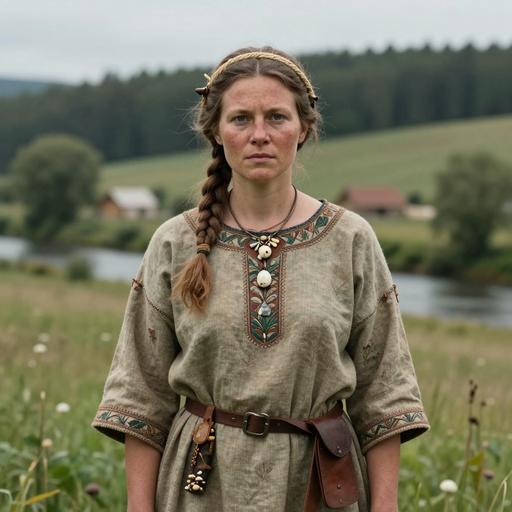
Portrait reconstruction of A woman buried in Czech Republic in the Middle Neolithic era
Ancient Individual

A woman buried in Czech Republic in the Middle Neolithic era

A woman buried in Czech Republic during the Middle Neolithic Czech Republic

A fragment of the ancient world, preserved across millennia in strands of DNA.

kol002
4656 BCE - 4456 BCE
Female
Czech Republic
Scroll to begin
Chapter I

Identity

The biological and cultural markers that define this ancient individual

Sample ID

kol002

Date Range

4656 BCE - 4456 BCE

Cultural Period

Middle Neolithic Czech Republic

Biological Sex

Female

mtDNA Haplogroup

H-c

Y-DNA Haplogroup

N/A (Female)

Chapter II

Place

Where this individual was discovered

Country Czech Republic
Locality Kolín
Coordinates 50.0289, 15.2012
Chapter III

Time

When this individual lived in the broader context of human history

kol002 4656 BCE - 4456 BCE
Chapter IV

Story

The narrative of this ancient life

The Middle Neolithic period in the region now known as the Czech Republic is a fascinating era characterized by the widespread presence of the Linear Pottery Culture (Linearbandkeramik or LBK), which flourished approximately between 5500 BCE and 4500 BCE. This culture is named for its distinct pottery, which features linear decorations made by impressing lines or patterns into the clay before firing. The LBK culture represents one of the first farming communities in Central Europe and marks a significant shift from hunting and gathering to agriculture and settled life.

Geography and Settlements

The Linear Pottery Culture primarily occupied the fertile loess plains of Central Europe, including what is now the Czech Republic, as well as parts of Germany, Poland, Austria, and Slovakia. These regions offered an ideal environment for early agricultural practices due to their rich, easy-to-work soil and temperate climate.

LBK settlements in the Czech region were typically located near rivers or streams, providing access to water resources essential for farming and daily living. Villages were often composed of longhouses, substantial wooden-framed structures covered with wattle and daub, that served as multi-purpose spaces for living, storage, and possibly communal activities. These longhouses could be impressive in size, reaching lengths of up to 45 meters.

Economy and Subsistence

The economy of the Linear Pottery Culture was predominantly based on agriculture, with an emphasis on cultivating crops such as emmer wheat, einkorn wheat, barley, lentils, and peas. This agricultural base marked a shift from earlier, nomadic lifestyles to settled farming communities.

Animal husbandry also played a crucial role in their subsistence practices. The people of the LBK culture domesticated various animals, including cattle, pigs, sheep, and goats, which provided them with meat, milk, hides, and labor. The combination of farming and livestock rearing allowed for a more stable food supply and supported population growth.

Material Culture and Technology

The hallmark of the Linear Pottery Culture is its distinctive pottery, characterized by linear designs that were likely created with a mixture of aesthetic and symbolic intentions. The pots were usually created by hand rather than using a wheel, suggesting a high degree of craftsmanship and artistic tradition.

In addition to pottery, the LBK people manufactured a variety of stone tools. Flint was commonly used to produce axes, adzes, blades, and arrowheads, with polished stone tools reflecting a high level of technological proficiency and specialization.

Social Structure and Organization

The social organization of the LBK communities is believed to have been rather complex, although direct evidence is limited. Settlements might have been organized hierarchically, with some form of leadership or communal decision-making process. The construction of large longhouses suggests the presence of organized labor and possibly a division of tasks among community members.

Burial practices give some indication of social stratification. While many burials were communal or shared graves, individual graves often contained grave goods such as pottery, tools, or ornaments, which might indicate differences in status or wealth.

Cultural and Spiritual Life

The art and symbolic expressions of LBK communities remain somewhat enigmatic but can be glimpsed through their pottery and burial practices. The lines and patterns on their ceramics might have held symbolic meanings or indicated social affiliations or status within the community.

Evidence of longhouses and ritual deposition of objects like pottery and tools in certain contexts suggest the presence of ceremonial or religious practices. However, the precise nature of these beliefs and practices remains speculative due to the limited archaeological record.

Interaction and Exchange

LBK communities did not exist in isolation; rather, they engaged in a range of interactions with neighboring cultures. Evidence of trade and exchange is found in the movement of goods such as Spondylus shells and flint tools across significant distances. This exchange network indicates a level of communication and interaction with other Neolithic groups, contributing to the cultural dynamism of the region.

Conclusion

The Middle Neolithic era in the Czech Republic under the Linear Pottery Culture represents a pivotal moment in European prehistory. It signifies the transition to agriculture, establishment of permanent settlements, development of complex social structures, and engagement in broader networks of interaction. Understanding this culture provides valuable insights into the early development of agrarian societies in Central Europe.

Chapter V

Genetics

These comparisons show genetic similarity, not identity or origin. The populations listed are those whose genomes show statistical alignment to this ancient individual.

Similarity reflects shared history, not shared identity. These are analytical comparisons, not claims about who this person was.

Modern Genetic Admixture

This analysis compares the DNA profile with present-day reference populations, showing what percentage of genetic makeup resembles modern populations from different regions.

Europe 84.7%
Southern European 84.7%
Italian 50.1%
Sardinian 24.0%
Iberian 10.6%
Asia 11.2%
Arab, Egyptian & Levantine 6.6%
Arabian 4.8%
Levantine 1.9%
Northern West Asian 4.1%
Cypriot 4.1%
Africa 2.8%
North African 2.8%
Egyptian 2.8%
Oceania 1.3%
Melanesian 1.3%
Papuan 1.3%

Closest Modern Populations

These are the modern populations showing the closest statistical alignment to A woman buried in Czech Republic in the Middle Neolithic era, ranked by genetic distance. Lower distance values indicate closer statistical similarity.

1
Sardinian
5.3623
2
Belmonte Jew
5.7207
3
French Corsica
6.4454
4
Sicilian West
6.7893
5
Italian Lazio
6.8263
6
Sicilian East
7.0817
7
Maltese
7.0896
8
Italian Campania
7.1414
9
Italian Jew
7.1950
10
Italian Calabria
7.2005
Context

Related Samples

This individual exists within a broader network of ancient samples. No ancient genome stands alone.

Sample ID Culture/Period Date Location Action
bal004 Megalithic Scotland 3368 BCE Scotland. Ross and Cromarty. Balintore, United Kingdom View
mid001 Megalithic Scotland 3364 BCE Scotland. Orkney. Rousay. Midhowe, United Kingdom View
mid002 Megalithic Scotland 3623 BCE Scotland. Orkney. Rousay. Midhowe, United Kingdom View
lai001 Megalithic Scotland 3367 BCE Scotland. Orkney. Knowe of Lairo, United Kingdom View
ans017 Megalithic Ansarve, Sweden 3328 BCE Ansarve, Sweden View
ans014 Megalithic Ansarve, Sweden 3336 BCE Ansarve, Sweden View
ans008 Megalithic Ansarve, Sweden 3342 BCE Ansarve, Sweden View
ans016 Megalithic Ansarve, Sweden 2879 BCE Ansarve, Sweden View
ans003 Megalithic Ansarve, Sweden 3525 BCE Ansarve, Sweden View
ans005 Megalithic Ansarve, Sweden 3500 BCE Ansarve, Sweden View
prs016 Megalithic Ireland 3651 BCE Primrose Grange, Ireland View
prs002 Megalithic Ireland 3785 BCE Primrose Grange, Ireland View
prs013/014 Megalithic Ireland 3605 BCE Primrose Grange, Ireland View
prs008/009 Megalithic Ireland 3508 BCE Primrose Grange, Ireland View
prs006/011 Megalithic Ireland 3633 BCE Primrose Grange, Ireland View
prs012 Megalithic Ireland 3771 BCE Primrose Grange, Ireland View
prs017 Megalithic Ireland 3779 BCE Primrose Grange, Ireland View
prs010 Megalithic Ireland 3640 BCE Primrose Grange, Ireland View
prs003/015 Megalithic Ireland 3769 BCE Primrose Grange, Ireland View
prs018 Megalithic Ireland 3769 BCE Primrose Grange, Ireland View
car004 Megalithic Ireland 3638 BCE Carrowmore, Ireland View
kol006 Middle Neolithic Czech Republic 4929 BCE Kolín, Czech Republic View
kol002 Middle Neolithic Czech Republic 4656 BCE Kolín, Czech Republic View
car004 3638 BCE Carrowmore, Ireland View
kol002 4656 BCE Kolín, Czech Republic View
kol006 4929 BCE Kolín, Czech Republic View
prs002 3785 BCE Primrose Grange, Ireland View
prs003/015 3769 BCE Primrose Grange, Ireland View
prs006/011 3633 BCE Primrose Grange, Ireland View
prs008/009 3508 BCE Primrose Grange, Ireland View
prs010 3640 BCE Primrose Grange, Ireland View
prs012 3771 BCE Primrose Grange, Ireland View
prs013/014 3605 BCE Primrose Grange, Ireland View
prs016 3651 BCE Primrose Grange, Ireland View
prs017 3779 BCE Primrose Grange, Ireland View
prs018 3769 BCE Primrose Grange, Ireland View
ans003 3525 BCE Ansarve, Sweden View
ans005 3500 BCE Ansarve, Sweden View
ans008 3342 BCE Ansarve, Sweden View
ans014 3336 BCE Ansarve, Sweden View
ans016 2879 BCE Ansarve, Sweden View
ans017 3328 BCE Ansarve, Sweden View
bal004 3368 BCE Scotland. Ross and Cromarty. Balintore, United Kingdom View
lai001 3367 BCE Scotland. Orkney. Knowe of Lairo, United Kingdom View
mid001 3364 BCE Scotland. Orkney. Rousay. Midhowe, United Kingdom View
mid002 3623 BCE Scotland. Orkney. Rousay. Midhowe, United Kingdom View
Sample ID Culture/Period Date Location Action
I7197 Middle Neolithic Czech Republic 4549 BCE Prague 5. Jinonice. Zahradnictví, Czech Republic View
I14190 Middle Neolithic Czech Republic 4600 BCE Central Bohemia. Prague 5. Prague-Jinonice (Holmanʼs Garden Centre), Czech Republic View
kol006 Middle Neolithic Czech Republic 4929 BCE Kolín, Czech Republic View
kol002 Middle Neolithic Czech Republic 4656 BCE Kolín, Czech Republic View
Sources

References

Scientific publications and genetic data that inform this profile.

Scientific Publication

Megalithic tombs in western and northern Neolithic Europe were linked to a kindred society

Authors Sánchez-Quinto F, Malmström H, Fraser M, Girdland-Flink L, Svensson EM et al.
Abstract

Paleogenomic and archaeological studies show that Neolithic lifeways spread from the Fertile Crescent into Europe around 9000 BCE, reaching northwestern Europe by 4000 BCE. Starting around 4500 BCE, a new phenomenon of constructing megalithic monuments, particularly for funerary practices, emerged along the Atlantic façade. While it has been suggested that the emergence of megaliths was associated with the territories of farming communities, the origin and social structure of the groups that erected them has remained largely unknown. We generated genome sequence data from human remains, corresponding to 24 individuals from five megalithic burial sites, encompassing the widespread tradition of megalithic construction in northern and western Europe, and analyzed our results in relation to the existing European paleogenomic data. The various individuals buried in megaliths show genetic affinities with local farming groups within their different chronological contexts. Individuals buried in megaliths display (past) admixture with local hunter-gatherers, similar to that seen in other Neolithic individuals in Europe. In relation to the tomb populations, we find significantly more males than females buried in the megaliths of the British Isles. The genetic data show close kin relationships among the individuals buried within the megaliths, and for the Irish megaliths, we found a kin relation between individuals buried in different megaliths. We also see paternal continuity through time, including the same Y-chromosome haplotypes reoccurring. These observations suggest that the investigated funerary monuments were associated with patrilineal kindred groups. Our genomic investigation provides insight into the people associated with this long-standing megalith funerary tradition, including their social dynamics.
G25 Coordinates

These coordinates represent a position in genetic space, a tool for comparison, not a conclusion. You can use these to perform custom admixture analysis in G25 Studio.

kol002,0.1037247,0.15670118,0.00555886,-0.06108684,0.0435658,-0.02977668,-0.00368346,0.00270414,0.04323096,0.05517874,0.00020404,0.00663604,-0.00946108,-0.01111968,-0.010058,0.0074137,0.00540324,0.0012982,0.00240742,0.00039328,0.00425614,0.0077027,-0.01252634,-0.01540222,0.00176153
Continue in G25 Studio
Use code for 25% off Expires Jul 12