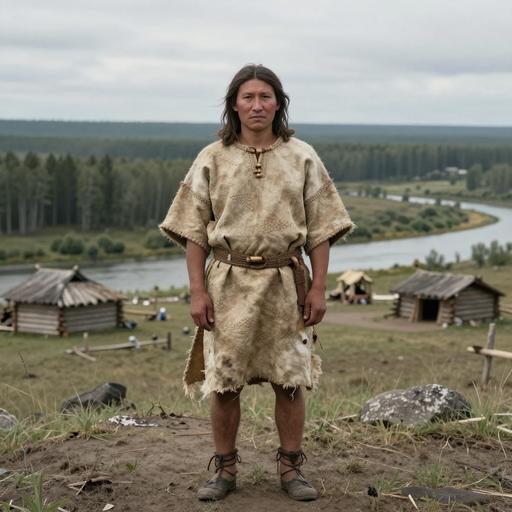
The Early Bronze Age in the Irkutsk region of Siberia represents a fascinating period that reflects the complex interactions between environmental adaptations, emerging metallurgy, and cultural developments. This era, roughly dating from 3000 to 2000 BCE, forms part of the broader context of the Early Bronze Age in northern Eurasia. Here, the people dwelled in a challenging environment characterized by the vast taiga, harsh weather conditions, and resource-rich landscapes.
Geography and Environment
Irkutsk is located near the western edge of Lake Baikal, the world's deepest and oldest freshwater lake, and is nestled within the vast taiga and steppe regions of Siberia. This location provided a unique ecological niche, offering diverse resources like fish from the lake, game from the forests, and rich deposits of minerals useful for tool-making and early metallurgy. The region's geography also promoted interactions among different cultural groups, leading to a vibrant exchange of ideas and technologies.
Subsistence and Economy
The inhabitants of Early Bronze Age Irkutsk were primarily hunter-gatherers with a gradual shift towards pastoralism and rudimentary agriculture. The taiga offered abundant hunting opportunities, including deer, elk, and smaller game, while the rivers and Lake Baikal provided rich fishing grounds. The emergence of livestock, possibly influenced by interactions with steppe cultures, began to supplement traditional subsistence strategies. Evidence of early agrarian practices suggests occasional cultivation of hardy crops suited to the short growing seasons.
Settlements and Architecture
Archaeological evidence indicates mixed settlement patterns, ranging from semi-permanent villages to seasonal camps. Dwelling structures were typically constructed from available materials such as wood and animal hides, with some evidence suggesting the use of earthworks for insulation against the cold. These structures, often located near water sources, reflect a deep understanding of and adaptation to the natural environment.
Metallurgy and Craftsmanship
One of the defining characteristics of this era was the advent of metallurgy, signifying a technological leap from the Neolithic period. The Irkutsk region, with its proximity to copper deposits, became an early center for metalworking. Artifacts such as tools, weapons, and ornaments made from copper and, later, bronze indicate significant advancements in metallurgy. Techniques like casting and alloying suggest a growing expertise in metalworking, which likely had social and economic implications.
Social Structure and Culture
The social organization of the Early Bronze Age communities in Irkutsk was likely kinship-based, with egalitarian features typical of hunter-gatherer societies. However, the accumulation of wealth in the form of livestock and metallurgical skills may have led to emerging social stratification. Cultural expressions, including pottery and carving, reveal a distinct aesthetic and symbolic lexicon tied to both everyday life and ritual practices. Artifacts often feature motifs connected to nature and shamanistic beliefs, highlighting the spiritual dimensions of the society.
Burial Practices and Beliefs
Burial practices from this period provide insights into religious and spiritual beliefs. Graves often contained goods such as tools, weapons, and ornaments, indicating a belief in an afterlife. The presence of elaborate burial mounds, sometimes associated with prominent individuals, suggests the beginnings of social differentiation in life and death. Ritualistic practices, possibly involving shamanistic rites, underscore the community's connection to the spiritual world and the natural environment.
Interactions and Influences
The Early Bronze Age Irkutsk region was not isolated; instead, it was part of a broader network of cultural and trade exchanges across Siberia and Central Asia. These interactions facilitated the spread of technological innovations such as metalworking and may have influenced social and cultural developments. The exchange of goods, ideas, and people across these networks contributed to the cultural dynamism of the region.
In summary, the Early Bronze Age in the Irkutsk region of Siberia represents a period of significant transformation, characterized by advancements in metallurgy, evolving subsistence strategies, and complex social patterns. It was a time of adaptation and innovation, shaped by the challenging yet resource-rich environment of Siberia, and marked by a distinct cultural identity and connections to broader Eurasian trends.