Menu
Currency
Main
Store
Blog

Loading Report

Preparing your ancestry journey

Connecting to ancient matches...

Preparing your report

Skip to main content
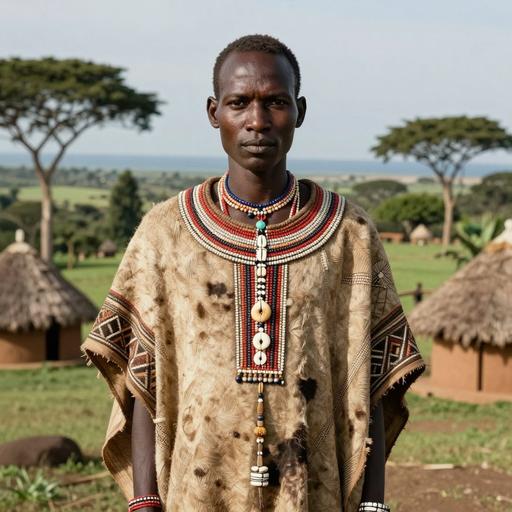
Portrait reconstruction of A man buried in Kenya in the Middle Ages era
Ancient Individual

A man buried in Kenya in the Middle Ages era

A man buried in Kenya during the Kenya 400 Years Ago

A fragment of the ancient world, preserved across millennia in strands of DNA.

I0595
1445 BCE - 1626 BCE
Male
Kenya
Scroll to begin
Chapter I

Identity

The biological and cultural markers that define this ancient individual

Sample ID

I0595

Date Range

1445 BCE - 1626 BCE

Cultural Period

Kenya 400 Years Ago

Biological Sex

Male

mtDNA Haplogroup

L4b2a2

Y-DNA Haplogroup

E-M293

Chapter II

Place

Where this individual was discovered

Country Kenya
Locality Kilifi. Panga ya Saidi
Coordinates -3.7000, 39.7000
Chapter III

Time

When this individual lived in the broader context of human history

I0595 1445 BCE - 1626 BCE
Chapter IV

Story

The narrative of this ancient life

Around 400 years ago, during the 17th century, the region now known as Kenya was inhabited by various ethnic groups, with the Bantu people being one of the most significant in terms of cultural and linguistic impact. The Bantu migrations, which began around 1000 BC, gradually brought these people into East Africa, where they established communities and civilizations that contributed to the rich tapestry of Kenya's history.

Bantu People and Their Migration

The Bantu are believed to have originated from the region around present-day Cameroon and Nigeria, from where they began their great southward and eastward migrations across Africa. By the 17th century, Bantu-speaking communities had firmly established themselves in various parts of Kenya, particularly in the central, western, and coastal regions. Their migration was driven by a combination of searching for arable land, resources, and possibly escaping conflicts.

Society and Culture

Social Structure: The Bantu-speaking communities often organized themselves into clans and kinship groups, which were led by elders or chiefs. Society was typically hierarchical, with clear divisions of labor based on age and gender. Men were generally responsible for herding and clearing land for agriculture, while women took on roles in farming, childcare, and household management.

Agriculture and Economy: Agriculture was central to Bantu life. They cultivated crops like sorghum, millet, and later introduced crops like bananas and yams. They also engaged in animal husbandry, raising cattle, goats, and sheep. Trade was significant, both internally and with neighboring regions, facilitated by the Indian Ocean trade networks. Items such as iron tools, pottery, and textiles were commonly traded, and coastal communities also engaged in trading with Arab and Persian merchants.

Technology: The Bantu brought with them advanced ironworking techniques, which greatly contributed to their agricultural success and ability to clear dense forests for farming. They produced iron tools and weapons, facilitating both their subsistence strategies and defense mechanisms.

Language and Religion

Language: By this time, the Bantu languages had diversified considerably, giving rise to numerous distinct languages and dialects spoken across Kenya. This linguistic diversity is a testimony to the adaptability and cultural richness of the Bantu people.

Religion: Bantu religious beliefs were predominantly animistic, focusing on ancestor worship and the spirits of the natural world. They believed in a supreme creator God, alongside a pantheon of lesser spirits and deities associated with natural phenomena. Rituals, songs, and dances played a crucial role in religious and community life, often used to mark significant life events such as births, initiations, marriages, and funerals.

Interaction with Other Cultures

Coastal Influences: On the eastern coast, particularly in areas like Mombasa and Malindi, Bantu communities came into contact with Arab traders who had established trading posts along the Indian Ocean coast. This interaction led to the development of the Swahili culture and the Swahili language, a Bantu language with significant Arabic influence.

Trade and Exchange: The inland Bantu communities were connected through extensive trade networks with neighboring Nilotic and Cushitic groups. These interactions facilitated the exchange of goods, ideas, and cultural practices.

Challenges and Conflicts

The 17th century also presented challenges for the Bantu communities. Competition for resources, such as fertile land and water, occasionally led to conflicts both within Bantu groups and with other ethnic groups. However, these challenges often resulted in the formation of alliances and the strengthening of societal structures.

Conclusion

The Bantu presence in Kenya 400 years ago laid a significant foundation for the country's cultural, linguistic, and societal development. Their legacy is still visible today, as numerous Kenyan ethnic groups trace their roots to Bantu ancestors. The synthesis of indigenous and foreign influences crafted a unique cultural heritage that continues to influence Kenya's social and political landscapes.

Context

Related Samples

This individual exists within a broader network of ancient samples. No ancient genome stands alone.

Sample ID Culture/Period Date Location Action
I2966 Hora Late Stone Age 8500BP in Malawi 7131 BCE Mzimba District. Hora, Malawi View
I0589 Zanzibar 1300 Years Before Present in Tanzania 586 CE Zanzibar. Kuumbi Cave, Tanzania View
I3726 Luxmanda 3000 Years Before Present in Tanzania 1204 BCE Luxmanda. UVS40, Tanzania View
KhoesanLeipzigHunter South Africa 2200 Years Before Present 403 BCE St. Helena, South Africa View
MAL-005 Modern Malawi 2000 CE Dedza // Yao, Malawi View
MAL-009 Modern Malawi 2000 CE Machinga // Yao, Malawi View
MAL-011 Modern Malawi 2000 CE Mchinga // Chichewa, Malawi View
MAL-012 Modern Malawi 2000 CE Salima // Chichewa, Malawi View
MAL-014 Modern Malawi 2000 CE Nambuma // Chichewa, Malawi View
MAL-015 Modern Malawi 2000 CE Blantyre // Yao, Malawi View
MAL-018 Modern Malawi 2000 CE Nkotankhota // Chichewa, Malawi View
MAL-019 Modern Malawi 2000 CE Dedza // Chichewa, Malawi View
MAL-023 Modern Malawi 2000 CE Mchisi // Chichewa, Malawi View
MAL-024 Modern Malawi 2000 CE Mangochi // Yao, Malawi View
MAL-025 Modern Malawi 2000 CE Chev // Ngoni, Malawi View
MAL-026 Modern Malawi 2000 CE Chev // Ngoni, Malawi View
MAL-028 Modern Malawi 2000 CE Lilongwe // Chichewa, Malawi View
MAL-032 Modern Malawi 2000 CE Blantyre // Yao, Malawi View
MAL-043 Modern Malawi 2000 CE Chev // Chichewa, Malawi View
MAL-045 Modern Malawi 2000 CE Dowa // Chichewa, Malawi View
MAL-047 Modern Malawi 2000 CE Majimba // Tumbuka, Malawi View
MAL-050 Modern Malawi 2000 CE Zomba // Chichewa, Malawi View
MAL-058 Modern Malawi 2000 CE Mzimba // Tumbuka, Malawi View
MAL-059 Modern Malawi 2000 CE Mzimba // Tumbuka, Malawi View
MAL-065 Modern Malawi 2000 CE Mzimba // Tumbuka, Malawi View
MAL-073 Modern Malawi 2000 CE Mzimba // Tumbuka, Malawi View
MAL-074 Modern Malawi 2000 CE Mzimba // Ngoni, Malawi View
MAL-079 Modern Malawi 2000 CE Karonga // Tumbuka, Malawi View
MAL-097 Modern Malawi 2000 CE Nlekata bay //, Malawi View
MAL-099 Modern Malawi 2000 CE Karonga // Tumbuka, Malawi View
MAL-101 Modern Malawi 2000 CE Machinga // Chichewa, Malawi View
MAL-112 Modern Malawi 2000 CE Mangochi // Chichewa, Malawi View
MAL-122 Modern Malawi 2000 CE Lilongwe // Chichewa, Malawi View
MAL-124 Modern Malawi 2000 CE Chev Distr // Chichewa, Malawi View
MAL-136 Modern Malawi 2000 CE Mangochi // Yao, Malawi View
MAL-196 Modern Malawi 2000 CE Zomba // chiyao, Malawi View
MAL-197 Modern Malawi 2000 CE Majimba // Chichewa, Malawi View
MAL-206 Modern Malawi 2000 CE Mzimba // Tumbuka, Malawi View
I0595 Kenya 400 Years Ago 1445 BCE Kilifi. Panga ya Saidi, Kenya View
I4421 Chencherere Late Stone Age 5200BP in Malawi 3400 BCE Chencherere, Malawi View
I4422 Chencherere Late Stone Age 5200BP in Malawi 3351 BCE Chencherere, Malawi View
I4426 Fingira Late Stone Age 2500BP in Malawi 542 BCE Fingira, Malawi View
I4427 Late Stone Age Malawi 4227 BCE Fingira, Malawi View
I4468 Late Stone Age Malawi 4230 BCE Fingira, Malawi View
I2967 Hora Late Stone Age 8500BP in Malawi 6222 BCE Mzimba District. Hora, Malawi View
UCT473 South Africa 1200 Years Before Present 665 CE Kasteelberg, South Africa View
UCT386 South Africa 1900 Years Before Present 88 BCE Faraoskop Rock Shelter, South Africa View
I1048 Pemba 1400 Years Before Present in Tanzania 539 CE Zanzibar. Pemba Island. Mapangani Cave, Tanzania View
I2298 Pemba 600 Years Before Present in Tanzania 1319 CE Zanzibar. Pemba Island. Mapangani Cave, Tanzania View
UCT473 665 BCE Kasteelberg, South Africa View
UCT386 88 BCE Faraoskop Rock Shelter, South Africa View
I0589 586 BCE Zanzibar. Kuumbi Cave, Tanzania View
I1048 539 BCE Zanzibar. Pemba Island. Mapangani Cave, Tanzania View
I2298 1319 BCE Zanzibar. Pemba Island. Mapangani Cave, Tanzania View
I1048 539 BCE Zanzibar. Pemba Island. Mapangani Cave, Tanzania View
I0595 1445 BCE Kilifi. Panga ya Saidi, Kenya View
I0589 586 BCE Zanzibar. Kuumbi Cave, Tanzania View
I2966 7131 BCE Mzimba District. Hora, Malawi View
I2967 6222 BCE Mzimba District. Hora, Malawi View
I4468 4230 BCE Fingira, Malawi View
I4427 4227 BCE Fingira, Malawi View
I4421 3400 BCE Chencherere, Malawi View
I4422 3351 BCE Chencherere, Malawi View
I3726 1204 BCE Luxmanda. UVS40, Tanzania View
I1048 539 BCE Zanzibar. Pemba Island. Mapangani Cave, Tanzania View
I4426 542 BCE Fingira, Malawi View
Sample ID Culture/Period Date Location Action
I0595 Kenya 400 Years Ago 1445 BCE Kilifi. Panga ya Saidi, Kenya View
Sources

References

Scientific publications and genetic data that inform this profile.

Scientific Publication

Reconstructing Prehistoric African Population Structure

Authors Skoglund P, Thompson JC, Prendergast ME, Mittnik A, Sirak K et al.
Abstract

We assembled genome-wide data from 16 prehistoric Africans. We show that the anciently divergent lineage that comprises the primary ancestry of the southern African San had a wider distribution in the past, contributing approximately two-thirds of the ancestry of Malawi hunter-gatherers ∼8,100-2,500 years ago and approximately one-third of the ancestry of Tanzanian hunter-gatherers ∼1,400 years ago. We document how the spread of farmers from western Africa involved complete replacement of local hunter-gatherers in some regions, and we track the spread of herders by showing that the population of a ∼3,100-year-old pastoralist from Tanzania contributed ancestry to people from northeastern to southern Africa, including a ∼1,200-year-old southern African pastoralist. The deepest diversifications of African lineages were complex, involving either repeated gene flow among geographically disparate groups or a lineage more deeply diverging than that of the San contributing more to some western African populations than to others. We finally leverage ancient genomes to document episodes of natural selection in southern African populations. PAPERCLIP.

Use code for 25% off Expires Jul 13