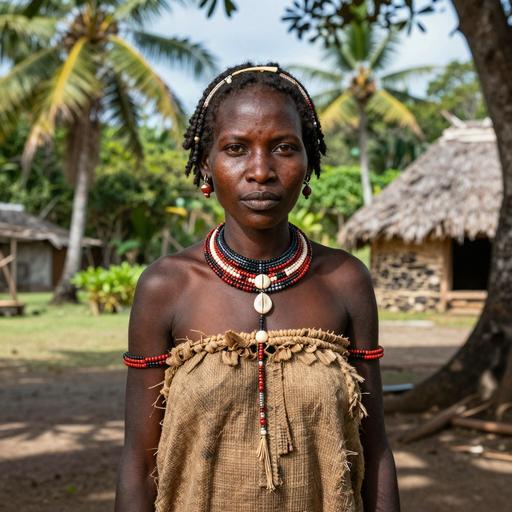
The era of 600 years before the present in Pemba, part of Tanzania's Swahili Coast civilization, represents a fascinating period characterized by vibrant cultural and economic activity. During this time, the island of Pemba, along with its sister island Zanzibar and other coastal areas, was part of the larger Swahili Coast, a series of city-states and settlements that spanned the eastern coast of Africa from Somalia in the north to Mozambique in the south. The region was renowned for its unique cultural synthesis, maritime prowess, and role as a hub in the Indian Ocean trade network.
Maritime Trade and Economy
Around 600 BP (circa 1400 AD), the Swahili civilization was at the height of its prosperity. Pemba, like other regions of the Swahili Coast, was deeply involved in maritime trade facilitated by its strategic location. The island served as a crucial node in the Indian Ocean trade routes, linking Africa with the Arabian Peninsula, Persia, India, and later China. Merchants and sailors navigated the monsoon winds to trade goods such as gold, ivory, slaves, and gemstones from the African interior, as well as locally produced commodities like mangrove poles, coconuts, and spices. In exchange, they imported textiles, pottery, beads, and other luxury items.
Cultural Synthesis and Urban Centers
Pemba, like its coastal counterparts, was characterized by a blend of African, Arab, Persian, and later, Indian influences, reflected in its language, architecture, and social customs. This cultural synthesis gave rise to the Swahili culture, characterized by its distinct language (Kiswahili, a Bantu language enriched with Arabic loanwords), Islamic faith, and unique social structure. The prosperity from trade allowed for the development of urban centers and stone-built settlements, leading to architectural advancements such as the use of coral stone in building mosques, homes, and public buildings.
Society and Social Structure
Society on Pemba during this era was hierarchical but cosmopolitan, with a ruling class of merchant elites known as the Waungwana, whose wealth was derived from trade. Below them were the Waswahili, the general populace involved in various trades and crafts, and the Wahadimu, the indigenous farming communities. Social interactions were significantly influenced by Islamic practices, as Islam had become the dominant religion by this period, introduced by Arab and Persian traders centuries earlier.
Religion and Cultural Practices
Islam played a central role in the daily lives of Pemba's inhabitants, guiding not only spiritual beliefs but also aspects of commerce, law, and social customs. Mosques were prominent features in towns, serving as centers for education and community gatherings. The religious calendar also influenced cultural practices, with festivals such as Eid al-Fitr and Eid al-Adha being significant social events.
Art and Craftsmanship
Cultural expressions flourished during this period, with the Swahili renowned for their artisan skills in weaving, pottery, metalwork, and wood carving. Pemba was no exception, producing intricately designed items for both local use and trade. The art was often infused with both indigenous and foreign motifs, reflecting the island's multicultural influences.
Agriculture and Food
While trade was a cornerstone of Pemba's economy, agriculture also played a vital role. The fertile soil and favorable climate allowed for the cultivation of various crops, including rice, which was a staple food. Cloves and other spices began to be cultivated during this time, although the spice trade would peak in later centuries. Fishing and the gathering of seafood were also essential to the diet.
Challenges and Conflicts
Despite its prosperity, the Swahili Coast, including Pemba, faced challenges. Competition among city-states and external threats from neighboring African kingdoms, as well as occasional conflicts with Arab and Persian traders, were not uncommon. These tensions sometimes led to shifts in power dynamics within and between the coastal settlements.
In conclusion, the period of 600 years before the present in Pemba was marked by a vibrant and dynamic culture deeply interconnected with the broader Indian Ocean world. The island's role as a trade hub facilitated a rich cultural exchange that left a lasting legacy on its social, economic, and cultural development, making it an integral part of the Swahili Coast civilization.