Region & Environment
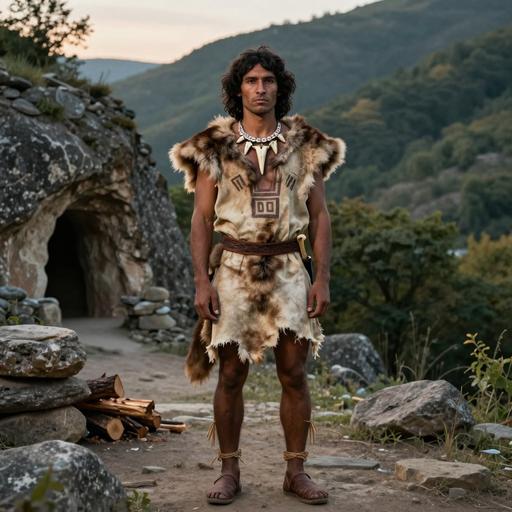
Georgia sits at the crossroads of mountain and lowland habitats, with access to varied resources. During the early Upper Paleolithic, local climates were cooler and landscapes would have shifted repeatedly, influencing the distribution of game and the availability of plant foods.
Historical Context
Dzudzuana Cave Culture belongs to the early Upper Paleolithic of the Caucasus region. In this period, human groups in the region relied on stone tool technologies and mobile foraging systems, using caves and rock shelters as favorable locations.
Populations & Lifeways
Populations were hunter-gatherers with flexible mobility. Life revolved around procuring wild resources and processing them on-site, with activities organized around tool production, maintenance, and the repeated use of sheltered locations during favorable hunting seasons.
Archaeology & Material Culture
Archaeological work in caves such as Dzudzuana typically yields dense concentrations of lithic artifacts associated with flaking and tool use. The stratified deposits can preserve sequences of occupation, allowing archaeologists to recognize changing toolkits or activity emphases over time. Where organic remains are preserved, they can supplement lithic evidence, though preservation varies.
Culture & Society
Cultural practice is most visible through recurring stone-tool traditions, including characteristic reduction methods and tool forms. These patterns imply learned techniques passed within groups and possibly shared across neighboring populations, reinforcing cultural cohesion in a wider Paleolithic world.
Legacy & Transition
Over time, climatic fluctuation and changing ecosystems influenced how Paleolithic groups used landscapes and shelters. Dzudzuana contributes to the deep archaeological sequence that helps track the long-term development of hunter-gatherer lifeways in the Caucasus before later Mesolithic and Neolithic transitions.