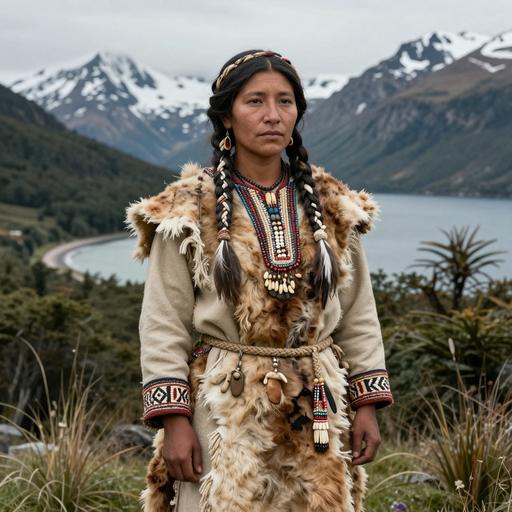
The Mitre Peninsula, located at the southeastern tip of Tierra del Fuego in modern-day Argentina, is a region steeped in rich cultural history. Approximately 400 years ago, this area was home to the Haush people, one of the indigenous groups of South America. The Haush, also known as the Manek'enk or Mánekenk, were a part of the broader ethno-cultural landscape of Tierra del Fuego, which included other groups such as the Selk'nam (Ona) and the Yaghan (Yámana).
Geography and Environment
The Mitre Peninsula is characterized by its rugged coastline, dense forests, and challenging climatic conditions, with cold temperatures and strong winds prevalent throughout the year. The Haush people adapted to this environment, developing ingenious ways to survive and thrive in one of the southernmost inhabited regions on the planet. The area’s natural resources, including marine life, birds, and the land’s flora, were central to their lifestyle and subsistence.
Economic Activity and Subsistence
The Haush were primarily hunter-gatherers, relying heavily on the coastal and marine environments. Their diet was rich in seafood, with seals, fish, and shellfish playing a significant role. They also hunted guanacos, a wild camelid native to South America, and gathered local plant resources, which supplemented their diet. The use of simple yet effective tools made from bone, stone, and wood facilitated their hunting and gathering activities.
Social Structure and Organization
The Haush society was structured into small, loosely-knit bands. These groups were often composed of extended family units, each with defined territories. Social organization was relatively egalitarian, with cooperative labor and shared resources essential for survival. Leadership was likely informal and based on experience and knowledge, particularly concerning hunting and navigating the challenging environment.
Cultural Practices and Beliefs
The Haush culture was rich in oral traditions, craftsmanship, and rituals. They maintained an elaborate system of myths and legends that explained and gave meaning to their world. Spiritual life revolved around the natural elements and their relationships with the land and sea, which were often personified in their mythology.
Rituals and ceremonies played an integral role in marking significant events such as births, marriages, and deaths. The Haush also engaged in artistic expressions, including body painting and ornamentation, which held cultural significance in signaling social status or group identity.
Language
The Haush spoke a language distinct from their neighbors, reflecting their unique cultural identity. However, linguistic similarities with the languages of nearby indigenous groups suggest a degree of interaction and shared linguistic heritage across the region.
Interaction with Other Indigenous Groups
Geographical proximity led to interactions with other Fuegian peoples, particularly the Selk'nam and Yaghan. These interactions could include trade, intermarriage, and cultural exchanges, although territorial disputes occasionally arose. The Haush's position at the end of the continent did, however, result in them being somewhat isolated compared to more northerly groups.
Impact of European Contact
Around 400 years ago, the effects of European exploration were beginning to be felt. Although the first sustained European contact would come decades later, with missions and settlements, the initial interactions often led to cultural disruptions, through the introduction of new diseases and subsequent social changes.
The Haush, like many indigenous peoples of South America, faced significant challenges in the centuries following European contact. The introduction of new economic pressures and cultural influences gradually altered traditional lifestyles and social structures.
In summary, the Haush culture of the Mitre Peninsula was characterized by mastery over their harsh environment, a rich cultural and spiritual life, and complex social organizations adapted for survival in one of Earth’s most extreme regions. Their story is one of resilience and adaptability, qualities that defined many indigenous cultures of South America.