Menu
Currency
Main
Store
Blog

Loading Report

Preparing your ancestry journey

Connecting to ancient matches...

Preparing your report

Skip to main content
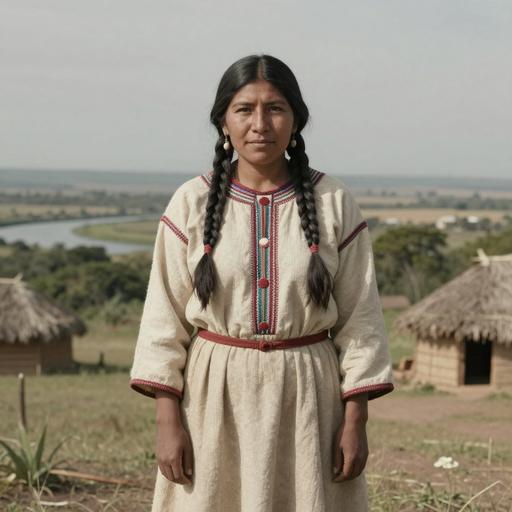
Portrait reconstruction of A woman buried in Argentina in the Ancient South America era
Ancient Individual

A woman buried in Argentina in the Ancient South America era

A woman buried in Argentina during the Laguna Toro Site 2400 Years Ago

A fragment of the ancient world, preserved across millennia in strands of DNA.

I12376
740 BCE - 200 BCE
Female
Argentina
Scroll to begin
Chapter I

Identity

The biological and cultural markers that define this ancient individual

Sample ID

I12376

Date Range

740 BCE - 200 BCE

Cultural Period

Laguna Toro Site 2400 Years Ago

Biological Sex

Female

mtDNA Haplogroup

A2-a

Y-DNA Haplogroup

N/A (Female)

Chapter II

Place

Where this individual was discovered

Country Argentina
Locality Southwest of Buenos Aires. Laguna Toro
Chapter III

Time

When this individual lived in the broader context of human history

I12376 740 BCE - 200 BCE
Chapter IV

Story

The narrative of this ancient life

The Laguna Toro site, situated in the hinterlands of what is now modern-day Argentina, offers a fascinating glimpse into the Indigenous cultures of South America around 2400 years ago. This period is marked by a variety of cultural and technological developments that were influenced by both environmental factors and interactions with neighboring groups.

Geographic and Environmental Context

Laguna Toro is located in a region characterized by diverse ecosystems, including Andean foothills, wetlands, and forested areas. This geographical diversity provided a rich bounty of natural resources that could be exploited for subsistence. The climate at the time would have been suitable for a range of plants and animals, supporting both hunting and rudimentary forms of agriculture.

Subsistence and Economy

Around 2400 BP, inhabitants of the Laguna Toro area were largely engaged in a mixed subsistence economy. This included hunting, gathering, and the nascent development of agricultural practices. The local fauna, such as guanacos and various bird species, were hunted using sophisticated tools made from bone and stone. Gathering would have focused on native plant species such as tubers, seeds, and berries.

Agriculture was in its early stages, with evidence suggesting the cultivation of maize and possibly other crops suited to the climate and soil of the region. This period might have seen the transition from purely nomadic lifestyles to semi-sedentary communities, fostering more permanent settlements near arable land.

Social Structure and Organization

Social structures during this period were likely kin-based, with clans or extended family groups forming the basic units of society. Leadership may have been based on age, wisdom, or prowess in hunting and gathering, though specific hierarchies were likely fluid. Emerging sedentism suggests an increasing complexity in social organization, potentially laying the groundwork for more stratified societies in subsequent centuries.

Tools and Technology

The Laguna Toro site demonstrates a range of technological expertise, particularly in tool-making. Stone tools, such as projectile points, scrapers, and knives, were crafted using local materials. This period also saw advancements in pottery, with clay vessels being used for storage and cooking. These technological developments facilitated more efficient food processing and storage, allowing communities to thrive in their environment.

Cultural and Religious Practices

Cultural practices during this era were likely tied closely to the natural world. Animistic religious beliefs may have been prevalent, with a deep respect for the environment and its resources. Artifacts such as carved stone figures or symbols inscribed on pottery might indicate ritualistic or ceremonial activities, suggesting a spiritual dimension to daily life.

The Laguna Toro region would have featured seasonal gatherings for trade, social reinforcement, and ceremonial purposes, potentially involving neighboring groups. These interactions could lead to a syncretism of beliefs, technology, and practices, enriching the local culture.

Archaeological Evidence and Interpretation

The archaeological record at Laguna Toro offers rich evidence of these practices. Excavations have uncovered remnants of dwellings, hearths, and storage pits, painting a picture of daily life. Analysis of floral and faunal remains provides insight into diet and subsistence, while pottery shards and tool fragments reveal technological prowess.

Studies suggest that the Laguna Toro site exhibits a broad array of cultural influences, indicating both local innovation and the movement of ideas and goods across regions. This period stands as a transformative stage in the pre-Columbian history of Argentina, setting the stage for future societal developments that would occur in the centuries to come.

In summary, the Laguna Toro site 2400 years ago embodies a pivotal moment of adaptation and innovation within indigenous cultures of South America. It reflects a delicate balance between tradition and transformation, underpinning the resilience and ingenuity of early agrarian societies.

Context

Related Samples

This individual exists within a broader network of ancient samples. No ancient genome stands alone.

Sample ID Culture/Period Date Location Action
I8575 Southern Continent Aonikenk Culture, Chile 400 Years Ago 141 CE Southern Continent. Magallanes. Cerro Johnny, Chile View
I8576 North Tierra del Fuego Selknam Culture, Chile 100 Years Ago 1800 CE North of Tierra del Fuego. Faro Méndez, Chile View
I12364 North Tierra del Fuego Selknam Culture 500 Years Ago 1040 CE Tierra del Fuego (North). Margen Sur, Argentina View
I12366 North Tierra del Fuego Selknam Culture 500 Years Ago 1670 CE Tierra del Fuego (North). Pozo Tierra del Fuego 1, Argentina View
I12357 Mitre Peninsula Haush Culture 400 Years Ago 1470 CE Tierra del Fuego. Mitre Peninusula. Caleta Falsa, Argentina View
I12365 North Tierra del Fuego Selknam Culture 500 Years Ago 1150 CE Tierra del Fuego (North). Margen Sur, Argentina View
I12359 Mitre Peninsula Haush Culture 400 Years Ago 1280 CE Tierra del Fuego. Mitre Peninusula. Caleta Falsa, Argentina View
I12361 Mitre Peninsula Haush Culture 400 Years Ago 1450 CE Tierra del Fuego. Mitre Peninusula. Río Policarpo, Argentina View
I12355 Beagle Channel Yamana Culture 1500 Years Ago 260 CE Beagle Channel. Tierra del Fuego. Río Pipo, Argentina View
I12376 Laguna Toro Site 2400 Years Ago 740 BCE Southwest of Buenos Aires. Laguna Toro, Argentina View
I12360 Mitre Peninsula Haush Culture 400 Years Ago 1460 CE Tierra del Fuego. Mitre Peninusula. Caleta Falsa, Argentina View
I12363 North Tierra del Fuego Selknam Culture 500 Years Ago 1490 CE Tierra del Fuego (North). Puesto Pescador, Argentina View
I12367 North Tierra del Fuego Selknam Culture 500 Years Ago 1200 CE Tierra del Fuego (North). Margen Sur, Argentina View
I12941 Beagle Channel Yamana Culture 100 Years Ago 1560 CE Beagle Channel. Tierra del Fuego. Almanza, Argentina View
I12943 Beagle Channel Yamana Culture 100 Years Ago 1550 CE Beagle Channel. Tierra del Fuego. Almanza, Argentina View
I12942 Beagle Channel Yamana Culture 100 Years Ago 1810 CE Beagle Channel. Tierra del Fuego. Acatushún, Argentina View
I12356 Mitre Peninsula Haush Culture 400 Years Ago 1450 CE Tierra del Fuego. Mitre Peninusula. Caleta Falsa, Argentina View
I12362 North Tierra del Fuego La Arcillosa 2 Site 5800 Years Ago 4040 BCE Tierra del Fuego (North). La Arcillosa 2, Argentina View
I12354 North Tierra del Fuego Selknam Culture 500 Years Ago 1420 CE Tierra del Fuego (North). Río Grande, Argentina View
I12358 Mitre Peninsula Haush Culture 400 Years Ago 1330 CE Tierra del Fuego. Mitre Peninusula. Caleta Falsa, Argentina View
Sample ID Culture/Period Date Location Action
I12376 Laguna Toro Site 2400 Years Ago 740 BCE Southwest of Buenos Aires. Laguna Toro, Argentina View
Sources

References

Scientific publications and genetic data that inform this profile.

Scientific Publication

Ancient genomes in South Patagonia reveal population movements associated with technological shifts and geography

Authors Nakatsuka N, Luisi P, Motti JMB, Salemme M, Santiago F et al.
Abstract

Archaeological research documents major technological shifts among people who have lived in the southern tip of South America (South Patagonia) during the last thirteen millennia, including the development of marine-based economies and changes in tools and raw materials. It has been proposed that movements of people spreading culture and technology propelled some of these shifts, but these hypotheses have not been tested with ancient DNA. Here we report genome-wide data from 20 ancient individuals, and co-analyze it with previously reported data. We reveal that immigration does not explain the appearance of marine adaptations in South Patagonia. We describe partial genetic continuity since ~6600 BP and two later gene flows correlated with technological changes: one between 4700-2000 BP that affected primarily marine-based groups, and a later one impacting all <2000 BP groups. From ~2200-1200 BP, mixture among neighbors resulted in a cline correlated to geographic ordering along the coast.

Use code for 25% off Expires Jul 12