Menu
Currency
Main
Store
Blog

Loading Report

Preparing your ancestry journey

Connecting to ancient matches...

Preparing your report

Skip to main content
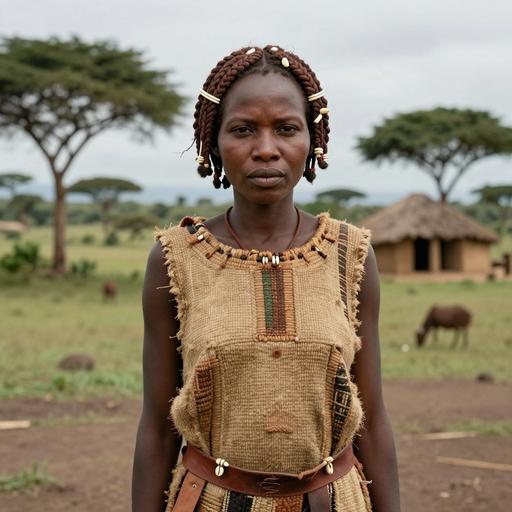
Portrait reconstruction of A woman buried in Tanzania in the Africa East Pastoralist era
Ancient Individual

A woman buried in Tanzania in the Africa East Pastoralist era

A woman buried in Tanzania during the Prehistoric in Tanzania

A fragment of the ancient world, preserved across millennia in strands of DNA.

I13978
414 BCE - 203 BCE
Female
Tanzania
Scroll to begin
Chapter I

Identity

The biological and cultural markers that define this ancient individual

Sample ID

I13978

Date Range

414 BCE - 203 BCE

Cultural Period

Prehistoric in Tanzania

Biological Sex

Female

mtDNA Haplogroup

L4b2a1

Y-DNA Haplogroup

N/A (Female)

Chapter II

Place

Where this individual was discovered

Country Tanzania
Locality Gishimangeda Cave
Coordinates -3.4800, 35.3500
Chapter III

Time

When this individual lived in the broader context of human history

I13978 414 BCE - 203 BCE
Chapter IV

Story

The narrative of this ancient life

The prehistoric era of Tanzania is a fascinating period in the African Stone Age, marked by significant evolutionary, cultural, and technological developments. This era spans from around 2.6 million years ago to the advent of the Iron Age and provides insight into some of the earliest chapters in human history.

The Oldowan Industry (ca. 2.6 million – 1.7 million years ago)

The Oldowan is one of the earliest known stone tool industries, and its origins are closely linked to eastern Africa, particularly the regions within Tanzania. This industry is characterized by the production of simple tools, mostly made by striking river pebbles to create sharp flakes. These tools were likely used for processing plant material and butchering animal carcasses. The famous archaeological site of Olduvai Gorge in northern Tanzania is one of the most important Paleoanthropological sites in the world, made renowned by the work of Louis and Mary Leakey. It provides a rich repository of early Oldowan tools and fossilized remains of hominins, including some of the earliest evidence of Homo habilis, an early human species.

The Acheulean Industry (ca. 1.7 million - 200,000 years ago)

Following the Oldowan, the Acheulean industry developed, characterized by the production of more sophisticated hand axes and cleavers. The Acheulean tools reflect an advance in cognitive abilities and craftsmanship, illustrating more strategic planning and complex social interactions. The site of Isimila, located near Iringa in the southern highlands of Tanzania, is an exemplary Acheulean site. It showcases a large number of hand axes and tools, suggesting a well-developed tradition of tool-making that persisted for hundreds of thousands of years.

Middle Stone Age (ca. 300,000 – 50,000 years ago)

Transitioning into the Middle Stone Age (MSA), Tanzania saw further advancements in tool technology and cognitive abilities. Tools from this period include prepared core techniques, such as the Levallois technique, which demonstrates a marked improvement in the efficiency of tool production. In addition, there is evidence suggesting the beginnings of symbolic behavior. This period saw the continued evolution of Homo sapiens, who increasingly exhibited modern behavioral characteristics.

Later Stone Age (ca. 50,000 – 10,000 years ago)

The Later Stone Age (LSA) marked a period where human culture became recognizably more complex and human populations began expanding. This era is characterized by the production of microlithic tools, including blades and arrowheads. These tools were often composite implements, with the stone being hafted onto wood or bone to create more complex weapons and tools. Rock art sites, such as those found in the Kondoa Rock-Art Sites in central Tanzania, provide evidence of early human symbolic expression and spirituality, depicting a range of images from animals to abstract symbols.

Subsistence and Environment

Throughout these periods, the prehistoric inhabitants of Tanzania adapted to a variety of ecological niches, from savannahs to forests. Early hominins likely had a varied diet that included both plant and animal resources. As hunting techniques improved and tool use became more sophisticated, there was likely an increase in the reliance on animal protein.

Acheulean to Iron Age Transition

The transition from the Stone Age to the Iron Age in Tanzania was gradual. The development and use of metal did not completely replace stone tools immediately but existed alongside them for some time. This period set the stage for the rise of more complex societies, eventually leading to the establishment of cultures with intricate social, economic, and political structures.

Conclusion

The prehistoric era of Tanzania is a testament to the ingenuity and adaptability of early hominins and humans. From the basic Oldowan tools to the more elaborate creations of the Later Stone Age, this period laid the foundational elements for human development. The archaeological sites scattered across Tanzania offer invaluable insight into the prehistoric developments that occurred in this region, highlighting its significant role in the epic story of human evolution.

Context

Related Samples

This individual exists within a broader network of ancient samples. No ancient genome stands alone.

Sample ID Culture/Period Date Location Action
I8802 Iron Age Pastoral in Kenya 772 BCE Nakuru. Deloraine Farm. GqJh6, Kenya View
I8805 Pastoral Neolithic Elmenteitan in Kenya 122 BCE Nakuru. Egerton Cave. GrJh10, Kenya View
I8808 Late Stone Age in Kenya 84 BCE Victoria Nyanza. Kisumu. Jawuoyo Rockshelter, Kenya View
I8904 Pastoral Neolithic Nderit in Kenya 2500 BCE North Horr. Kokurmatakore, Kenya View
I12394 Pastoral Neolithic Elmenteitan in Kenya 431 BCE Nakuru. Keringet Cave. GrJg4, Kenya View
I12391 Iron Age Pastoral in Kenya 892 BCE Kasiole 2. GvJh54, Kenya View
I12381 Iron Age Pastoral in Kenya 1296 BCE Laikipia District Burial Site. GoJl45, Kenya View
I12379 Historic Era 2 in Kenya 1527 CE Emurula Ole Polos Cairns. GvJh 122, Kenya View
I12384 Pastoral Neolithic in Kenya 215 BCE Nyandarua. Ol Kalou, Kenya View
I12533 Early Pastoral Neolithic in Kenya 2138 BCE Prette John's Gully, Kenya View
I12534 Early Pastoral Neolithic in Kenya 2129 BCE Prette John's Gully, Kenya View
I8901 Iron Age Pastoral in Kenya 892 BCE Laikipia. Kisima Farm. KFR-C4, Kenya View
I8874 Pastoral Neolithic in Kenya 1407 BCE Nakuru. Cole's Burial. GrJj 5a, Kenya View
I8809 Pastoral Neolithic in Kenya 1111 BCE Laikipia. Kisima Farm. KFR-A5/Porcupine Cave, Kenya View
I13972 Prehistoric in Tanzania 245 CE Gishimangeda Cave, Tanzania View
I8922 Pastoral Neolithic Elmenteitan in Kenya 800 BCE Nakuru. Rigo Cave. GrJh3, Kenya View
I13980 Prehistoric in Tanzania 776 BCE Gishimangeda Cave, Tanzania View
I13981 Prehistoric in Tanzania 768 BCE Gishimangeda Cave, Tanzania View
I12398 Pastoral Neolithic Elmenteitan in Kenya 767 BCE Nakuru. Rigo Cave. GrJh3, Kenya View
I8804 Pastoral Neolithic in Kenya 757 BCE Nakuru. Keringet Cave. GrJg4, Kenya View
I8758 Pastoral Neolithic in Kenya 756 BCE Nakuru. Naishi Cave, Kenya View
I8923 Pastoral Neolithic Elmenteitan in Kenya 748 BCE Nakuru. Rigo Cave. GrJh3, Kenya View
I13979 Prehistoric in Tanzania 721 BCE Gishimangeda Cave, Tanzania View
I8814 Pastoral Neolithic in Kenya 541 BCE Nakuru. Naivasha Burial Groud, Kenya View
I13978 Prehistoric in Tanzania 414 BCE Gishimangeda Cave, Tanzania View
I8919 Pastoral Neolithic in Kenya 391 BCE Nakuru. Naivasha Burial Groud, Kenya View
I8918 Pastoral Neolithic in Kenya 382 BCE Nakuru. Naivasha Burial Groud, Kenya View
I13762 Prehistoric and Iron Age in Tanzania 200 BCE Gishimangeda Cave, Tanzania View
I10719 Pastoral Neolithic Elmenteitan in Kenya 91 BCE Nakuru. Central Rift Valley. Njoro River Cave II, Kenya View
I13970 Prehistoric in Tanzania 50 BCE Gishimangeda Cave, Tanzania View
I13977 Prehistoric in Tanzania 47 BCE Gishimangeda Cave, Tanzania View
I8892 Iron Age Pastoral in Kenya 772 BCE Nakuru. Ilkek Mounds. GsJj66, Kenya View
I8931 Kansyore Era in Kenya 3300 BCE Victoria Nyanza. Homa Bay. White Rock Point. GrJb2, Kenya View
I8930 Kansyore Era in Kenya 3300 BCE Victoria Nyanza. Homa Bay. White Rock Point. GrJb2, Kenya View
I8820 Pastoral Neolithic in Kenya 898 BCE Laikipia. Kisima Farm. KFR-A5/Porcupine Cave, Kenya View
I8759 Pastoral Neolithic in Kenya 795 BCE Nakuru. Naishi Cave, Kenya View
I8920 Pastoral Neolithic in Kenya 405 BCE Nakuru. Naivasha Burial Groud, Kenya View
I8830 Pastoral Neolithic in Kenya 409 BCE Nakuru. Naivasha Burial Groud, Kenya View
I13763 Prehistoric and Iron Age in Tanzania 175 BCE Karatu District. Northeastern shore of Lake Eyasi. Gishimangeda, Tanzania View
I13982 Prehistoric and Iron Age in Tanzania 800 BCE Gishimangeda Cave, Tanzania View
I13983 Prehistoric and Iron Age in Tanzania 800 BCE Gishimangeda Cave, Tanzania View
I8904 2500 BCE North Horr. Kokurmatakore, Kenya View
I8892 772 BCE Nakuru. Ilkek Mounds. GsJj66, Kenya View
I8930 3300 BCE Victoria Nyanza. Homa Bay. White Rock Point. GrJb2, Kenya View
I8931 3300 BCE Victoria Nyanza. Homa Bay. White Rock Point. GrJb2, Kenya View
I8820 898 BCE Laikipia. Kisima Farm. KFR-A5/Porcupine Cave, Kenya View
I13982 800 BCE Gishimangeda Cave, Tanzania View
I13983 800 BCE Gishimangeda Cave, Tanzania View
I8759 795 BCE Nakuru. Naishi Cave, Kenya View
I8830 409 BCE Nakuru. Naivasha Burial Groud, Kenya View
I8920 405 BCE Nakuru. Naivasha Burial Groud, Kenya View
I13763 175 BCE Karatu District. Northeastern shore of Lake Eyasi. Gishimangeda, Tanzania View
Sample ID Culture/Period Date Location Action
I13972 Prehistoric in Tanzania 245 CE Gishimangeda Cave, Tanzania View
I13980 Prehistoric in Tanzania 776 BCE Gishimangeda Cave, Tanzania View
I13981 Prehistoric in Tanzania 768 BCE Gishimangeda Cave, Tanzania View
I13979 Prehistoric in Tanzania 721 BCE Gishimangeda Cave, Tanzania View
I13978 Prehistoric in Tanzania 414 BCE Gishimangeda Cave, Tanzania View
I13970 Prehistoric in Tanzania 50 BCE Gishimangeda Cave, Tanzania View
I13977 Prehistoric in Tanzania 47 BCE Gishimangeda Cave, Tanzania View
Sources

References

Scientific publications and genetic data that inform this profile.

Scientific Publication

Ancient DNA reveals a multistep spread of the first herders into sub-Saharan Africa

Authors Prendergast ME, Lipson M, Sawchuk EA, Olalde I, Ogola CA et al.
Abstract

How food production first entered eastern Africa ~5000 years ago and the extent to which people moved with livestock is unclear. We present genome-wide data from 41 individuals associated with Later Stone Age, Pastoral Neolithic (PN), and Iron Age contexts in what are now Kenya and Tanzania to examine the genetic impacts of the spreads of herding and farming. Our results support a multiphase model in which admixture between northeastern African-related peoples and eastern African foragers formed multiple pastoralist groups, including a genetically homogeneous PN cluster. Additional admixture with northeastern and western African-related groups occurred by the Iron Age. These findings support several movements of food producers while rejecting models of minimal admixture with foragers and of genetic differentiation between makers of distinct PN artifacts.

Use code for 25% off Expires Jul 12