Menu
Currency
Main
Store
Blog

Loading Report

Preparing your ancestry journey

Connecting to ancient matches...

Preparing your report

Skip to main content
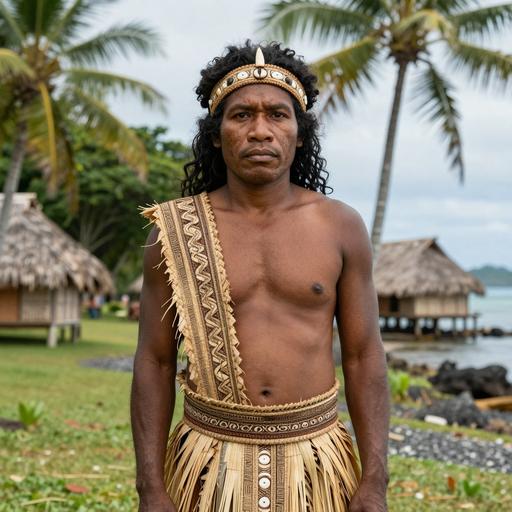
Portrait reconstruction of A man buried in Vanuatu in the Early Prehistoric era
Ancient Individual

A man buried in Vanuatu in the Early Prehistoric era

A man buried in Vanuatu during the Vanuatu 2,900 Years Ago

A fragment of the ancient world, preserved across millennia in strands of DNA.

I5951
970 BCE - 770 BCE
Male
Vanuatu
Scroll to begin
Chapter I

Identity

The biological and cultural markers that define this ancient individual

Sample ID

I5951

Date Range

970 BCE - 770 BCE

Cultural Period

Vanuatu 2,900 Years Ago

Biological Sex

Male

mtDNA Haplogroup

B4a1a1

Y-DNA Haplogroup

O-M119

Chapter II

Place

Where this individual was discovered

Country Vanuatu
Locality Efate. Teouma
Chapter III

Time

When this individual lived in the broader context of human history

I5951 970 BCE - 770 BCE
Chapter IV

Story

The narrative of this ancient life

Approximately 2,900 years ago, the archipelago now known as Vanuatu was a key location for the expansion of Austronesian-speaking peoples across the Pacific. This period marks an important era in the history of Melanesia, characterized by the spread of culture, technology, and new ways of life that were part of the wider Lapita cultural complex.

Geography and Environment

Vanuatu during this time was much as it is today: a series of islands scattered across the South Pacific. The climate was tropical, with a mix of volcanic high islands and smaller, lower coral atolls. The fertile volcanic soil, lush rainforests, and abundant marine resources provided a rich environment for settlement and subsistence.

The Lapita Culture

The people of Vanuatu around 2,900 years ago were part of the Lapita culture, a society distinguished by its uniquely decorated pottery. The Lapita people are considered the ancestors of many modern Pacific Islanders. They are renowned for their navigational skills and were among the first to sail across vast stretches of ocean, colonizing remote islands.

Pottery and Artifacts: The Lapita pottery was characterized by intricate geometric designs, often made using dentate stamping. These artifacts have been crucial in identifying Lapita sites throughout the Pacific. Beyond pottery, they crafted tools from materials like stone, bone, and shell.

Social Structure and Settlements: Settlements during this time were likely organized into villages, often located near the coast where resources were readily available. Social structures were built around kinship, with extended families likely functioning as the primary social unit.

Subsistence and Economy

The economy of Vanuatu in this era was predominantly subsistence-based, relying heavily on both marine and terrestrial resources.

Agriculture: Agriculture was a cornerstone of Lapita sustenance, with root crops such as taro and yam cultivated alongside bananas and coconuts.

Fishing and Maritime Skills: The surrounding ocean provided an abundant supply of fish and other marine life, supplementing the diet and reinforcing the maritime nature of the society. The Lapita people are known to have been skilled at constructing outrigger canoes, which allowed them to travel and fish efficiently.

Inter-island Connections

Vanuatu’s location made it a critical juncture for inter-island trade and interaction. The Austronesian expansion carried not only people but also plants and animals across the Pacific. There is evidence of widespread trade networks and cultural exchanges between island groups, facilitated by advanced navigation techniques.

Cultural and Spiritual Beliefs

While specific details about the spiritual beliefs of Vanuatu's inhabitants from this period are scarce, it is likely they practiced animistic and ancestral worship traditions, similar to other Austronesian societies. Ritual sites and objects, such as those found at Lapita and other archaeological digs, suggest a complex spiritual life.

Legacy

The Austronesian expansion into Vanuatu marked a critical point in the human settlement of the Pacific. The legacy of the Lapita culture, with its skills in navigation, horticulture, and craftsmanship, laid the groundwork for the diverse cultures that would evolve in the Pacific Islands.

As the progenitors of the people who spread throughout much of Polynesia, Micronesia, and parts of Melanesia, the people settling Vanuatu were instrumental in the broader story of human exploration and adaptability. Today's Ni-Vanuatu people carry forward this rich heritage, embedded in languages, traditions, and the archaeological record scattered across the islands.

Context

Related Samples

This individual exists within a broader network of ancient samples. No ancient genome stands alone.

Sample ID Culture/Period Date Location Action
I6188 Vanuatu 2,400 Years Ago 600 BCE Efate. Mele-Taplins, Vanuatu View
I14493 Vanuatu 400 Years Ago 1502 CE Retoka, Vanuatu View
I10967 Polynesian Vanuatu 200 Years Ago 1671 CE Efate. Mangaasi, Vanuatu View
I10966 Vanuatu 400 Years Ago 1450 CE Efate. Mangaasi, Vanuatu View
I10969 Vanuatu 400 Years Ago 1450 CE Retoka, Vanuatu View
I5265 Vanuatu 3,000 Years Ago 1250 BCE Efate. Teouma, Vanuatu View
I5267 Vanuatu 3,000 Years Ago 1220 BCE Efate. Teouma, Vanuatu View
I5951 Vanuatu 2,900 Years Ago 970 BCE Efate. Teouma, Vanuatu View
I10968 Vanuatu 400 Years Ago 1450 CE Retoka, Vanuatu View
I5266 Vanuatu 3,000 Years Ago 1250 BCE Efate. Teouma, Vanuatu View
I5268 Vanuatu 3,000 Years Ago 1060 BCE Efate. Teouma, Vanuatu View
EFE005 Vanuatu 200 Years Ago 1657 CE Efate. Banana Bay, Vanuatu View
EFE005 1657 CE Efate. Banana Bay, Vanuatu View
Sample ID Culture/Period Date Location Action
I1368 Vanuatu 2,900 Years Ago 1040 BCE Efate. Teouma, Vanuatu View
I1369 Vanuatu 2,900 Years Ago 1070 BCE Efate. Teouma, Vanuatu View
I1370 Vanuatu 2,900 Years Ago 1160 BCE Efate. Teouma, Vanuatu View
I5951 Vanuatu 2,900 Years Ago 970 BCE Efate. Teouma, Vanuatu View
Sources

References

Scientific publications and genetic data that inform this profile.

Scientific Publication

Three Phases of Ancient Migration Shaped the Ancestry of Human Populations in Vanuatu

Authors Lipson M, Spriggs M, Valentin F, Bedford S, Shing R et al.
Abstract

The archipelago of Vanuatu has been at the crossroads of human population movements in the Pacific for the past three millennia. To help address several open questions regarding the history of these movements, we generated genome-wide data for 11 ancient individuals from the island of Efate dating from its earliest settlement to the recent past, including five associated with the Chief Roi Mata's Domain World Heritage Area, and analyzed them in conjunction with 34 published ancient individuals from Vanuatu and elsewhere in Oceania, as well as present-day populations. Our results outline three distinct periods of population transformations. First, the four earliest individuals, from the Lapita-period site of Teouma, are concordant with eight previously described Lapita-associated individuals from Vanuatu and Tonga in having almost all of their ancestry from a "First Remote Oceanian" source related to East and Southeast Asians. Second, both the Papuan ancestry predominating in Vanuatu for the past 2,500 years and the smaller component of Papuan ancestry found in Polynesians can be modeled as deriving from a single source most likely originating in New Britain, suggesting that the movement of people carrying this ancestry to Remote Oceania closely followed that of the First Remote Oceanians in time and space. Third, the Chief Roi Mata's Domain individuals descend from a mixture of Vanuatu- and Polynesian-derived ancestry and are related to Polynesian-influenced communities today in central, but not southern, Vanuatu, demonstrating Polynesian genetic input in multiple groups with independent histories.