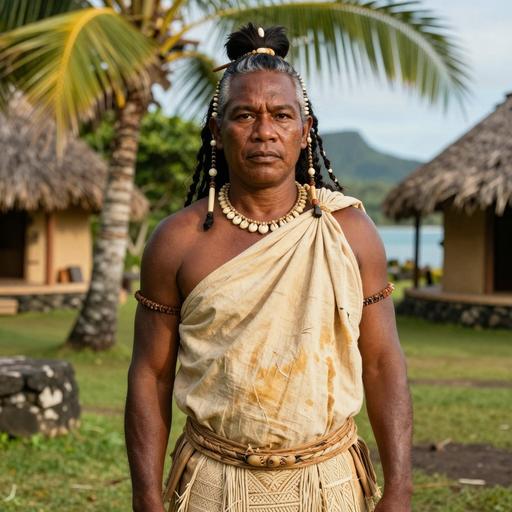
Vanuatu, a collection of islands located in the South Pacific, was a region influenced by the Austronesian culture around 2,400 years ago. The Austronesian expansion, which began thousands of years prior, contributed significantly to the cultural and linguistic landscape of Vanuatu during this period. This era is characterized by complex social structures, sophisticated seafaring skills, and the integration of agrarian practices that shaped the day-to-day lives of its inhabitants.
Geographical Context
Vanuatu, part of the Melanesian region, consists of approximately 80 islands, which are predominantly volcanic. These islands provided a diverse range of microenvironments, from fertile highlands to coastal lagoons, supporting a variety of ecosystems and resources for the Austronesian settlers. This geographical diversity influenced settlement patterns, subsistence strategies, and social structures.
Austronesian Influence
Austronesians are renowned for their navigation skills and maritime technology. Around 2,400 years ago, they had expanded across the Pacific, reaching as far as Vanuatu. Their migration brought advancements in boat-building and navigation, allowing them to connect and trade with other island communities. This seafaring culture facilitated not only trade but also cultural and technological exchanges across vast distances.
Language and Society
The arrival of Austronesians introduced the Proto-Oceanic language, which is the ancestor of many languages spoken in the Pacific today. This period saw a linguistic diversification as populations settled and adapted to new environments, leading to the development of distinct but related languages across the islands.
Societal structures were typically organized around extended family units and kinship groups. Leadership roles were often hereditary, but there were avenues for individuals to gain status through achievements in warfare, trade, or through the accumulation of wealth and resources. Social cohesion was maintained through cultural practices, rituals, and inter-village alliances.
Subsistence and Economy
The economy was primarily agrarian, with a heavy reliance on horticulture. The cultivation of staple crops such as taro, yam, banana, and breadfruit was essential. The introduction of pig husbandry contributed to both dietary needs and social status, with pigs often being used in ceremonial exchanges and feasting.
Fishing and the harvesting of marine resources played a critical role due to the islands’ proximity to abundant marine environments. The use of outrigger canoes, another Austronesian contribution, enabled efficient fishing and transportation between islands. These practices provided both sustenance and trade opportunities.
Material Culture and Technology
The material culture of this era exhibited a blend of innovation and adaptation. Pottery, typically decorated with intricate patterns, was a significant craft, though less emphasized in regions compared to earlier Lapita pottery traditions. Stone tools remained in use for agricultural and domestic tasks. Evidence of complex weaving and basketry also points to advanced textile crafts.
Architecture and Settlement Patterns
Villages were often situated near arable land and freshwater sources. The architectural style included communal structures and family dwellings, usually constructed from locally available materials such as wood, bamboo, and thatch. Settlements were organized to support communal living, with spaces designated for social and ceremonial purposes.
Cultural and Religious Practices
Religious and spiritual beliefs were deeply intertwined with daily life. This era likely saw the worship of ancestral spirits and nature deities, with rituals and ceremonies designed to appease these entities and ensure community well-being. Such practices would have included music, dance, and the carving of totems or spirit figures.
Conclusion
The Vanuatu of 2,400 years ago was a nexus of cultural evolution and adaptation, driven by Austronesian influence. This period laid the groundwork for many enduring cultural traits and practices that would continue to evolve with the island's history. The intricate balance between seafaring prowess, agricultural innovation, and social organization helped these communities thrive in a complex and interconnected Pacific environment.