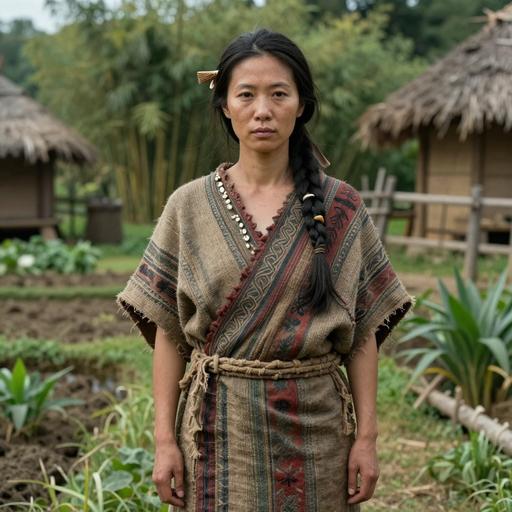
The Jomon period, spanning from approximately 14,000 BCE to 300 BCE, was a time of significant cultural development in prehistoric Japan. The Nagabaka site, dating to around 800 BCE, falls within the later stages of the Jomon era, specifically around 2800 Before Present (BP). This period is characterized by advanced pottery, sedentary lifestyles, and a rich cultural tapestry that warrants a detailed exploration.
Nagabaka 2800 BP - Context
Geography and Environment
The Nagabaka site is located on the island of Honshu, Japan, an area known for its varied and rich ecosystems. During this time, Japan experienced a relatively stable climate after the Jomon transgression—a period of rising sea levels following the last Ice Age. This era's temperate climate fostered dense forests and abundant marine life, contributing to the Jomon people’s subsistence strategies.
Society and Lifestyle
The Jomon people were predominantly hunter-gatherers, with a lifestyle gradually transitioning to one with increased elements of sedentism due to abundant natural resources. By 800 BCE, semi-permanent and permanent settlements were common. The Nagabaka community would have lived in pit-dwellings (tateana jukyo), which were partially underground structures that provided insulation against the elements. Villages might consist of these dwellings arranged in circular patterns, possibly indicating social structures or stratification.
Economy and Diet
The economy of the Jomon people was based on a blend of hunting, gathering, and fishing. The Nagabaka people would have exploited the rich forestry for nuts (such as acorns and chestnuts), fruits, and game like deer and boar. The coastal proximity provided ample opportunities for fishing, with shellfish and seaweed being significant dietary components. Evidence of early cultivation practices, such as the planting of taro or other root crops, suggests an incipient form of horticulture.
Cultural Practices
Pottery
One of the most distinguishable aspects of Jomon culture is its pottery, renowned for cord-marking, which gives the era its name (\Jomon" translates to "cord-marked"). By 800 BCE, Jomon pottery from Nagabaka likely featured intricate designs and sophisticated shapes, reflecting technological advances and aesthetic values. These pots were not merely utilitarian but also held a ceremonial significance, often used in rituals or as burial offerings.
Art and Tools
The Nagabaka Jomon people crafted various tools and artifacts, from stone and bone tools for daily subsistence activities to ornaments such as beads and pendants. These items indicate both practical skills and artistic endeavors, with many objects showcasing symbolic and possibly religious motifs. Dogu, clay figurines believed to have ritualistic purposes, were prevalent, embodying various stylized human forms and potentially serving roles in fertility or shamanistic rites.
Religion and Spirituality
Jomon spirituality was likely animistic, with a deep reverence for nature. The people of Nagabaka may have engaged in rituals tied to natural cycles and phenomena, relying on shamans or spiritual leaders to mediate between the physical and spiritual realms. Sites often include stone circles or alignments that suggest ceremonial activities, pointing to a complex belief system.
Interaction and Exchange
Despite Japan’s insular geography, there were instances of interaction between different Jomon communities and even with cultures from mainland Asia. Exchange of goods such as obsidian, which traveled great distances, indicates a network of trade and cultural exchange.
Legacy
The Jomon culture, including the Nagabaka community of 800 BCE, left an enduring legacy in Japanese prehistory, influencing subsequent cultures such as the Yayoi. The era’s focus on communal living, respect for nature, and artistic expression set the foundation for many cultural attributes seen in later Japanese history.
In conclusion, the Nagabaka site of 800 BCE offers a snapshot of Jomon life that is characterized by complex societal structures, advanced craftsmanship, and rich spiritual life. This community’s legacy is preserved in the archaeological record, offering valuable insights into one of the myriad cultures that have shaped Japan’s historical and cultural landscape."