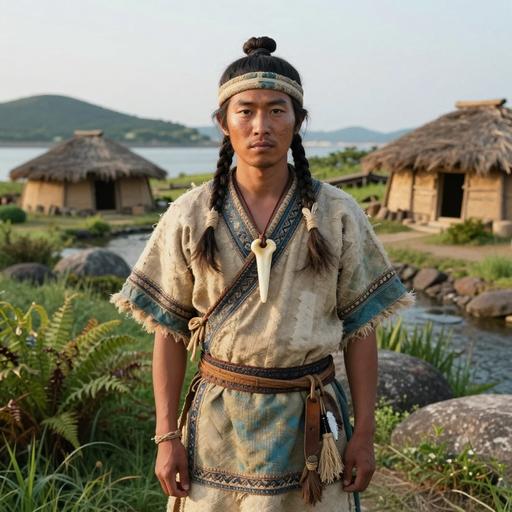
The Yondaedo Culture is a historical and archaeological term used to describe a cultural period in Korea that occurred during the late Iron Age, roughly spanning from 300 to 100 BCE. This era played a crucial role in the development of early Korean societies and is often examined within the broader context of East Asian history.
Geographical Context
The Yondaedo Culture primarily developed on the Korean Peninsula, an area characterized by its mountainous terrain and extensive coastlines. This period saw interactions between communities in what is today modern-day North and South Korea, influencing both local and regional cultural developments.
Political Structure
During the Yondaedo period, Korea was not yet unified as a single nation. Instead, the peninsula was divided among several tribal states or chiefdoms. Each of these communities had its own leadership structures, which were often based on kinship ties and warrior elites. These polities frequently engaged in both conflict and cooperation with one another.
Economic Activities
The Yondaedo Culture witnessed significant advancements in agriculture and metallurgy. The cultivation of rice, millet, and other crops became more efficient, supporting population growth and urbanization. This era also saw improvements in ironworking techniques, with iron tools and weapons becoming increasingly prevalent. These advancements facilitated not only agricultural productivity but also craft specialization and trade.
Technological and Material Culture
Technological innovations during this period were not limited to metallurgy; pottery and ceramics also saw significant development. The creation of more sophisticated kiln technologies allowed for the production of higher-quality pottery items, often used in both domestic settings and burial rites. Artisans in this period began to produce more elaborate items, including decorated pottery, which played important roles in social and ritual contexts.
Social Organization and Religion
The social fabric of the Yondaedo Culture was complex, with a stratified society that included a ruling class of elites, typically warriors or chieftains, as well as farmers, artisans, and possibly slaves. Social rank often influenced one’s role and status within the community, and burial practices from this era suggest a significant emphasis on hierarchical structures.
Religion during the Yondaedo period was likely a mix of shamanistic practices and ancestral worship. Ritual sites and grave goods found in archaeological excavations indicate that spiritual practices were integral to society, with a focus on appeasing spirits and honoring ancestors through offerings and ceremonies.
Artistic and Intellectual Developments
Art forms in this era included intricate bronzework and pottery, as well as a burgeoning interest in jade and other ornamental stones. The Korean people in this period were beginning to form distinct artistic styles that would set the foundation for later cultural developments. Although there is limited evidence concerning literary accomplishments, the era likely involved various oral traditions that contributed to the identity and cohesion of different groups.
Interaction with Neighboring Cultures
Korea's Yondaedo period was influenced by significant interactions with neighboring cultures, particularly those of China and Japan. The exchange of goods, ideas, and technologies was facilitated through trade networks and occasional conflict. Chinese influence is evident in some of the technological advancements and cultural exchanges, as this period aligns with China's Eastern Zhou Dynasty, a time when Chinese culture was spreading across East Asia.
End of the Yondaedo Culture
The transition from the Yondaedo Culture to subsequent historical periods was marked by the emergence of more centralized political structures, laying the groundwork for the formation of the Three Kingdoms of Korea (Goguryeo, Baekje, and Silla) in the early centuries CE. This shift was driven by continued advancements in agriculture, warfare, and statecraft, which gradually unified and strengthened the various polities on the peninsula.
In conclusion, the Yondaedo Culture represents a critical period in Korean history that laid much of the groundwork for later developments in Korean society, technology, and culture. The era’s contributions to agriculture, metallurgy, social structure, and interregional exchange were instrumental in shaping the trajectory of Korean history and its integration into the broader context of East Asian civilizations.