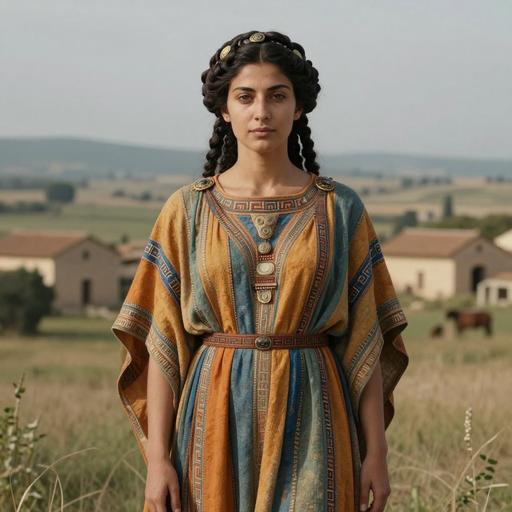
Tarquinia in central Italy during the Iron Age is closely associated with Etruscan cultural development. The Monterozzi area, in particular, is important for understanding Etruscan society through its archaeological record of settlements and cemeteries.
Region & Environment
Central Italy around Tarquinia includes coastal and inland landscapes that facilitated agriculture and supported movement by land and sea. The region’s access to Mediterranean routes helped integrate Etruscan communities into broader exchange networks.
Historical Context
From roughly 800 to 500 BCE, Etruscan societies in central Italy formed enduring regional patterns within the wider Mediterranean Iron Age. Over these centuries, cultural change is visible in evolving artifact styles and in increasing complexity of social and ritual behaviors, especially in mortuary contexts.
Populations & Lifeways
Etruscan populations lived in organized communities with craft specialization and shared participation in public and ritual activities. Daily life likely involved agriculture, animal husbandry, and artisan production, while elite and non-elite roles can sometimes be inferred through differences in funerary treatment and the range of grave goods.
Archaeology & Material Culture
The archaeological record at Tarquinia is strongly shaped by cemeteries and their associated grave goods. Finds commonly include ceramics and other artifacts whose styles help define local phases, alongside items that may point to long-distance contacts. Evidence for craft production—such as work in ceramics and metal objects—supports the picture of specialized manufacturing and consumption.
Culture & Society
Etruscan culture expressed social identity through burial practices and the display of status in funerary contexts. Cemetery organization and the variety of objects placed with the dead can indicate differences in wealth, role, and community affiliation. As in many Iron Age societies, these practices also served to maintain memory and social cohesion.
Legacy & Transition
The Tarquinia Monterozzi Iron Age record supports understanding of how Etruscan traditions developed before later Roman expansion. Over time, political and cultural transformations in central Italy altered how Etruscan communities were integrated into emerging Roman frameworks, but Etruscan material legacies remained influential in art and ritual expressions.