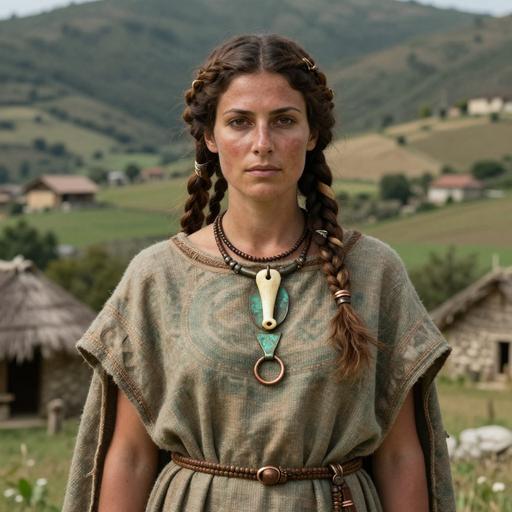
Region & Environment
Central Italy offers fertile zones and access routes that supported sustained settlement during the Bronze Age. Communities would have balanced cultivation with pasture and the management of local resources. Variations in terrain and soil quality encouraged dispersed farming settlements alongside more focal activity areas.
Historical Context
From roughly the 3rd to the early 2nd millennium down toward the later 2nd millennium BCE (as represented by the provided 2200–1000 BCE span), central Italy experienced broad cultural and economic transformations within the Bronze Age. The emergence and persistence of recognizable archaeological “cultures” reflects shared craft practices and interaction across regions, rather than a single uniform political system.
Populations & Lifeways
Populations associated with Pian Sultano likely lived in settlements organized around family-based farming and periodic craft production. Lifeways were anchored in agricultural cycles, with households participating in food processing and the management of stored goods. Metalworking and other skilled activities were likely carried out within community networks that obtained raw materials locally or through exchange.
Archaeology & Material Culture
Bronze Age cultural horizons like Pian Sultano are commonly identified through patterned assemblages, especially ceramics and metal artifacts, along with settlement and burial evidence where available. Artifacts such as pottery forms and decorative styles, along with metal objects (when present), provide the main basis for distinguishing chronological and regional phases. Evidence for storage, daily domestic activity, and craft work helps illustrate how household economies functioned.
Culture & Society
Bronze Age societies in central Italy used durable goods and shared material conventions to signal community identity. Craft traditions—especially in pottery and metal—suggest coordinated knowledge and transmission of techniques. Social organization likely combined household labor with specialized tasks, and community links would have been important for obtaining materials and distributing finished items.
Legacy & Transition
The legacy of Pian Sultano lies in how Bronze Age settlement and craft practices shaped the archaeological landscape that later Iron Age communities inherited. As the Bronze Age drew to a close within the wider period leading toward the Iron Age, changing artifact styles and evolving settlement patterns reflect transformations in production, exchange, and social organization rather than an abrupt disappearance of earlier ways of life.