Menu
Currency
Main
Store
Blog

Loading Report

Preparing your ancestry journey

Connecting to ancient matches...

Preparing your report

Skip to main content
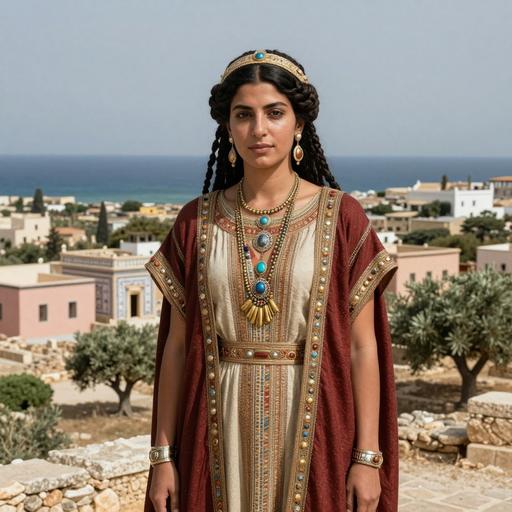
Portrait reconstruction of A woman buried in Tunisia in the Iron Age era
Ancient Individual

A woman buried in Tunisia in the Iron Age era

A woman buried in Tunisia during the The Punic Culture in Tunisia

A fragment of the ancient world, preserved across millennia in strands of DNA.

R11790
761 BCE - 405 BCE
Female
Tunisia
Scroll to begin
Chapter I

Identity

The biological and cultural markers that define this ancient individual

Sample ID

R11790

Date Range

761 BCE - 405 BCE

Cultural Period

The Punic Culture in Tunisia

Biological Sex

Female

mtDNA Haplogroup

Not available

Y-DNA Haplogroup

N/A (Female)

Social Role

Farmer (AI estimate, era-typical)

Chapter II

Place

Where this individual was discovered

Country Tunisia
Locality Kerkouane
Coordinates 36.9615, 11.0804
Chapter III

Time

When this individual lived in the broader context of human history

R11790 761 BCE - 405 BCE
Chapter IV

Story

The narrative of this ancient life

The Punic culture in Tunisia, primarily identified with the Phoenician and later Carthaginian civilization, represents a significant period in ancient North African history. This era is marked by a blend of indigenous Berber elements with Phoenician influence, producing a unique cultural and historical tapestry.

Origins and Historical Context

The Punic culture in Tunisia originates from the Phoenicians, a seafaring people hailing from the Eastern Mediterranean region (modern-day Lebanon). Around 814 BC, they established the city of Carthage on the coast of what is now Tunisia, which became the heart of Punic civilization. Over time, Carthage grew from a small trading post into a dominant maritime and commercial empire in the Western Mediterranean.

Language and Literature

The people of Carthage used the Punic language, a dialect of Phoenician, which was written using the Phoenician script. While much of the original literature has been lost, inscriptions and references in other historical records provide insight into their language and culture. Punic eventually evolved into Neo-Punic, maintaining its presence even after Roman conquest.

Religion and Mythology

Religion was a central aspect of Punic culture, characterized by a pantheon of gods and goddesses, many inherited from the Phoenician tradition. The chief deity was Baal Hammon, often associated with agriculture and weather, and Tanit, a mother goddess symbolizing fertility and the moon. Religious practices included complex rituals, and Carthage is infamous for the alleged practice of child sacrifices to appease their deities, though the scale and nature of this practice are debated among historians.

Urban Life and Architecture

Carthaginian cities like Carthage itself were renowned for their urban planning and architectural achievements. The city featured impressive fortifications, harbors, and religious structures. The Tophet, an open-air sanctuary, was a distinctive architectural and religious feature, serving as a burial ground for ritual offerings.

Economy and Trade

The Punic economy was primarily driven by trade across the Mediterranean, facilitated by Carthage's powerful navy. They traded in goods such as silver, tin, gold, ivory, textiles, and wine, establishing trade routes as far as the Iberian Peninsula and even Britain. Carthage’s position allowed it to become a major hub for the exchange of goods and cultural influences.

Society and Governance

The Carthaginian society was hierarchical, with a privileged aristocracy. The government was a republic with two chief magistrates called sufetes, a senate, and popular assemblies. Military leaders frequently played essential roles in governance due to the constant threats from rival powers, like the Greeks and Romans.

Conflict and Warfare

Carthage is best known for its conflicts with Rome, encapsulated in the Punic Wars. These wars were a series of three devastating conflicts fought between Carthage and the Roman Republic from 264 to 146 BC. Hannibal Barca, one of Carthage's most famous leaders, led his army across the Alps in a daring invasion of Italy during the Second Punic War.

Cultural Legacy

Despite its eventual destruction by Rome in 146 BC, Carthage left an indelible mark on the region. The Punic influence continued to be felt, particularly in areas such as language, agriculture, and urban design, long after the society itself was absorbed by the Roman Empire. Roman Africa retained many Punic institutions and customs, blending into a Romano-African culture.

Archaeological Insights

Tunisia is rich in archaeological sites from the Punic era, such as the ruins of Carthage, Kerkouane, and various tophets, which provide crucial insights into this civilization. Excavations reveal their advanced seafaring technology, urban infrastructure, and artistic endeavors, including intricate sculpture and pottery.

In summary, the Punic culture in Tunisia is a vibrant chapter of history characterized by trade, military prowess, and rich traditions that resounded far beyond their Mediterranean origins. They stand as a testament to the enduring legacy of cultural fusion and resilience amidst external pressures.

Context

Related Samples

This individual exists within a broader network of ancient samples. No ancient genome stands alone.

Sample ID Culture/Period Date Location Action
R11759 The Punic Culture in Tunisia 763 BCE Kerkouane, Tunisia View
R11749 The Punic Culture in Tunisia 761 BCE Kerkouane, Tunisia View
R11755 The Punic Culture in Tunisia 761 BCE Kerkouane, Tunisia View
R11776 The Punic Culture in Tunisia 761 BCE Kerkouane, Tunisia View
R11778 The Punic Culture in Tunisia 761 BCE Kerkouane, Tunisia View
R11790 The Punic Culture in Tunisia 761 BCE Kerkouane, Tunisia View
R11780 The Punic Culture in Tunisia 750 BCE Kerkouane, Tunisia View
R11791 The Punic Culture in Tunisia 744 BCE Kerkouane, Tunisia View
R11746 The Punic Culture in Tunisia 735 BCE Kerkouane, Tunisia View
R11753 The Punic Culture in Tunisia 658 BCE Kerkouane, Tunisia View
R10337 Iron Age Tarquinia Monterozzi, Italy 152 BCE Tarquinia Monterozzi, Italy View
R10338 Iron Age Tarquinia Monterozzi, Italy 759 BCE Tarquinia Monterozzi, Italy View
R10339 Iron Age Tarquinia Monterozzi, Italy 162 BCE Tarquinia Monterozzi, Italy View
R10340 Iron Age Tarquinia Monterozzi, Italy 759 BCE Tarquinia Monterozzi, Italy View
R10341 Iron Age Tarquinia Monterozzi, Italy 162 BCE Tarquinia Monterozzi, Italy View
R10342 Iron Age Tarquinia Monterozzi, Italy 159 BCE Tarquinia Monterozzi, Italy View
R10343 Iron Age Tarquinia Monterozzi, Italy 759 BCE Tarquinia Monterozzi, Italy View
R10344 Iron Age Tarquinia Monterozzi, Italy 761 BCE Tarquinia Monterozzi, Italy View
R10359 Iron Age Tarquinia Monterozzi, Italy 368 BCE Tarquinia Monterozzi, Italy View
R10361 Iron Age Tarquinia Monterozzi, Italy 759 BCE Tarquinia Monterozzi, Italy View
R10363 Iron Age Tarquinia Monterozzi, Italy 391 BCE Tarquinia Monterozzi, Italy View
R11102 Bronze Age Pian Sultano, Italy 1925 BCE Pian Sultano, Italy View
R11104 Bronze Age Pian Sultano, Italy 1923 BCE Pian Sultano, Italy View
R11105 Bronze Age Pian Sultano, Italy 1736 BCE Pian Sultano, Italy View
R11107 Bronze Age Pian Sultano, Italy 1923 BCE Pian Sultano, Italy View
Sample ID Culture/Period Date Location Action
R11759 The Punic Culture in Tunisia 763 BCE Kerkouane, Tunisia View
R11749 The Punic Culture in Tunisia 761 BCE Kerkouane, Tunisia View
R11755 The Punic Culture in Tunisia 761 BCE Kerkouane, Tunisia View
R11776 The Punic Culture in Tunisia 761 BCE Kerkouane, Tunisia View
R11778 The Punic Culture in Tunisia 761 BCE Kerkouane, Tunisia View
R11790 The Punic Culture in Tunisia 761 BCE Kerkouane, Tunisia View
R11780 The Punic Culture in Tunisia 750 BCE Kerkouane, Tunisia View
R11791 The Punic Culture in Tunisia 744 BCE Kerkouane, Tunisia View
R11746 The Punic Culture in Tunisia 735 BCE Kerkouane, Tunisia View
R11753 The Punic Culture in Tunisia 658 BCE Kerkouane, Tunisia View
I24029 780 BCE Kerkouene (Nabeul, Dar Allosh, Ezzahra), Tunisia View
I24032 449 BCE Kerkouene (Nabeul, Dar Allosh, Ezzahra), Tunisia View
I24047 780 BCE Kerkouene (Nabeul, Dar Allosh, Ezzahra), Tunisia View
I24187 780 BCE Kerkouene (Nabeul, Dar Allosh, Ezzahra), Tunisia View
I24189 780 BCE Kerkouene (Nabeul, Dar Allosh, Ezzahra), Tunisia View
I24192 780 BCE Kerkouene (Nabeul, Dar Allosh, Ezzahra), Tunisia View
I24193 744 BCE Kerkouene (Nabeul, Dar Allosh, Ezzahra), Tunisia View
I24194 724 BCE Kerkouene (Nabeul, Dar Allosh, Ezzahra), Tunisia View
I24196 780 BCE Kerkouene (Nabeul, Dar Allosh, Ezzahra), Tunisia View
I24199 516 BCE Kerkouene (Nabeul, Dar Allosh, Ezzahra), Tunisia View
I24200 569 BCE Kerkouene (Nabeul, Dar Allosh, Ezzahra), Tunisia View
I24208 555 BCE Kerkouene (Nabeul, Dar Allosh, Ezzahra), Tunisia View
I24213 505 BCE Kerkouene (Nabeul, Dar Allosh, Ezzahra), Tunisia View
I24493 780 BCE Kerkouene (Nabeul, Dar Allosh, Ezzahra), Tunisia View
I24494 694 BCE Kerkouene (Nabeul, Dar Allosh, Ezzahra), Tunisia View
I28502 370 BCE Carthage (Tunis), Tunisia View
I28503 437 BCE Carthage (Tunis), Tunisia View
I28504 437 BCE Carthage (Tunis), Tunisia View
I28627 474 BCE Carthage (Tunis), Tunisia View
I35285 469 BCE Carthage (Tunis), Tunisia View
I35286 469 BCE Carthage (Tunis), Tunisia View
I35287 469 BCE Carthage (Tunis), Tunisia View
I35325 450 BCE Carthage (Tunis), Tunisia View
I35327 376 BCE Carthage (Tunis), Tunisia View
I35328 469 BCE Carthage (Tunis), Tunisia View
I35329 469 BCE Carthage (Tunis), Tunisia View
I35336 442 BCE Carthage (Tunis), Tunisia View
I35338 469 BCE Carthage (Tunis), Tunisia View
I35339 469 BCE Carthage (Tunis), Tunisia View
I35342 469 BCE Carthage (Tunis), Tunisia View
I35344 469 BCE Carthage (Tunis), Tunisia View
I35345 469 BCE Carthage (Tunis), Tunisia View
Use code for 25% off Expires Jul 26