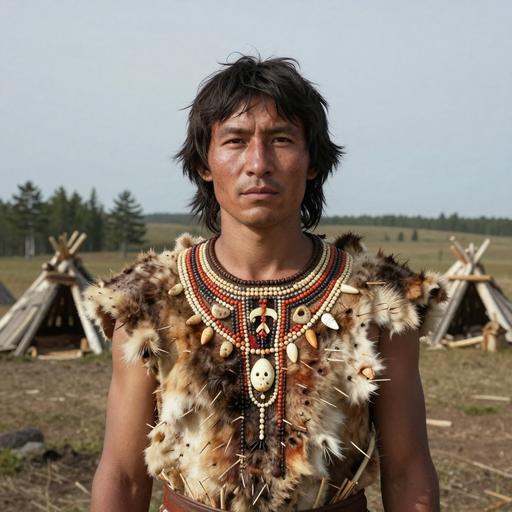
The Sunghir site, located near Vladimir, Russia, is one of the most significant and well-preserved archaeological sites from the European Upper Paleolithic era. This site provides invaluable insights into the lives, culture, and societal structures of Upper Paleolithic hunter-gatherers, approximately dating to between 34,000 and 28,000 years ago.
Overview of the Upper Paleolithic Era
The Upper Paleolithic period, spanning approximately from 50,000 to 10,000 years ago, marks the final phase of the Stone Age. It was a time of significant cultural, technological, and social developments among Homo sapiens. This era saw the proliferation of sophisticated stone tools, the development of art and symbolic behavior, and the establishment of complex social structures.
Location and Discovery
Sunghir is situated about 200 kilometers northeast of Moscow, on the western edge of what is now known as the Russian Plain. Discovered in the mid-20th century, the site has been extensively excavated, resulting in remarkable findings that have made it one of the most informative sites for understanding the European Upper Paleolithic.
Archaeological Finds
The site is renowned for its rich assemblage of archaeological materials, which include:
Burial Sites: Several burials were uncovered, the most notable being those of Sunghir 1, Sunghir 2, and Sunghir 3. Sunghir 1, an adult male, was found interred with an extensive array of grave goods, including thousands of ivory beads, mammoth ivory bracelets, a lance made from straightened mammoth tusk, and other adornments. The presence of these elaborate grave goods suggests the existence of ritual practices and social stratification.
Artistic Elements: The discovery of personal ornaments, such as beads and pendants made from animal teeth and ivory, as well as ochre, indicates the inhabitants' aesthetic sensibilities and possibly symbolic or ceremonial functions.
Tools and Technology: Lithic analysis from the site indicates advanced stone tool technology, including blades, scrapers, and burins, reflecting the sophistication in tool-making techniques and the ingenious adaptations required for survival in the harsh climates of the period.
Cultural and Social Implications
The lavishness and intricacy of the grave goods at Sunghir suggest a complex society with developed cultural practices. The differential treatment in burials indicates social differentiation, possibly pointing to leadership roles or hierarchical structures. This challenges earlier notions that prehistoric societies were uniformly egalitarian.
The presence of symbolic items, such as jewelry and ochre, denotes a developed sense of identity and possibly spiritual beliefs. The site's artifacts reflect a society engaging in long-distance trade or cultural exchange, as some materials were not locally sourced.
Physical Anthropology
The human remains at Sunghir have provided significant data for physical anthropologists. The skeletal remains show signs of robust health despite the harsh environment, with evidence pointing to a diverse diet that included a variety of plant and animal resources. Detailed study of these remains also contributes to understanding the genetic and evolutionary history of European populations.
Environmental Context
The Sunghir site was occupied during a period of fluctuating climate conditions associated with the Pleistocene epoch. The ability of these hunter-gatherer groups to adapt to such changing environments demonstrates their resilience and resourcefulness. Faunal remains found at the site include large Ice Age mammals such as mammoths, reindeer, and horses, which were crucial both as food sources and materials for tool and ornament production.
Conclusion
Overall, the Sunghir site encompasses a remarkable archaeological record that offers a window into the lives of Upper Paleolithic humans. It reveals a society rich in culture, art, and social complexity. The findings from Sunghir continue to provoke questions and inspire research about the nature of human societies, their development, and their intricate web of social relations during the Upper Paleolithic era.