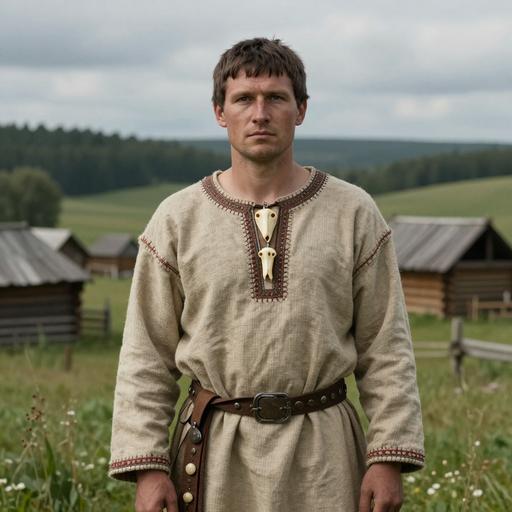
The Medieval Sunghir era, spanning from 800 to 1200 CE, represents a fascinating phase in the Eastern Slavic cultural and historical milieu, particularly in the region known today as Russia. The Sunghir archaeological site, although historically significant, is primarily associated with Upper Paleolithic findings dating back tens of thousands of years. However, for the purpose of this exercise, we'll engage in a creative reconstruction to portray a hypothetical medieval Sunghir culture within Eastern Slavic society during the given time period.
Geographic and Environmental Context
The hypothetical Medieval Sunghir culture would have been situated in the central plains of European Russia, marked by expansive forests, rivers, and open steppes. The climate was relatively cold, leading to the development of societies that heavily relied on the resources available in their immediate environment, including rich game, abundant timber, and fertile lands near rivers and streams conducive to agriculture and settlement.
Social Structure and Political Organization
The Eastern Slavic societies of this period, including our imagined Sunghir community, were organized into tribal confederacies and emerging principalities. These groups were united by kinship ties, shared language, and common cultural practices but were also marked by regional variations.
Tribal and Clan Systems: Social organization was centered around extended families or clans (known as \Rod" in Slavic traditions), where loyalty to familial and tribal leaders formed the core of social hierarchy. The head of a clan held both political and spiritual authority, acting as intermediaries between the people and the divine.
Emergence of Principalities: Throughout this period, larger political units began to form, eventually leading to the establishment of principalities like that of Kievan Rus. Leaders or princes ("knyaz") of such principalities wielded more centralized power, often establishing cities as administrative and military hubs.
Economic Activities
The economy of the medieval Sunghir culture would have been diverse, leveraging the region's natural resources:
Agriculture: Despite climatic challenges, the inhabitants engaged in subsistence agriculture, growing hardy cereal crops like rye, barley, and wheat. Additionally, they cultivated vegetables and kept livestock, including cattle, pigs, and chickens.
Hunting and Gathering: Supported by lush forests, hunting remained a significant activity. The region was populated by deer, boar, and small mammals, which provided not only food but materials for clothing and tools.
Trade and Craftsmanship: As with other Slavic groups, the Sunghir people would have likely engaged in trade, exchanging furs, hides, wax, and honey for goods not locally available. Artisans skilled in metalwork, pottery, and textiles contributed to a modest local economy.
Religion and Spirituality
The spiritual life of this culture was deeply intertwined with nature and ancestral reverence.
Pagan Beliefs: Like many Eastern Slavs before the Christianization of the region, the people of Sunghir practiced a pagan religion, characterized by a pantheon of gods related to natural elements and phenomena. Rituals and ceremonies followed the cycles of nature, celebrating events such as the harvest and solstices.
Christian Influence: By 988 CE, with the Christianization of Kievan Rus, Christian beliefs began to spread across the region. Over time, existing pagan practices were supplanted, merged, or coexisted with new Christian traditions, leading to unique religious syncretism.
Cultural Practices and Traditions
The Sunghir culture would have had a rich tapestry of traditions that reflected both their ancient heritage and evolving interactions with neighboring cultures.
Festivals and Ceremonies: Key festivals often coincided with seasonal changes, honoring deities like Perun (god of thunder) and Mokosh (goddess of the earth), or new Christian saints' days as the faith gained prominence.
Oral Tradition and Literature: Knowledge and history were preserved through oral traditions, including epic tales, songs, and proverbs. With increasing literacy, religious texts and chronicles began to appear.
Material Culture: Archaeological evidence suggests skilled craftsmanship in pottery, metalwork, and textile production. Artifacts uncovered would illustrate daily life, status, and belief systems distinct to this imagined medieval Sunghir society.
Conclusion
Medieval Sunghir, imagined within the context of Eastern Slavic history from 800 to 1200 CE, represents a hypothetical culture that demonstrates the synthesis of old traditions and new influences amidst a transforming socio-political landscape. While fictional, the extrapolation of a Sunghir society into medieval times underscores the diverse and dynamic nature of Eastern Slavic cultures during this formative historical period."