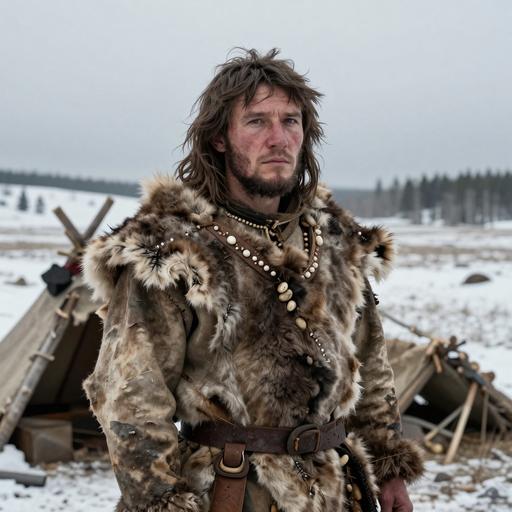
The Sunghir archaeological site, located near the city of Vladimir, Russia, is one of the most significant and well-preserved Upper Paleolithic sites in Europe. This site, which dates back to approximately 34,000 to 30,000 years ago, offers invaluable insights into the life, culture, and practices of early modern humans during the Upper Paleolithic era.
Overview
Sunghir is characterized by its remarkable Paleolithic burials, notable for their richness and depth of information. These burials have provided extensive evidence of the social structure, spiritual beliefs, and material culture of its inhabitants.
Artifacts and Material Culture
The site is renowned for the abundance and diversity of grave goods, which include finely crafted ivory beads, ochre appliqués, delicate bone and stone tools, and carvings that suggest a high level of artistic expression and symbolic thought. The presence of beads and pendants, often made from mammoth ivory or animal teeth, points to the complexity of personal adornment practices and possibly social status indicators.
Burial Practices
The burials at Sunghir are particularly informative. The most famous graves are those of a roughly 40-year-old man and two children, who were buried with extraordinary care and a rich array of grave goods. The adults were interred with thousands of ivory beads sewn onto clothing, suggesting elaborate garments, and numerous mammoth ivory spears, pointing to the importance of hunting in their society. The children’s burials, with similar ornamentation, indicate that complex social roles or status distinctions may have been ascribed from a young age.
Anthropology and Society
The skeletal remains reveal much about the physical anthropology of the Upper Paleolithic people. Analysis shows robust builds, indicative of a physically demanding lifestyle, with traits consistent with adapting to cold climates. The genetic studies on these remains have provided evidence of the population structure and migration patterns of early modern humans in Europe.
Environment and Subsistence
Sunghir existed during a time period characterized by glacial climates, with the surrounding environment being a cold steppe tundra. The presence of fauna such as mammoths, reindeer, and other large mammals in the archaeological record suggests that the Sunghir inhabitants were skilled hunters. The successful adaptation to a harsh environment was likely facilitated by innovations in hunting tools and social cooperation.
Symbolism and Cognitive Development
The detailed craftsmanship of beads and other artifacts, along with ochre usage, reflects symbolic and cognitive complexity. The sophisticated burial customs at Sunghir suggest an advanced understanding of ritual and possibly religious practices, reflecting complex social structures and cultural beliefs.
Conclusion
In summary, the Sunghir site offers a glimpse into the sophisticated and symbolic world of Upper Paleolithic humans in Eastern Europe. It represents a wellspring of knowledge about human life during this time: from social and economic structures to cognitive and symbolic behavior. The meticulous craftsmanship, intricate burial rites, and adaptive strategies uncovered at Sunghir not only enhance our understanding of early modern human communities but also underscore the richness and diversity of human evolution during the Upper Paleolithic era.