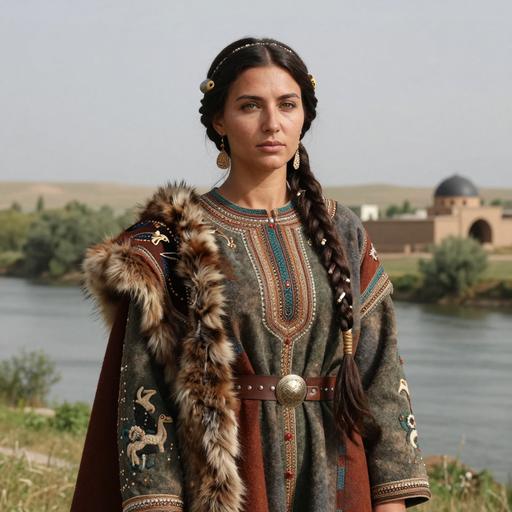
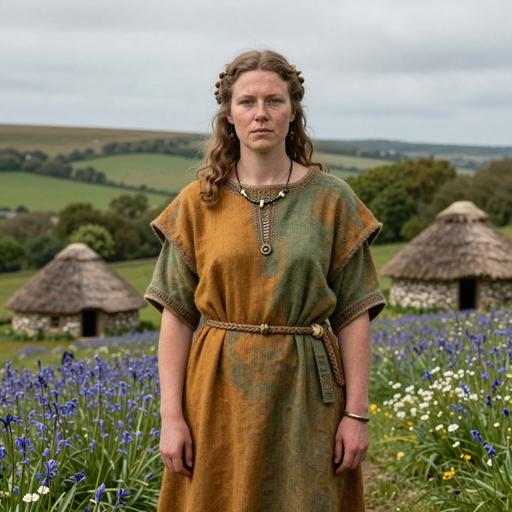
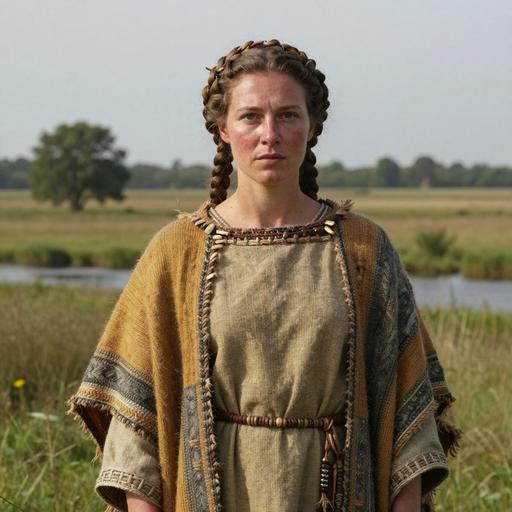
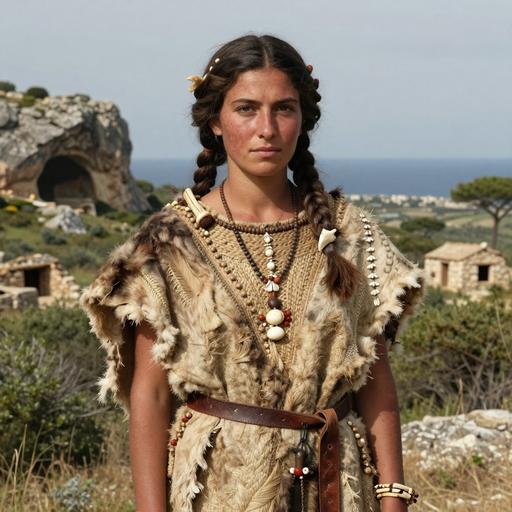
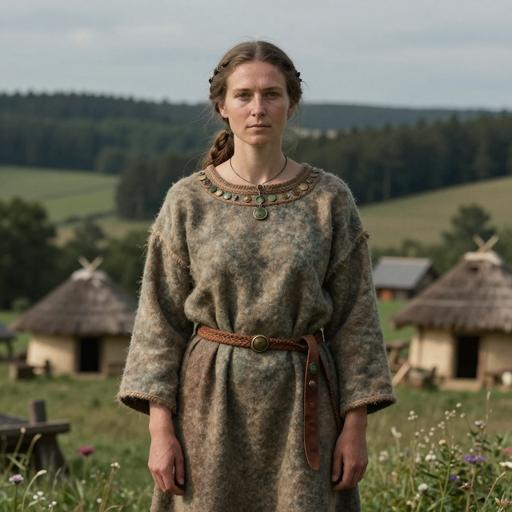
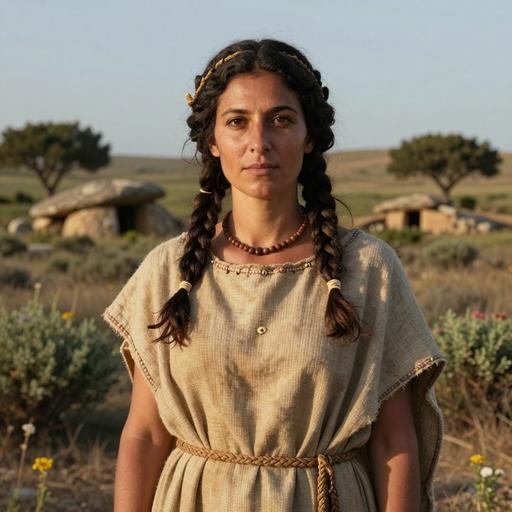
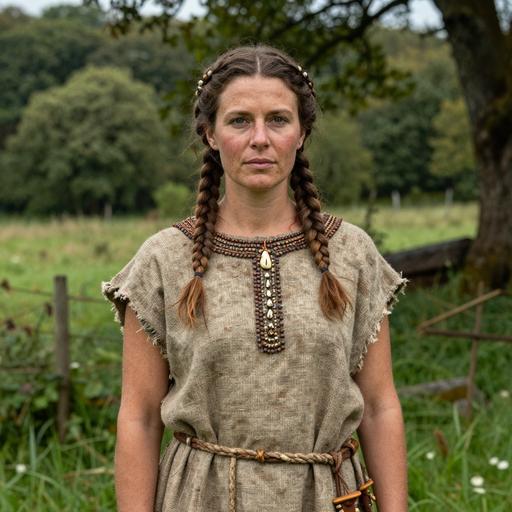
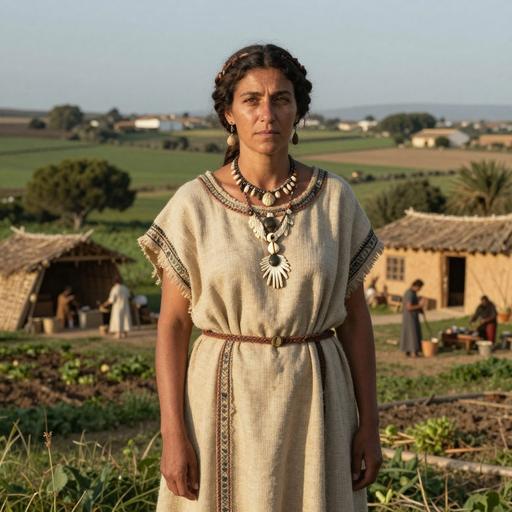
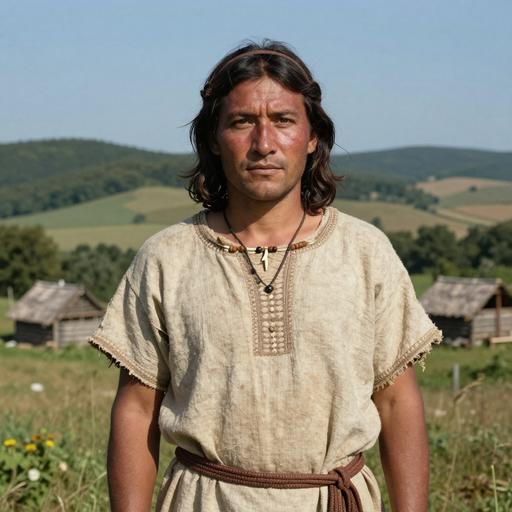
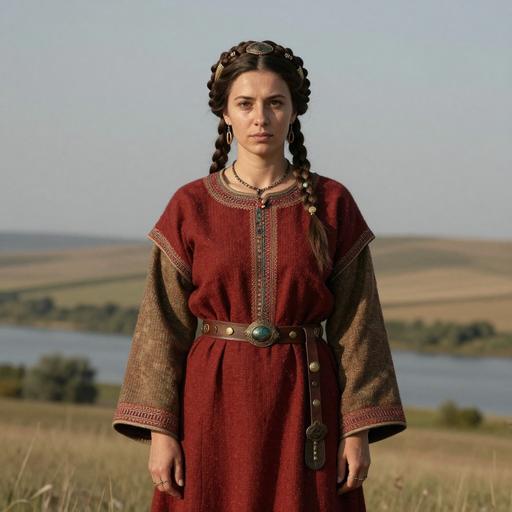
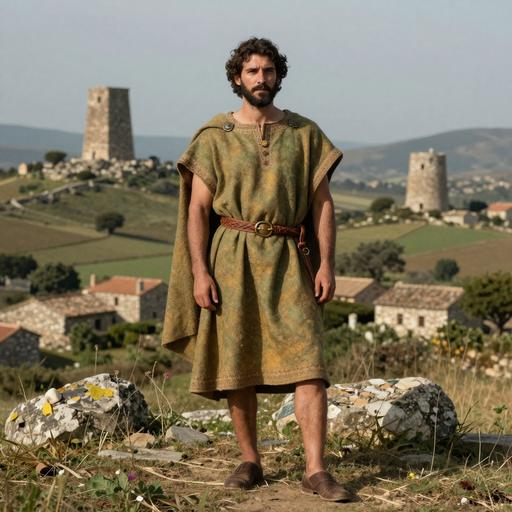
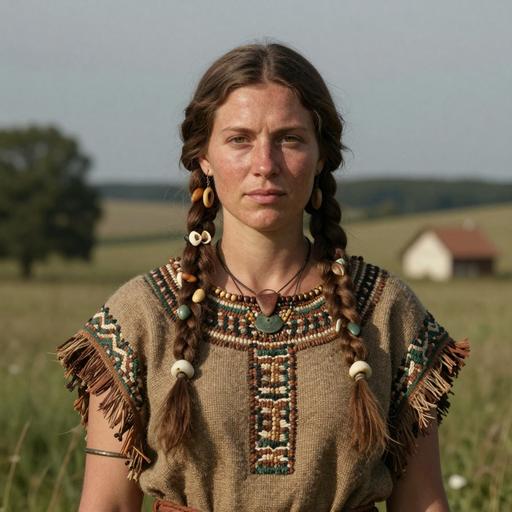
A reference profile for one lineage branch. Shared haplogroups do not establish a family relationship or cultural identity.
Reference profile
Branch background
Historical context for mtDNA lineage branch K1B1A
Origins and Evolution
mtDNA haplogroup K1B1A is a downstream lineage of K1B1, itself a branch of mtDNA haplogroup K (which derives from the U8b'K cluster). The parent K1B1 most likely arose in the Near East / Anatolia during the early Holocene (around ~9 kya) as part of the post-glacial and early Neolithic expansions; K1B1A most likely split from other K1B1 lineages shortly thereafter (estimated ~8 kya). Its phylogenetic position and geographic distribution are consistent with an origin tied to early farming populations in Anatolia and the Near East, followed by dispersal into Europe with Neolithic demic diffusion.
Subclades
K1B1A is defined by a set of private mutations downstream of K1B1. Available modern and ancient sequence data indicate limited internal diversity relative to older haplogroups, which is consistent with a moderate-age clade that experienced localized founder events in some populations. Where more detailed sequencing has been done, researchers have observed additional sub-branches within K1B1A, but these remain relatively rare and geographically patchy in published datasets.
Geographical Distribution
K1B1A shows a Mediterranean–Near Eastern-centered distribution with a spread into parts of Europe and adjacent regions. It is observed at low-to-moderate frequencies in Anatolia and the Levant, present in southern European populations (Iberia, Italy, Greece), and recorded in some western and northern European groups at lower frequency. The lineage is also found among Ashkenazi Jewish communities and in populations of the Caucasus, Iran, and coastal North Africa where Near Eastern gene flow occurred. K1B1A has been identified in ancient DNA: in the dataset referenced here it appears in 31 archaeological samples, consistent with a presence in Neolithic and later contexts across the Mediterranean–Near East region.
Historical and Cultural Significance
The distribution and age of K1B1A strongly link it to the Neolithic agricultural expansions that originated in Anatolia and the Near East and moved into Europe via maritime and continental routes. Associations with early farmer-associated archaeological contexts (for example LBK-descended populations in Central Europe and other Neolithic sites) support a role in the spread of farming. In later periods, K1B1A's presence in Ashkenazi Jewish and other Mediterranean populations reflects historical migrations, local founder effects, and community-specific demographic events during the Bronze Age, Iron Age and medieval periods.
Practical Notes for Genetic Genealogy
Detection of K1B1A in a modern individual's mtDNA suggests maternal ancestry tied, in deep time, to Near Eastern/Anatolian early farmer populations or to populations that later admixed with them.
Low haplotype diversity in some modern communities may indicate founder effects or bottlenecks; matching full mitogenomes and considering private mutations are important for distinguishing recent shared ancestry from deep regional affinity.
Conclusion
K1B1A is a mid-Holocene maternal lineage that reflects the movement of Near Eastern/Anatolian peoples and their genes into surrounding regions during the Neolithic and later historical periods. Its pattern—Mediterranean/Near Eastern focus, presence in early farmer contexts, and occurrence in Jewish and island/isolate populations—makes it informative for studies of Neolithic demography, post-Neolithic migrations, and population-specific founder events.
Key Points
Origins and Evolution
Subclades
Geographical Distribution
Historical and Cultural Significance
Practical Notes for Genetic Genealogy
Reference profile
Tree & Relationships
Phylogenetic context and subclades
Evolution Path
Follow the recorded parent branches toward K1B1A. Dates are estimates and can change as reference data is revised.
The populations where mtDNA haplogroup K1B1A is found include:
Ashkenazi Jewish communities
Anatolian (modern Turkey) populations
European Early Neolithic farmer-descended populations (e.g., LBK descendants in Central Europe)
Southern European populations (Iberia, Italy, Greece)
Western and Northern European populations (British Isles, Scandinavia) at moderate to low frequencies
Caucasus populations (Armenians, Georgians)
North African coastal groups with Near Eastern admixture
Iranian and Levantine populations
Island and isolated Mediterranean populations (e.g., Sardinia and other islands)
Low-frequency occurrences in parts of Central Asia from west–east contacts
Historical context
A branch through time
Estimated formation in a broad historical timeline. Period markers provide context and do not imply a connection with particular cultures.
~10k years ago
Neolithic Revolution
Agriculture begins, settled communities form
~8k years ago
Haplogroup K1B1A
Estimated formation of this mtDNA branch; dates and locations are reference estimates.
This branch
~5k years ago
Bronze Age
Metalworking, writing, and early civilizations
~3k years ago
Iron Age
Iron tools, expanded trade networks
~2.5k years ago
Classical Antiquity
Greek and Roman civilizations flourish
Present
Present Day
Modern era
Reference profile
Archaeological context
Recorded archaeological associations for mtDNA branch K1B1A
Recorded associations
These labels describe archaeological contexts recorded for reference samples linked to K1B1A. An association does not establish that all carriers belonged to a culture or followed a particular migration route.
Germany Bell Beaker Culture, Germany 2500-2000 BCE
K1b1a1Subclade
Sample ID: I6466
Chalcolithic Portugal - Portugal - Lisbon. Verdelha dos Ruivos
Portugal Portugal C 2700-2300 BCE
K1b1a1Subclade
Sample ID: I4951
The Bell Beaker Culture in England - United Kingdom - England. Wiltshire. Netheravon. Flying School
United Kingdom England BellBeaker 2800-1800 BCE
K1b1a1Subclade
Sample ID: I5530
Bell Beaker Culture, Germany - Germany - Weichering
Germany Bell Beaker Culture, Germany 2800-1800 BCE
K1b1a1Subclade
MATERNAL LINEAGE · ANCIENT DNA
Ancient lineage evidence map
Follow parent clades toward this branch and explore where ancient carriers were found.
Loading ancient observations…
Reduced motion is enabled. Use the timeline or Show all to explore at your own pace.
Read observations as a table
Displayed ancient observations by branch, period and date midpoint
Branch
Period
Date range
Sample
Sample ID
Location
Haplogroup
Relationship
Markers are archaeological find locations. A dashed connector is an uncertain, proposed geographic transition between consecutive branches supported by multiple dated observations; it is not an exact travel route, birthplace or proof of direct descent. Parent-clade samples may belong to other descendant branches. Gaps remain where evidence is insufficient. Sample dates differ from haplogroup formation dates.
Grouping by historical period reflects when each ancient individual lived, combined across every branch on this lineage chain; it is not a migration sequence or a personal timeline between periods.
Reference profile
Carrier Distribution Map
Geographic distribution of 69 ancient DNA samples (direct and subclade carriers of K1B1A)
Direct carrier Subclade carrier
Time Period Filter
All Time Periods
Showing all samples
Reference profile
Temporal Distribution
Distribution of carriers across archaeological periods
Reference profile
Geographic Distribution
Counts by recorded sample country. These reflect the available reference selection, not population frequencies.
Reference profile
Country × Era Distribution
Compare recorded sample counts across countries and archaeological periods. Select a populated cell to inspect a sample.
Data
Data & Provenance
Source information and data quality
Last Updated2026-02-16
Confidence Score50/100
CoverageLow
Data Source
Classification, estimated dates and geographic context reflect the recorded reference data and may change as evidence is revised. Sample coverage is uneven; recorded locations and archaeological associations do not establish personal origin or cultural identity.