Menu
mtDNA Haplogroup • Maternal Lineage

K1B1A1

mtDNA Haplogroup K1B1A1

~7,000 years ago
Near East / Anatolia
3 subclades
Scroll to explore
Chapter I

The Story

The journey of mtDNA haplogroup K1B1A1

Origins and Evolution

K1B1A1 is a downstream branch of mtDNA haplogroup K1B1A, which itself is nested within haplogroup K (a descendant of U8). Based on phylogenetic position and available ancient DNA, K1B1A1 most likely coalesced in the Near East / Anatolia during the early Holocene (roughly 6–8 kya). Its emergence is consistent with the demographic expansions associated with the spread of farming from Anatolia into Europe: K1B1A1 appears in early farmer contexts and subsequently in later Mediterranean and European populations. The subclade shows relatively limited internal diversity compared with older lineages in haplogroup K, suggesting a more recent origin and episodes of localized founder effects and drift.

Subclades (if applicable)

At present, K1B1A1 is described as a defined terminal subclade beneath K1B1A in phylogenies used in population genetics and ancient DNA studies. Where deeper substructure has been reported, it is usually limited and often restricted to particular regional or population-specific lineages (for example, lineages concentrated in Ashkenazi communities or island populations). Continued sampling and full mitogenome sequencing occasionally resolve additional derived branches within K1B1A1, but overall the clade shows a pattern of a single Near Eastern origin followed by dispersal and local differentiation.

Geographical Distribution

K1B1A1 is most commonly detected in the Near East and Anatolia and in Mediterranean Europe, with lower frequencies extending into western, northern and parts of eastern Europe. The haplogroup is present in modern Anatolian and Levantine populations, various Southern European populations (Italy, Greece, Iberia), and appears in some Caucasus groups. It is notably seen in Ashkenazi Jewish datasets at low-to-moderate frequency, where founder effects and demographic history have amplified a few maternal lineages. K1B1A1 appears in multiple ancient DNA samples from Neolithic and later archaeological contexts (the database referenced records ~48 aDNA occurrences), supporting continuity from early farmer dispersals through later historical periods.

Historical and Cultural Significance

Because K1B1A1 is tied to the broader K1B1A lineage associated with Near Eastern/Anatolian Neolithic populations, it serves as an informative marker for studying the Neolithic transition in Europe—the movement of agriculturally associated populations into the continent. Its presence in Mediterranean island and coastal populations (including Sardinia and other isolated groups) highlights the role of maritime and coastal dispersal routes in the spread of maternal lineages. In Jewish population genetics, K1B1A1 is one of several mtDNA lineages that reflects mixture and founder events during the formation and later history of Jewish communities, particularly in Europe.

Conclusion

K1B1A1 represents a relatively young, geographically informative mitochondrial lineage with a Near Eastern/Anatolian origin in the early Holocene. Its phylogeographic pattern—presence in Anatolia, the Mediterranean, parts of Europe and in specific founder populations—matches expectations for a lineage involved in Neolithic farmer expansions followed by regional drift and secondary dispersals. Continued mitogenome sequencing and expanded ancient DNA sampling will refine substructure and timings, but current evidence supports a Near Eastern origin ~6–8 kya with subsequent spread into Europe and local amplification in certain populations.

Key Points

  • Origins and Evolution
  • Subclades (if applicable)
  • Geographical Distribution
  • Historical and Cultural Significance
  • Conclusion
Chapter II

Tree & Relationships

Phylogenetic context and subclades

Evolution Path
This haplogroup's evolutionary journey from its earliest ancestor to the present.

Steps Haplogroup Age Estimate Archaeology Era Time Passed Immediate Descendants Tested Modern Descendants Ancient Connections
1 K1B1A1 Current ~7,000 years ago 🌾 Neolithic 7,000 years 3 16 0
2 K1B1A ~8,000 years ago 🌾 Neolithic 8,000 years 1 27 69
3 K1B1 ~9,000 years ago 🌾 Neolithic 9,000 years 4 38 0
4 K1B ~10,000 years ago 🌾 Neolithic 10,500 years 2 66 9
5 K1 ~13,000 years ago 🏹 Mesolithic 13,000 years 8 1,072 116
6 K ~16,000 years ago 🏹 Mesolithic 16,000 years 7 1,393 55
Chapter III

Where in the World

Geographic distribution and modern presence


Place of Origin

Near East / Anatolia

Modern Distribution

The populations where mtDNA haplogroup K1B1A1 is found include:

  1. Ashkenazi Jewish communities
  2. Anatolian (modern Turkey) populations
  3. European Early Neolithic farmer-descended populations (e.g., LBK descendants in Central Europe)
  4. Southern European populations (Iberia, Italy, Greece)
  5. Western and Northern European populations (British Isles, Scandinavia) at moderate to low frequencies
  6. Caucasus populations (Armenians, Georgians)
  7. North African coastal groups with Near Eastern admixture
  8. Iranian and Levantine populations
  9. Island and isolated Mediterranean populations (e.g., Sardinia and other islands)
  10. Low-frequency occurrences in parts of Central Asia from west–east contacts
CHAPTER IV

When in Time

Your haplogroup in the context of human history

~10k years ago

Neolithic Revolution

Agriculture begins, settled communities form

~7k years ago

Haplogroup K1B1A1

Your mtDNA haplogroup emerged in Near East / Anatolia

Near East / Anatolia
~5k years ago

Bronze Age

Metalworking, writing, and early civilizations

~3k years ago

Iron Age

Iron tools, expanded trade networks

~2k years ago

Classical Antiquity

Greek and Roman civilizations flourish

Present

Present Day

Modern era

Your Haplogroup
Historical Era
Chapter IV-B

Linked Cultures

Ancient cultures associated with mtDNA haplogroup K1B1A1

Cultural Heritage

These ancient cultures have been linked to haplogroup K1B1A1 based on matching ancient DNA samples from archaeological excavations. The presence of this haplogroup in these cultures provides insights into the migrations and population movements of populations carrying this haplogroup.

Avlebjerg-Strøby British Megalithic Channel Islands Neolithic Danish Middle Neolithic French Neolithic Globular Amphora Iberian Neolithic Irish Middle Neolithic Pre-Nuragic Culture Scottish Neolithic
Culture assignments are based on archaeological context of ancient DNA samples and may represent regional associations during specific time periods.
Chapter V

Sample Catalog

37 direct carriers and 12 subclade carriers of haplogroup K1B1A1

49 / 49 samples
Portrait Sample Country Era Date Culture mtDNA Match
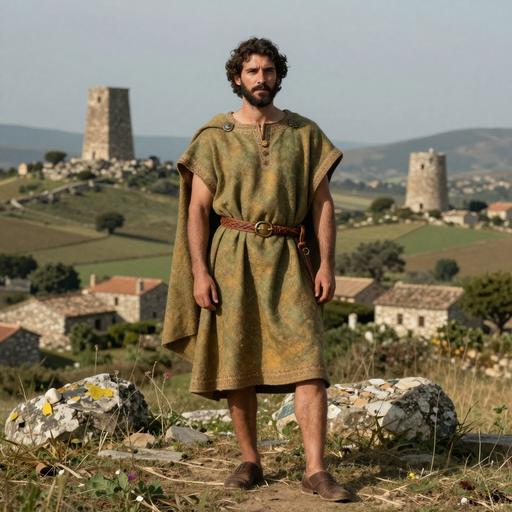
Portrait of ancient individual SSD-35 from Hungary, dated 652 CE - 773 CE
SSD-35
Hungary Middle Avar Period Hungary 652 CE - 773 CE Avar Culture K1b1a1+199 Direct
Portrait of ancient individual COR002 from Italy, dated 772 CE - 943 CE
COR002
Italy Early Medieval Sardinia, Italy 772 CE - 943 CE Early Medieval Sardinian K1b1a1 Direct
Portrait of ancient individual COR001 from Italy, dated 885 CE - 992 CE
COR001
Italy Early Medieval Sardinia, Italy 885 CE - 992 CE Early Medieval Sardinian K1b1a1 Direct
Portrait of ancient individual I8136 from Spain, dated 1534 BCE - 1422 BCE
I8136
Spain Early Bronze Age Spain 1534 BCE - 1422 BCE Early Bronze Age Iberian K1b1a1 Direct
Portrait of ancient individual VLI053 from Czech Republic, dated 1700 BCE - 1500 BCE
VLI053
Czech Republic Early Bronze Age Unetice Culture, Bohemia, Czech Republic 1700 BCE - 1500 BCE Unetice Culture K1b1a1 Direct
Portrait of ancient individual BNL010 from Czech Republic, dated 1898 BCE - 1744 BCE
BNL010
Czech Republic Early Bronze Age Unetice Culture, Bohemia, Czech Republic 1898 BCE - 1744 BCE Unetice Culture K1b1a1 Direct
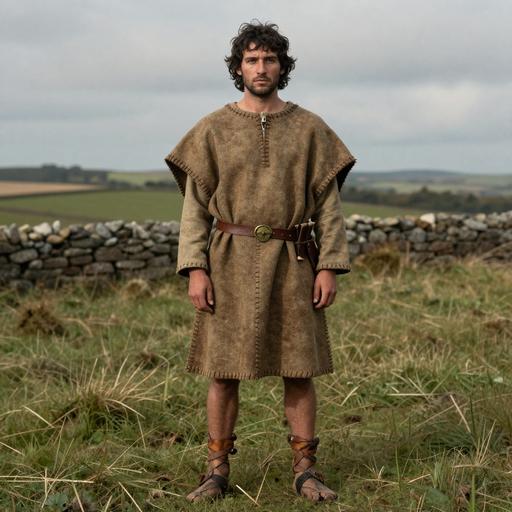
Portrait of ancient individual I18606 from United Kingdom, dated 1919 BCE - 1742 BCE
I18606
United Kingdom Chalcolithic to Early Bronze Age England 1919 BCE - 1742 BCE British Chalcolithic K1b1a1 Direct
Portrait of ancient individual I2566 from United Kingdom, dated 2267 BCE - 2036 BCE
I2566
United Kingdom Chalcolithic to Early Bronze Age England 2267 BCE - 2036 BCE British Chalcolithic K1b1a1 Direct
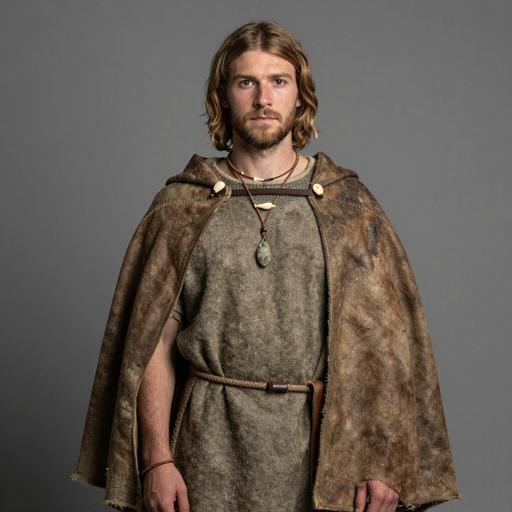
Portrait of ancient individual I16448 from United Kingdom, dated 2337 BCE - 2138 BCE
I16448
United Kingdom Early Bronze Age Scotland 2337 BCE - 2138 BCE Scottish Bronze Age K1b1a1 Direct
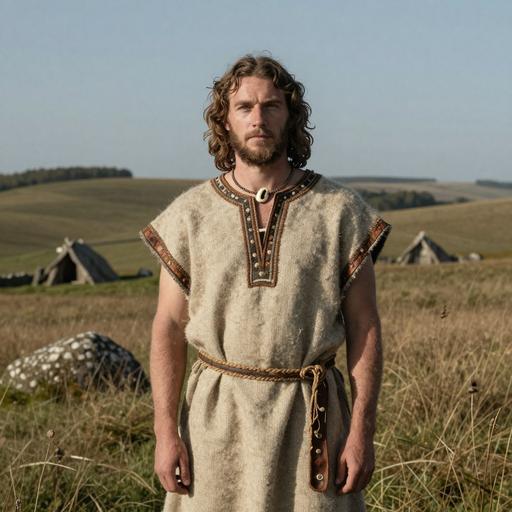
Portrait of ancient individual I2416 from United Kingdom, dated 2451 BCE - 2201 BCE
I2416
United Kingdom The Bell Beaker Culture in England 2451 BCE - 2201 BCE Bell Beaker K1b1a1 Direct
Chapter VI

Carrier Distribution Map

Geographic distribution of 49 ancient DNA samples (direct and subclade carriers of K1B1A1)

Direct carrier Subclade carrier
Time Period Filter
All Time Periods
Showing all samples
Chapter VII

Temporal Distribution

Distribution of carriers across archaeological periods

Chapter VIII

Geographic Distribution

Distribution by country of origin (direct and subclade carriers shown by default)

Chapter IX

Country × Era Distribution

Cross-tabulation of carrier countries and archaeological periods (direct and subclade carriers shown by default)

Data

Data & Provenance

Source information and data quality

Last Updated 2026-02-16
Confidence Score 50/100
Coverage Low
Data Source

We use the latest phylotree for MTDNA haplogroup classification and data.