Menu
Currency
mtDNA Haplogroup • Maternal Lineage

U8B

mtDNA Haplogroup U8B

~30,000 years ago
Near East / Western Eurasia
2 subclades
1 ancient samples
Scroll to explore
Chapter I

The Story

The journey of mtDNA haplogroup U8B

Origins and Evolution

Haplogroup U8B sits within the broader haplogroup U8, itself a derived branch of mtDNA haplogroup U, a major West Eurasian maternal lineage. Based on the phylogenetic position of U8 and the ages estimated for descendant clades such as haplogroup K, U8B most plausibly diversified during the Upper Paleolithic in western or near‑eastern Eurasia (order-of-magnitude estimate ~30 kya). As an intermediate node in the tree (often referenced in phylogenies as part of U8B'C or U8b-related structure), U8B helps link deeper Paleolithic branches of U with later derived lineages that expanded in later prehistory.

Because intermediate clades like U8B may be rare or undersampled in modern datasets, age and precise geographic origin remain somewhat uncertain and depend on improved sampling across Anatolia, the Caucasus, the Levant, and Europe.

Subclades

U8B functions as an internal branch of U8 and in many published phylogenies is closely associated with or ancestral to the branch that gives rise to haplogroup K (through U8b-related splits) as well as sibling clades sometimes annotated as U8C or U8a in broader U8 trees. Where characterized, descendant lineages of the U8B node include clades that later contribute to the maternal diversity of Neolithic farmers and subsequent European populations. Detailed subclade definitions and diagnostic mutations are best resolved by full mitogenome sequencing and updated Phylotree releases.

Geographical Distribution

Modern and ancient DNA evidence suggests U8B and its immediate relatives are primarily a West Eurasian lineage with detectable frequencies in:

  • Anatolia and the Near East (where several basal and early farmer lineages are found)
  • The Caucasus region (diverse U lineages persist)
  • Southern and Western Europe (including Mediterranean island populations at low-to-moderate frequency)

In many modern populations U8B itself may be rare or represented by closely related descendant haplogroups (e.g., haplogroup K), so geographic patterns are often inferred from those better-sampled descendant clades. Ancient DNA has recovered U8‑branch haplotypes in both Upper Paleolithic and later Neolithic contexts across Europe and the Near East, supporting a long-term West Eurasian presence.

Historical and Cultural Significance

While U8B as an internal/ intermediate node is not typically associated with a single archaeological culture on the strength of direct evidence, its descendant and sibling clades have archaeological significance: haplogroup K (derived from the same U8b-related structure) appears repeatedly in Neolithic farmer assemblages and in later Bronze Age contexts across Europe. This pattern suggests that U8B‑related lineages were part of the maternal substrate that contributed to the genetic makeup of early farming communities and to subsequent demographic processes such as Neolithic expansion and later population movements (e.g., Bell Beaker‑associated mobility in parts of Europe).

Because U8B is an upstream node, its presence in ancient samples would indicate continuity from Paleolithic or early Holocene maternal lineages into later cultural horizons, but direct cultural attribution requires careful ancient DNA provenance and dating.

Conclusion

mtDNA haplogroup U8B is best understood as a West Eurasian intermediate maternal lineage within the U8 clade that likely originated in the Upper Paleolithic of the Near East / western Eurasia (~30 kya) and is phylogenetically important because it connects deeper U diversity with descendant lineages (notably K) that participated in Neolithic and later demographic expansions in Europe. Improved mitogenome sampling—especially from Anatolia, the Caucasus, and ancient remains—will clarify its exact age, substructure, and historical role.

Key Points

  • Origins and Evolution
  • Subclades
  • Geographical Distribution
  • Historical and Cultural Significance
  • Conclusion
Chapter II

Tree & Relationships

Phylogenetic context and subclades

Evolution Path

This haplogroup's evolutionary journey from its earliest ancestor to the present.

Steps Haplogroup Age Estimate Archaeology Era Time Passed Immediate Descendants Tested Modern Descendants Ancient Connections
1 U8B Current ~30,000 years ago 🦴 Paleolithic 30,000 years 2 1,432 1
2 U8B'C 2 1,433 0
3 U8 ~45,000 years ago 🦴 Paleolithic 45,000 years 2 1,457 5
4 U2'3'4'7'8'9 5 2,860 0
5 U ~46,000 years ago 🦴 Paleolithic 46,000 years 5 4,314 110
6 R ~55,000 years ago 🦴 Paleolithic 55,000 years 17 17,854 57
7 NA 1 17,854 0
8 N ~60,000 years ago 🦴 Paleolithic 60,000 years 16 20,371 13
9 L3 ~70,000 years ago 🦴 Paleolithic 70,000 years 7 23,542 6
10 L3'4 2 23,581 0
11 L3'4'6 2 23,584 0
12 L2'3'4'6 2 24,475 0
13 L2'3'4'5'6'7 2 24,488 0
14 L1'2'3'4'5'6'7 2 24,903 0
15 L ~160,000 years ago 🦴 Paleolithic 160,000 years 2 25,205 5

Siblings (1)

Other branches from the same parent haplogroup

Chapter III

Where in the World

Geographic distribution and modern presence

Place of Origin

Near East / Western Eurasia

Modern Distribution

The populations where mtDNA haplogroup U8B is found include:

  1. Modern Western and Southern Europeans (low to moderate frequency in some regions)
  2. Anatolian and Near Eastern populations (moderate frequency in basal/related lineages)
  3. Caucasus populations (low to moderate frequency)
  4. Mediterranean island populations (e.g., Sardinia and other islands, often via related clades)
  5. North African populations (low frequency, usually via historical admixture)
  6. Ancient European and Near Eastern samples (Upper Paleolithic and Neolithic contexts where U8‑related lineages are observed)
CHAPTER IV

When in Time

Your haplogroup in the context of human history

~30k years ago

Haplogroup U8B

Your mtDNA haplogroup emerged in Near East / Western Eurasia

Near East / Western Eurasia
~20k years ago

Last Glacial Maximum

Peak of the last ice age, populations isolated

~10k years ago

Neolithic Revolution

Agriculture begins, settled communities form

~5k years ago

Bronze Age

Metalworking, writing, and early civilizations

~3k years ago

Iron Age

Iron tools, expanded trade networks

~2k years ago

Classical Antiquity

Greek and Roman civilizations flourish

Present

Present Day

Modern era

Your Haplogroup
Historical Era
Chapter IV-B

Linked Cultures

Ancient cultures associated with mtDNA haplogroup U8B

Cultural Heritage

These ancient cultures have been linked to haplogroup U8B based on matching ancient DNA samples from archaeological excavations. The presence of this haplogroup in these cultures provides insights into the migrations and population movements of populations carrying this haplogroup.

Avar Culture Buran-Kaya Cioclovina Gravettian Italy Hohle Fels Magdalenian Paglicci Culture Pavlovian Culture Solutrean Sunghir Culture
Culture assignments are based on archaeological context of ancient DNA samples and may represent regional associations during specific time periods.
Chapter V

Sample Catalog

1 direct carrier of haplogroup U8B

1 / 1 samples
Portrait Sample Country Era Date Culture mtDNA Match
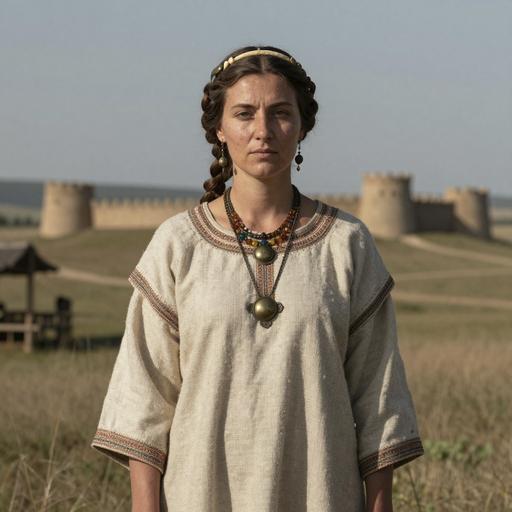
Portrait of ancient individual RKF235 from Hungary, dated 650 CE - 900 CE
RKF235
Hungary Late Avar Period Hungary 650 CE - 900 CE Avar Culture U8b Direct
Chapter VI

Carrier Distribution Map

Geographic distribution of 1 ancient DNA sample (direct and subclade carriers of U8B)

Direct carrier
Time Period Filter
All Time Periods
Showing all samples
Chapter VII

Temporal Distribution

Distribution of carriers across archaeological periods

Chapter VIII

Geographic Distribution

Distribution by country of origin (direct and subclade carriers shown by default)

Chapter IX

Country × Era Distribution

Cross-tabulation of carrier countries and archaeological periods (direct and subclade carriers shown by default)

Data

Data & Provenance

Source information and data quality

Last Updated 2026-06-14
Confidence Score 50/100
Coverage Low
Data Source

We use the latest phylotree for MTDNA haplogroup classification and data.