The Story
The journey of mtDNA haplogroup K1B1B
Origins and Evolution
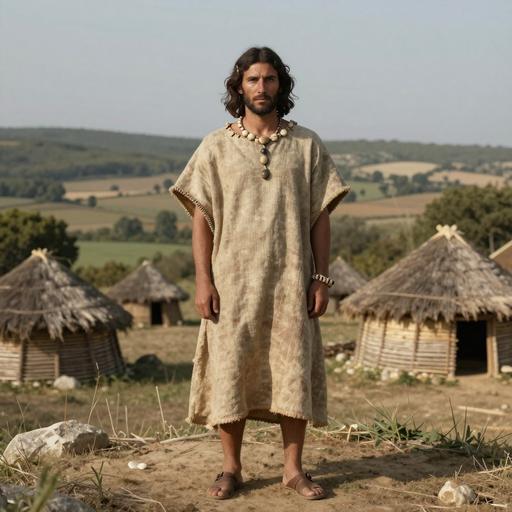
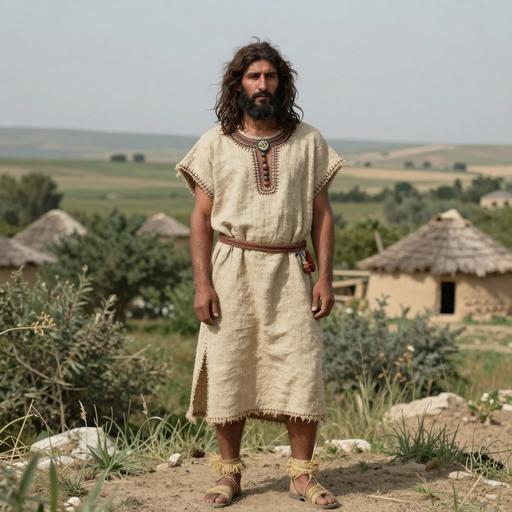
mtDNA haplogroup K1B1B is a downstream lineage of K1B1, itself a branch of K (which derives from macro-haplogroup U/K). Based on the phylogenetic position below K1B1 and the geographic distribution of related lineages, K1B1B most plausibly originated in the Near East or Anatolia in the early to mid-Holocene (estimated ~7 kya). This timing and location are consistent with a scenario in which the lineage emerged in populations associated with the spread of early farming or nearby hunter-gatherer groups that later admixed with incoming farmers.
Mutations that define K1B1B are private substitutions nested within the K1B1 node. The clade shows relatively low internal diversity in many sampled populations, which is typical of lineages that have gone through founder events or recent demographic expansions tied to cultural movements (for example, Neolithic dispersals, island colonization, or later diasporas).
Subclades
K1B1B is an intermediate subclade within the K1B1 branch. Published phylogenies and population screens report few deeply diverged sublineages within K1B1B compared with some older mtDNA clades. Where sublineages are present, they often show geographically restricted patterns (for example, single sublineages observed in Ashkenazi Jewish samples or in specific Mediterranean islands), suggesting founder effects and localized drift rather than deep, continent-wide diversification.
Because K1B1B is lower frequency overall, its subclade structure is incompletely resolved in many datasets; continued dense sequencing (full mitogenomes) from the Near East, Anatolia, and Mediterranean islands is likely to reveal additional branches and refine time estimates.
Geographical Distribution
K1B1B is best documented at low to moderate frequencies across the Near East and Mediterranean rim and at generally lower frequencies further into Europe and parts of North Africa. Key geographic observations include:
- Concentrations in Anatolia and neighboring parts of the Near East consistent with an origin in that region.
- Presence in Southern European populations (Italy, Greece, Iberia), often linked to Neolithic and later historical gene flow from the east across the Mediterranean.
- Detection within Ashkenazi Jewish communities at low–moderate frequency; in such contexts the lineage can show reduced diversity consistent with founder effects in diaspora history.
- Sporadic occurrences in Western and Northern Europe at low frequencies, attributable to Millennia of population movements and admixture.
- Occasional presence on Mediterranean islands (e.g., Sardinia and other insular populations) where drift can raise local frequency.
Overall, the distribution pattern mirrors that of several other Neolithic-associated maternal lineages that originated in the Near East and spread with agricultural populations, with later local drift and historical movements shaping modern frequencies.
Historical and Cultural Significance
The phylogeographic pattern of K1B1B is compatible with an association to Neolithic farmer expansions out of Anatolia and the Near East into Europe. Where K1B1B occurs in ancient DNA or in present-day populations with known Neolithic ancestry, it commonly co-occurs alongside other farmer-associated maternal haplogroups (e.g., H, J, T, and N1a) and paternal haplogroups (e.g., G2a, J2) in genomic profiles attributed to early agricultural communities.
Beyond the Neolithic, later population movements — including Bronze Age mobility around the Mediterranean, historical trade, and the formation and dispersal of Jewish communities — have contributed to the present-day patchy distribution of K1B1B. In diasporic groups like Ashkenazi Jews, the haplogroup's representation and reduced sequence diversity can reflect founder events and demographic bottlenecks during the last few thousand years.
Conclusion
K1B1B is a geographically informative, low-to-moderate frequency maternal lineage whose phylogenetic placement and distribution support an origin in the Near East/Anatolia during the early-to-mid Holocene with subsequent spread into Europe via Neolithic and later historical processes. Its pattern of localized high frequency in some islands or diasporic groups, combined with low overall diversity, points to the importance of founder effects and genetic drift in shaping its modern footprint. Continued full-mitogenome sampling across the Near East and Mediterranean will clarify internal structure and refine age and migration inferences for this clade.
Key Points
- Origins and Evolution
- Subclades
- Geographical Distribution
- Historical and Cultural Significance
- Conclusion