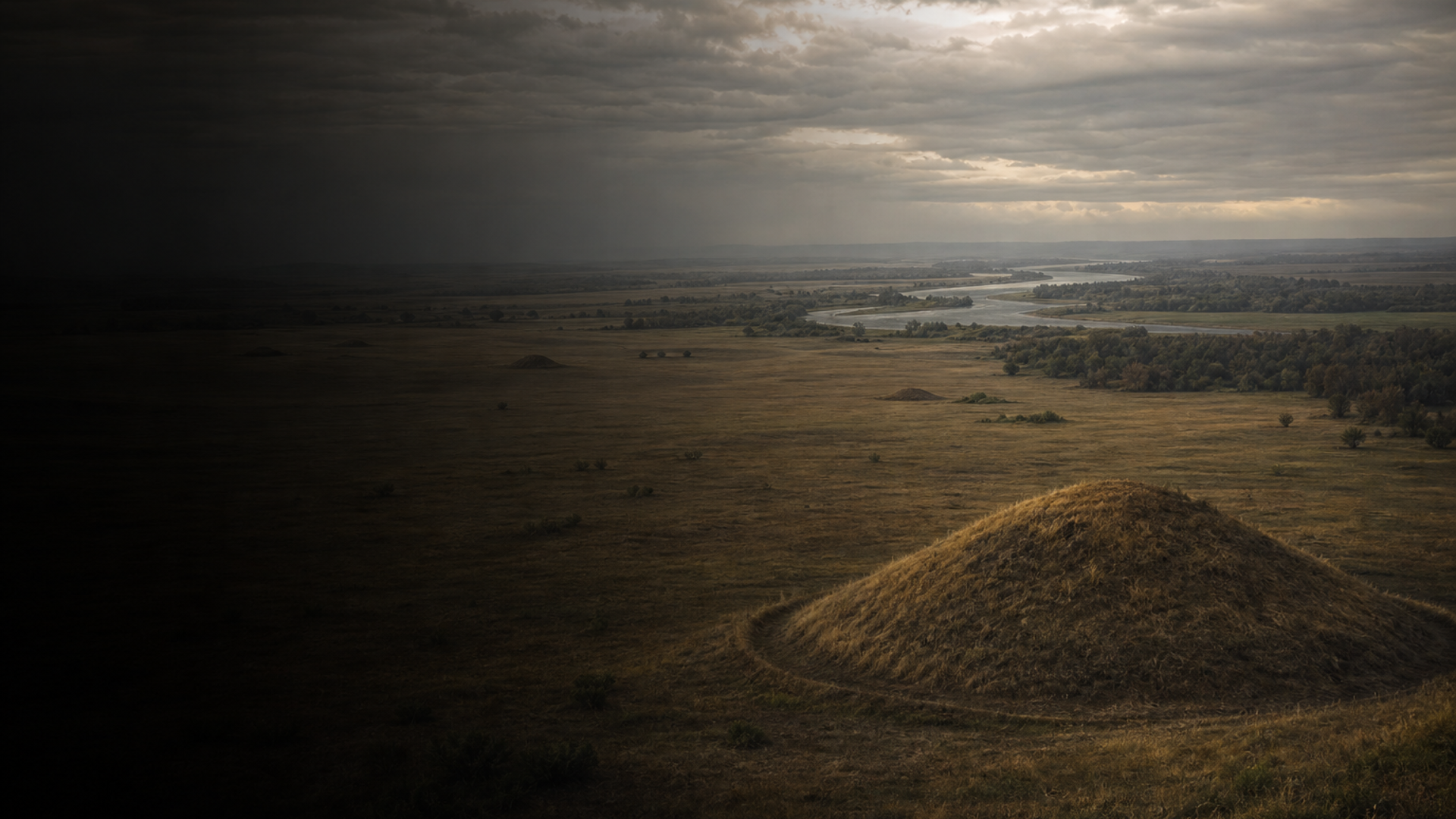
Archaeological context from the excavated cemeteries paints a picture of a mobile, hierarchical society negotiating new landscapes. Burials in this region vary in richness — some contain weapons, harness fragments, and personal ornaments typical of steppe-associated elites elsewhere, while others are modest. Such variability suggests social differentiation: mounted warrior elites and broader household groups coexisting within the same cultural horizon.
Settlement data in the Danube–Tisza zone for this period are still incomplete, but regional surveys indicate seasonal mobility, exploitation of riverine and steppe resources, and a mix of pastoral and agrarian practices. Craft production and metalwork styles show both steppe affinities and adoption of local Carpathian and Byzantine forms. The cinematic image of horsemen crossing open plains is grounded in tangible traces — bridles, bits, and burial arrangements — but archaeological evidence also points to village life, farming, and long-term occupation across river floodplains.
Interactions with neighboring polities — Byzantine frontier communities, Slavic groups, and residual local populations — created a mosaic of daily experiences: trade, raiding, alliance-making, and cultural exchange shaped households as much as elite tombs.
Given the limited number of burials with full context in this dataset, reconstructions of everyday life remain provisional and best seen as complementary to broader regional studies.