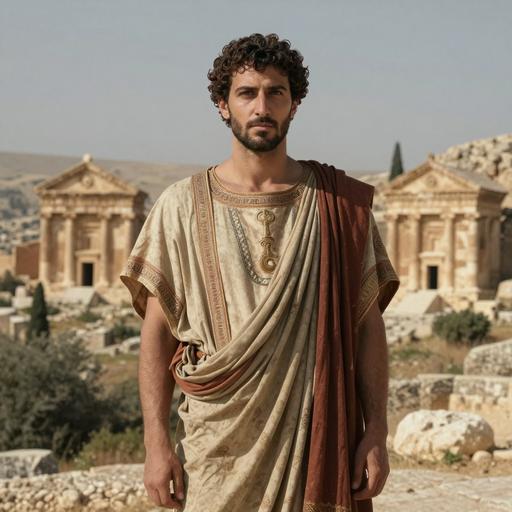
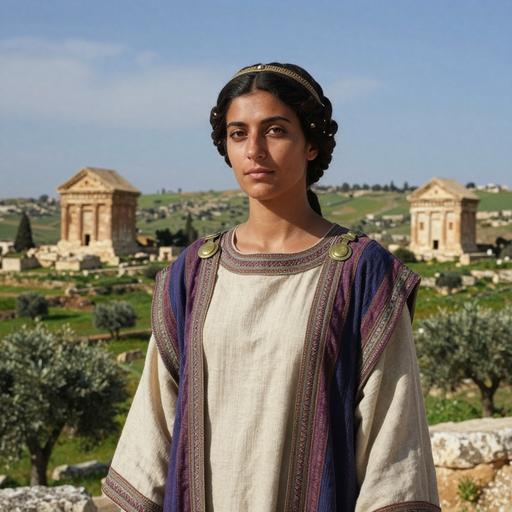
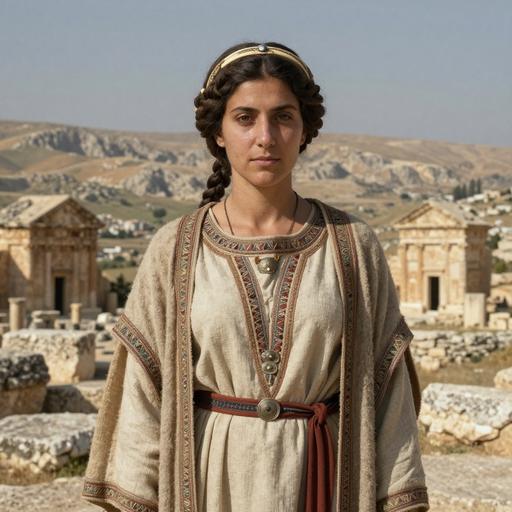
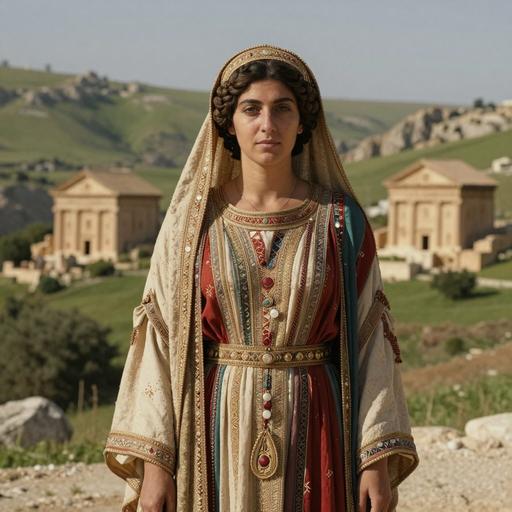
This dataset of 131 ancient individuals provides a broad window into the genetic landscape associated with Byzantine-era contexts across Turkey, the Balkans, Italy, the Crimea and the Levant. Maternal lineages are diverse: mtDNA haplogroups U (18), H (14), T (9), K (5), and X (5) are common in the collection, a pattern consistent with long-standing European and West Asian maternal ancestry across coastal and inland populations. These mtDNA counts support archaeological evidence for continuity of local female-lineage pools alongside incoming elements.
Y-chromosome data in the catalogue is sparser: reported counts include J (4), E (2), I (1), and G (1). Because these Y-haplogroup counts are low (several under 10), conclusions on paternal structure must be treated as preliminary. Nevertheless, the presence of J and G is compatible with Near Eastern and Anatolian paternal lines, while E and I reflect Mediterranean and Balkan inputs.
Combined autosomal signals (where available) indicate a mix of Anatolian farmer ancestry, Balkan/European input, and eastern Mediterranean/Levantine components — consistent with archaeological records of trade, soldiering and administrative mobility. Specific locales show variation: samples from Crimea and coastal Italian contexts trend toward stronger Mediterranean signatures, while southeastern Turkish and Armenian cave samples contain more West Asian and Caucasus-related ancestry.
Overall, genetics corroborate a mosaic model: long-standing local ancestry with episodic admixture tied to commerce, military recruitment and imperial connections. Where sample subsets are small, especially for Y-DNA, further sampling is required to refine paternal lineage histories.