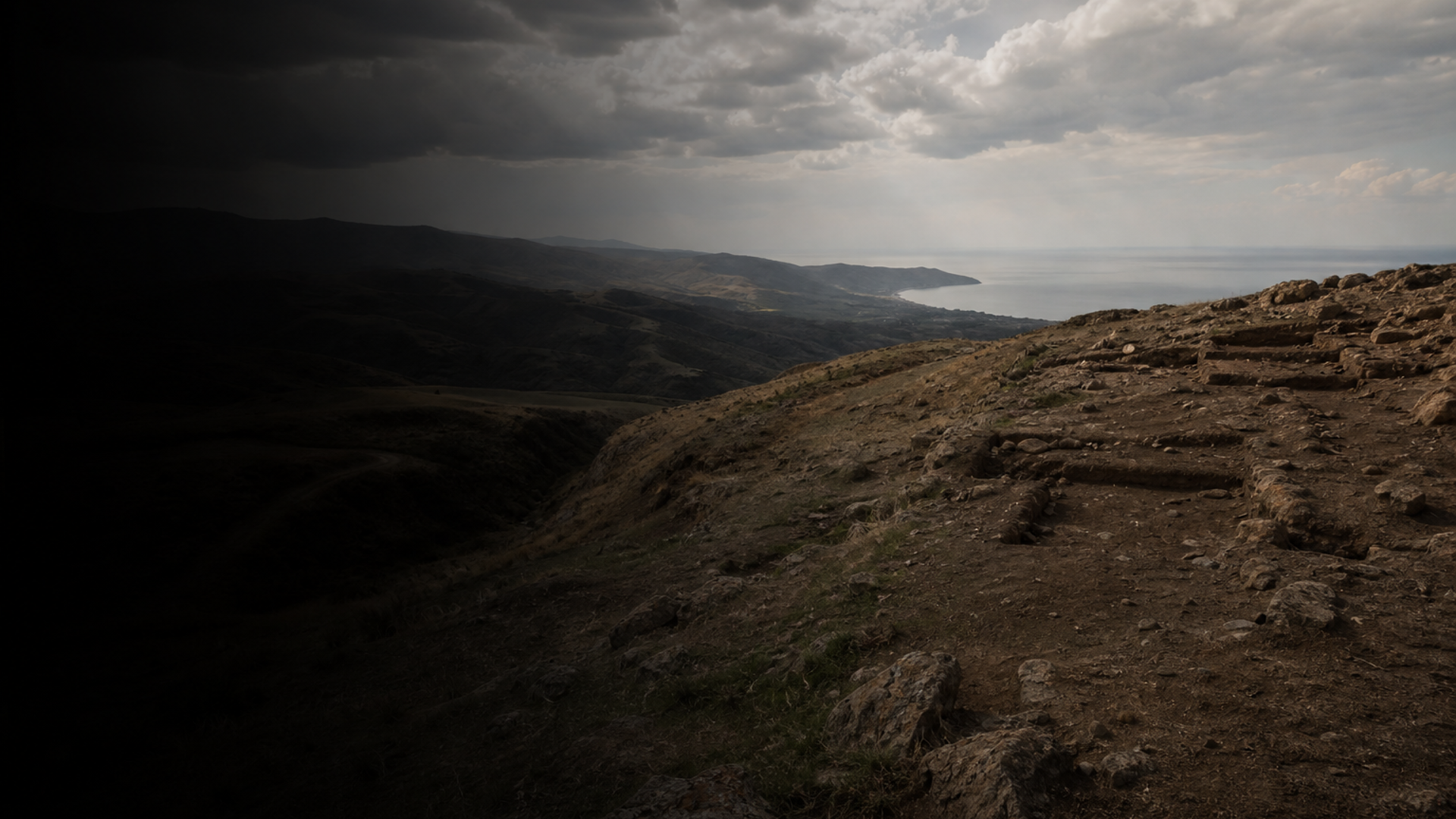
Ancient DNA from İkiztepe is sparse but evocative. Three genome-wide samples dated to 3500–3100 BCE provide the first genetic window into this coastal Anatolian community. Two of the three male individuals carry Y-chromosome haplogroup G, a lineage commonly associated with early Neolithic farmers in Anatolia and the Caucasus. This prevalence is consistent with archaeological signals of continuity from earlier farming populations.
Mitochondrial haplogroups are currently undetermined in the public summary for these three samples, and genome-wide ancestry proportions are provisional because of the very small sample count. With only three genomes, statistical power is low; any population-level inference must be framed as preliminary. Nevertheless, the observed Y-G presence aligns with broader patterns where Anatolian farmer-related ancestry persisted in northern Anatolia during the Chalcolithic. There is no clear, robust signal of substantial Steppe-derived ancestry in this tiny dataset, but absence of evidence is not evidence of absence. Expanded sampling and higher-coverage genomes are required to test for admixture events, sex-biased migrations, or continuity versus replacement scenarios.
In short: current genetic data hint at farmer-derived continuity at İkiztepe, but the dataset is too small (<10 samples) to draw firm demographic conclusions.