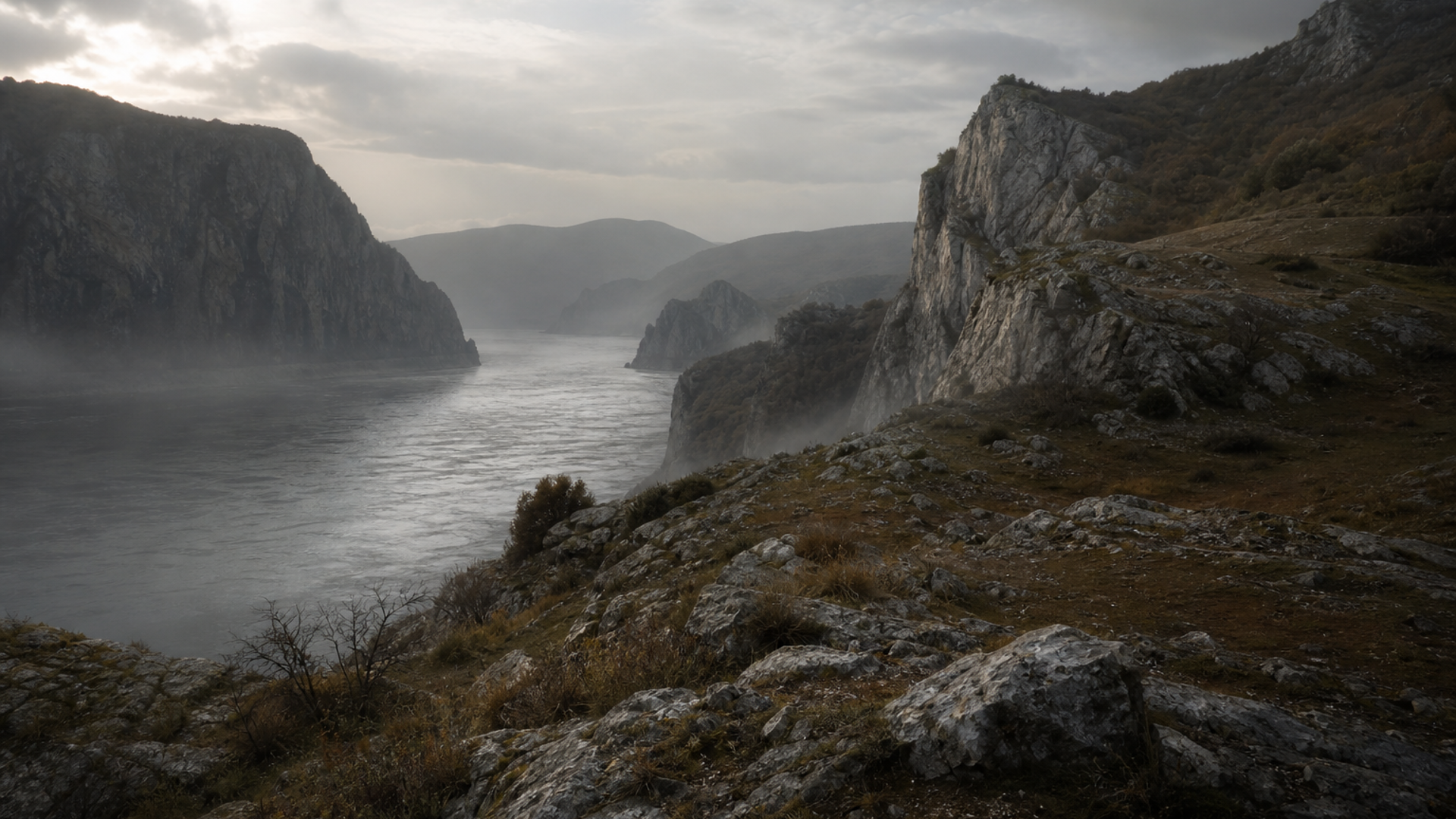
The Iron Gates Mesolithic dataset comprises 42 individuals sampled across Lepenski Vir, Vlasac, Padina and Hajduka Vodenica, spanning ca. 9755–5710 BCE. This sample size allows a reasonably robust view of population genetics for a Mesolithic context, though representativeness beyond the Danube corridor remains limited.
Mitochondrial DNA is dominated by haplogroup U (30 of 42), a hallmark of European hunter‑gatherer maternal lineages, implying deep matrilineal continuity in the region. Minor mtDNA lineages include K (4, including K1c and K1* variants) and a single H—suggesting some maternal diversity or later admixture events. On the paternal side, Y‑chromosome haplogroups cluster mainly in I (12) and R (7). Haplogroup I is commonly associated with Mesolithic Europeans and supports an interpretation of local male continuity; the presence of R may reflect regional heterogeneity and contact with neighboring forager groups.
Genetic data combined with archaeology suggest the Iron Gates communities were primarily local hunter‑gatherers with episodic gene flow along river routes. While the sample is substantial for Mesolithic Europe, caution is warranted: temporal depth, site selection, and post‑depositional processes can bias observed frequencies. Further sampling across time and place is necessary to track finer‑scale demographic shifts.