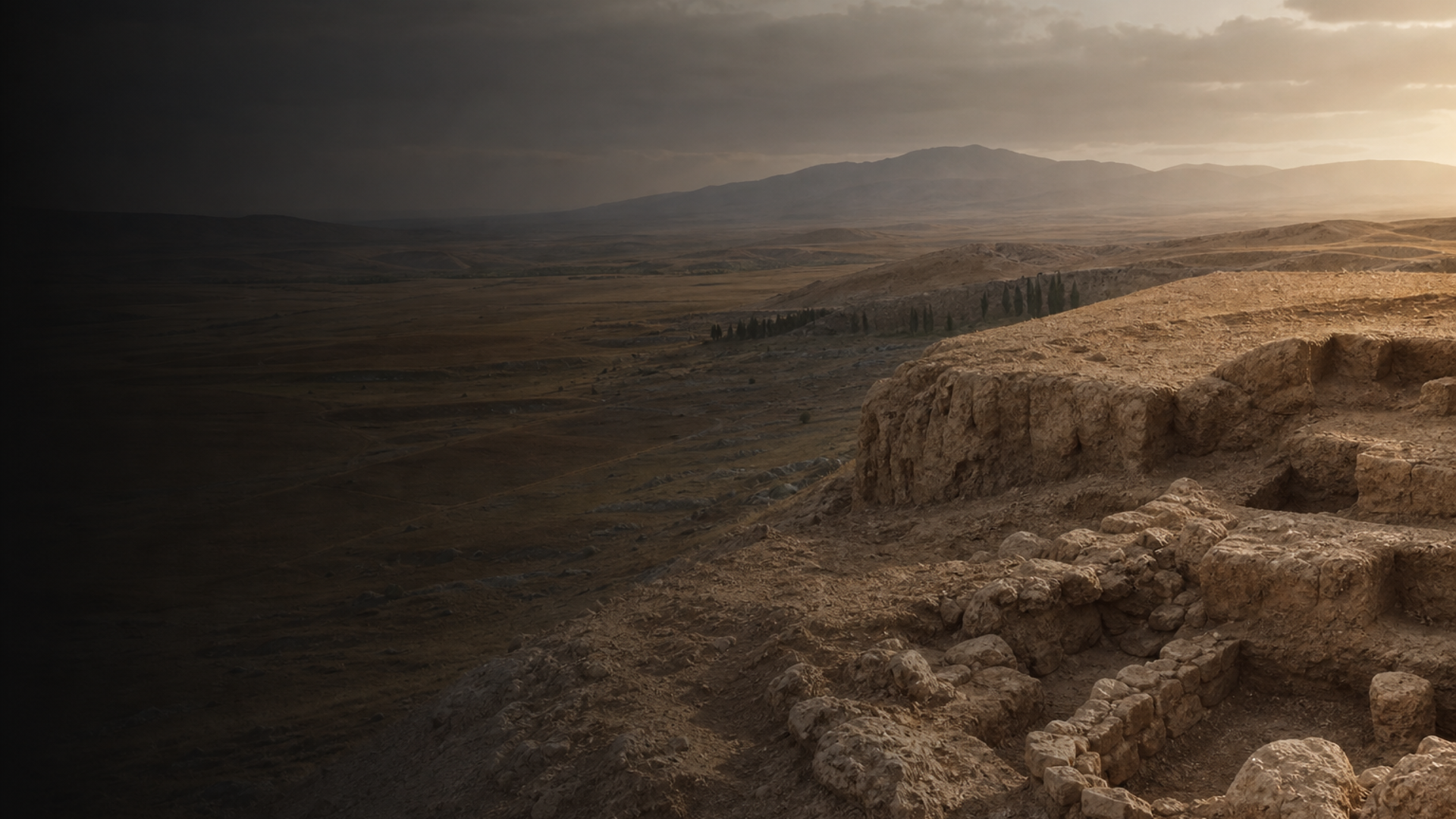
Imagine a village waking at dawn on the plain of Hatay: households clustered against the wind, hearth smoke mingling with the scent of stored grain. Archaeological remains at Tell Kurdu indicate an economy rooted in mixed farming — domesticated cereals and pulses supplemented by herded animals — and household-level craft production. Pottery fragments, grinding stones, and toolkits recovered from Chalcolithic layers suggest routine food processing, containerized storage, and an active domestic production of functional ceramics.
Social life likely balanced kin-based households with emerging inter-household exchange. Objects that required distant raw materials imply occasional long-distance contacts, whether through down-the-line trade or itinerant specialists. Funerary evidence at comparable nearby sites shows varying burial practices, hinting at social differentiation; at Tell Kurdu the record is incomplete, so any reconstruction of status, ritual life, or household hierarchy must be tentative. Environmental changes and resource pressures may have encouraged innovation in storage and craft, driving subtle shifts in community organization over generations.
Archaeological interpretation of daily life remains partly conjectural because preservation biases and limited excavation area obscure the full layout of the settlement. Nevertheless, the material traces combine with genetic results to give a more textured picture of people on the move and at home.