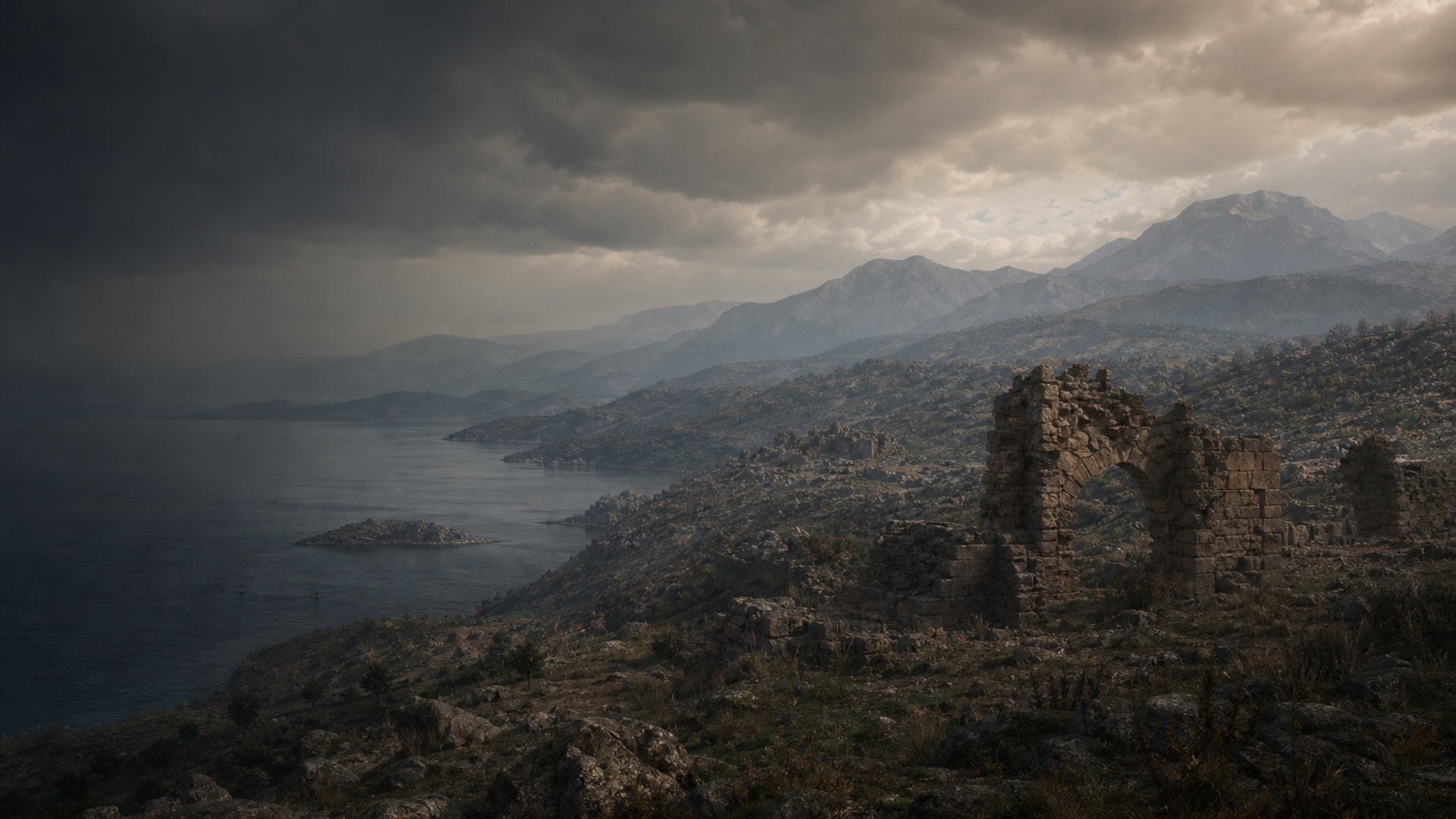
Daily life in West Byzantine Anatolia unfolded in a landscape of small towns, agrarian estates, and market routes linking the Marmara basin. Archaeological layers reveal stone-built churches and basilicas, house foundations, pottery assemblages, and burial grounds that reflect Christian funerary practice. Local economies combined cereal agriculture, olive and grape cultivation, animal husbandry, and artisanal activities such as textile production and metallurgy.
Iznik/Nicaea and nearby settlements occupied strategic positions on inland routes between the Aegean, the interior of Anatolia, and the capital regions to the west. Coins, amphorae, and imported ceramics testify to long-distance trade even as households relied on regional production. Social life was structured around village and town communities, ecclesiastical institutions, and a provincial administration that continued many Roman practices. Conflict and disruption—raids, shifting frontiers, and economic stress—periodically altered settlement patterns, but graves and domestic assemblages show resilience and cultural continuity.
Archaeobotanical and zooarchaeological remains from the region further illuminate diet: cereals, pulses, olives, grapes, and domesticated animals were staples. Craft specializations and workshop debris indicate skilled artisans operating within a network of regional exchange.