
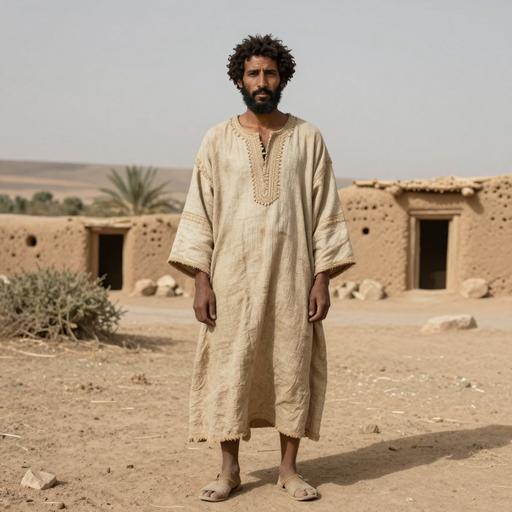
A man buried in Morocco in the era

Download PDF creates a visual, rasterized copy. Use Print for selectable text and better assistive-technology support.

Loading Report

Preparing your ancestry journey

Preparing the available report content...

Your report will open automatically.

Skip to main content
Reference library / Sample profile

A man buried in Morocco in the era

Explore the recorded context, genetic comparisons and research behind this reference sample.

MoroccoNeolithic North Africa

A reference profile describes this sample. It does not establish a personal or family relationship.

AI portrait reconstruction for A man buried in Morocco in the  era
AI-generated artistic reconstruction, not a photograph of the individual.
Record

Sample details

Recorded details and available lineage markers.

Individual

North Africa N individual, Morocco

Sample ID: KEB.6

Date Range

3800 BCE - 3600 BCE

Cultural Period

Neolithic North Africa

Biological Sex

Male

mtDNA Haplogroup

K1a4a1*

Y-DNA Haplogroup

T-L208

Social Role

Farmer (AI estimate, era-typical)

Geography

Location

Where this individual was discovered

Country Morocco
Locality Kelif el Boroud

A location map is not available for this record.

Chronology

Date range

When this individual lived in the broader context of human history

North Africa N individual, Morocco 3800 BCE - 3600 BCE
Context

Historical context

Background information associated with the reference record.

Overview

Neolithic North Africa represents the long-term adoption and diversification of agricultural lifeways across parts of the region. This era is characterized by communities that increasingly relied on domestic plants and animals while maintaining varying degrees of local foraging traditions.

Region & Environment

North Africa encompasses diverse environments, including coastal zones, steppe margins, and inland areas. Neolithic settlement patterns were shaped by the availability of water, cultivable land, and access to resources such as fish and game, producing different regional ecological strategies.

Historical Context

Within Neolithic development, the region experienced multiple phases of change rather than a single event. Over centuries, farming systems expanded, craft traditions evolved, and exchange networks could link different parts of the Mediterranean and North African landscapes.

Populations & Lifeways

Neolithic populations were primarily rural and household-based, centered on crop cultivation and herding. Domestic food production required stable or semi-stable settlement arrangements, but subsistence practices likely remained flexible and opportunistic in response to local environmental conditions.

Archaeology & Material Culture

Archaeological evidence for Neolithic lifeways commonly includes pottery, grinding and processing equipment, and stone tool assemblages supporting domestic tasks. Depending on the local sequence, faunal and botanical remains can provide direct evidence for managed animals and cultivated plants.

Culture & Society

Material style—especially pottery traditions—can signal regional identities and connections between communities. Community organization is often inferred from settlement organization, cemetery use where present, and recurring patterns in domestic construction and tool production.

Legacy & Transition

The Neolithic set foundations for subsequent cultural and technological transformations in North Africa, including later shifts in regional material traditions. These transitions are visible archaeologically in changing ceramic styles, toolkits, and evolving settlement patterns.

Analysis

Genetic comparisons

These comparisons show genetic similarity, not identity or origin. The populations listed are those whose genomes show statistical alignment to this ancient individual.

Similarity reflects shared history, not shared identity. These are analytical comparisons, not claims about who this person was.

Modern Genetic Admixture

This analysis compares the DNA profile with present-day reference populations, showing statistical similarity to modern reference populations from different regions. The excavation site records where this individual was found, not a fixed modern genetic identity.

Africa 51.0%
North African 38.6%
North African 35.3%
Egyptian 3.2%
Northern East African 12.5%
Ethiopian 12.5%
Europe 43.5%
Southern European 43.5%
Sardinian 22.7%
Iberian 17.1%
Italian 3.8%
Asia 5.4%
Arab, Egyptian & Levantine 4.2%
Arabian 4.2%
Chinese & Southeast Asian 1.2%
Chinese 1.2%

Closest Modern Populations

These are the modern populations showing the closest statistical alignment to A man buried in Morocco in the era, ranked by genetic distance. Lower distance values indicate closer statistical similarity. Cross-region similarity can reflect shared ancestry, population movement, continuity, or later admixture.

1
Libyan Jew
7.2534
2
Algerian Jew
7.3390
3
Moroccan Jew
7.3927
4
Tunisian Jew
7.5590
5
Belmonte Jew
7.6825
6
Tunisia
7.8161
7
Turkish Sabbatean
7.9695
8
Maltese
8.6620
9
Italian Jew
8.7282
10
Bulgarian Jew
8.8260
Context

Related Samples

This individual exists within a broader network of ancient samples. No ancient genome stands alone.

Individual Culture/Period Date Location Action
Berber individual, Morocco Early Neolithic Era in Morocco 4348 BCE Ifri n'Amr or Moussa, Morocco View
Berber individual, Morocco Epipalaeolithic-Neolithic Transition in Morocco 5007 BCE Ifri n'Amr or Moussa, Morocco View
Berber individual, Morocco Epipalaeolithic-Neolithic Transition in Morocco 5211 BCE Ifri n'Amr or Moussa, Morocco View
Berber individual, Morocco Epipalaeolithic-Neolithic Transition in Morocco 5367 BCE Ifri n'Amr or Moussa, Morocco View
Berber individual, Morocco Epipalaeolithic-Neolithic Transition in Morocco 5297 BCE Ifri n'Amr or Moussa, Morocco View
Berber individual, Morocco Late Neolithic Era in Morocco 3800 BCE Kelif el Boroud, Morocco View
Berber individual, Morocco Late Neolithic Era in Morocco 3779 BCE Kelif el Boroud, Morocco View
Berber individual, Morocco Late Neolithic Era in Morocco 8400 BCE , Morocco View
Western European Neolithic individual, Spain Early Neolithic Spain 5100 BCE El Toro, Spain View
Western European Neolithic individual, Spain Early Neolithic Spain 5036 BCE El Toro, Spain View
North Africa N individual, Morocco 5211 BCE Ifri n'Amr or Moussa, Morocco View
North Africa N individual, Morocco 3779 BCE Kelif el Boroud, Morocco View
Iberia N individual, Morocco 8400 BCE , Morocco View
North Africa N individual, Morocco 5367 BCE Ifri n'Amr or Moussa, Morocco View
North Africa N individual, Morocco 5297 BCE Ifri n'Amr or Moussa, Morocco View
North Africa N individual, Morocco 5007 BCE Ifri n'Amr or Moussa, Morocco View
North Africa N individual, Morocco 3800 BCE Kelif el Boroud, Morocco View
Iberia En individual, Spain 5036 BCE El Toro, Spain View
Iberia En individual, Spain 5100 BCE El Toro, Spain View
Page 1
Individual Culture/Period Date Location Action
North Africa N individual, Morocco 5211 BCE Ifri n'Amr or Moussa, Morocco View
North Africa N individual, Morocco 3779 BCE Kelif el Boroud, Morocco View
North Africa N individual, Morocco 5367 BCE Ifri n'Amr or Moussa, Morocco View
North Africa N individual, Morocco 5297 BCE Ifri n'Amr or Moussa, Morocco View
North Africa N individual, Morocco 5007 BCE Ifri n'Amr or Moussa, Morocco View
North Africa N individual, Morocco 3800 BCE Kelif el Boroud, Morocco View
Page 1
Sources

References

Scientific publications and genetic data that inform this profile.

G25 Coordinates

These coordinates represent a position in genetic space, a tool for comparison, not a conclusion. You can use these to perform custom admixture analysis in G25 Studio.

KEB.6,0.03658636,0.1478323,-0.00057108,-0.06645004,0.03868712,-0.03213186,-0.00795852,0.00384618,0.054598,0.0424287,-0.00027264,0.00268456,-0.00458946,-0.01086432,-0.00393736,0.00235924,0.0116963,-0.0009124,-0.00572964,0.00076276,0.0002028,0.00027354,-0.00535602,-0.0122838,0.00049819
Continue in G25 Studio
Use code for 30% off • Expires Nov 16