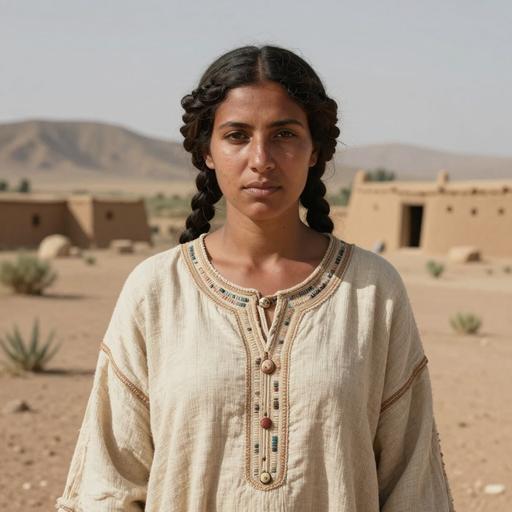
An individual buried in Morocco in the era

Download PDF creates a visual, rasterized copy. Use Print for selectable text and better assistive-technology support.

Loading Report

Preparing your ancestry journey

Preparing the available report content...

Your report will open automatically.

Skip to main content
Reference library / Sample profile

An individual buried in Morocco in the era

Explore the recorded context, genetic comparisons and research behind this reference sample.

MoroccoNeolithic Iberia

A reference profile describes this sample. It does not establish a personal or family relationship.

AI portrait reconstruction for An individual buried in Morocco in the  era
AI-generated artistic reconstruction, not a photograph of the individual.
Record

Sample details

Recorded details and available lineage markers.

Individual

Iberia N individual, Morocco

Sample ID: BOT.1

Date Range

8400 BCE - 3600 BCE

Cultural Period

Neolithic Iberia

Biological Sex

Not known

mtDNA Haplogroup

K1a4a1*

Y-DNA Haplogroup

Not available

Social Role

Farmer (AI estimate, era-typical)

Geography

Location

Where this individual was discovered

Country Morocco

A location map is not available for this record.

Chronology

Date range

When this individual lived in the broader context of human history

Iberia N individual, Morocco 8400 BCE - 3600 BCE
Context

Historical context

Background information associated with the reference record.

Overview

Neolithic Iberia was the era when farming and herding became central to many communities, bringing more stable settlement patterns and new material technologies. Archaeology for this timeframe highlights ceramics, specialized lithic tool use, and evidence for domestic production.

Region & Environment

Iberia’s varied environments influenced how Neolithic economies developed. Fertile valleys and accessible water sources supported agriculture, while other zones contributed pasture and supplementary resources, creating regionally distinct land-use strategies.

Historical Context

This era belongs to the broader Neolithic transition in Europe, characterized by the spread of domesticated crops and animals. Over time, communities adapted these practices to local conditions, producing differences in settlement and material styles.

Populations & Lifeways

Populations were predominantly settled farming groups, though seasonal movement for herding or resource collection may have occurred. Lifeways included cultivation, animal management, food processing, and household craft activities.

Archaeology & Material Culture

Neolithic material culture commonly includes ceramics for cooking and storage, lithic tools for processing plant and animal products, and items related to daily domestic life. Settlement evidence may include houses, storage features, and repeated occupation surfaces where preservation allows.

Culture & Society

Community identity in the Neolithic is often visible through shared conventions in pottery and toolkits, which can vary across Iberian regions. Cooperative labor for agriculture and maintenance of settlement suggests social networks beyond single households.

Legacy & Transition

Neolithic practices formed the foundation for later intensification and subsequent transitions toward Copper Age societies. The continuity of settlement and domestic production helps explain how later innovations were incorporated into established lifeways.

Context

Related Samples

This individual exists within a broader network of ancient samples. No ancient genome stands alone.

Individual Culture/Period Date Location Action
Berber individual, Morocco Early Neolithic Era in Morocco 4348 BCE Ifri n'Amr or Moussa, Morocco View
Berber individual, Morocco Epipalaeolithic-Neolithic Transition in Morocco 5007 BCE Ifri n'Amr or Moussa, Morocco View
Berber individual, Morocco Epipalaeolithic-Neolithic Transition in Morocco 5211 BCE Ifri n'Amr or Moussa, Morocco View
Berber individual, Morocco Epipalaeolithic-Neolithic Transition in Morocco 5367 BCE Ifri n'Amr or Moussa, Morocco View
Berber individual, Morocco Epipalaeolithic-Neolithic Transition in Morocco 5297 BCE Ifri n'Amr or Moussa, Morocco View
Berber individual, Morocco Late Neolithic Era in Morocco 3800 BCE Kelif el Boroud, Morocco View
Berber individual, Morocco Late Neolithic Era in Morocco 3779 BCE Kelif el Boroud, Morocco View
Berber individual, Morocco Late Neolithic Era in Morocco 8400 BCE , Morocco View
Western European Neolithic individual, Spain Early Neolithic Spain 5100 BCE El Toro, Spain View
Western European Neolithic individual, Spain Early Neolithic Spain 5036 BCE El Toro, Spain View
North Africa N individual, Morocco 5211 BCE Ifri n'Amr or Moussa, Morocco View
North Africa N individual, Morocco 3779 BCE Kelif el Boroud, Morocco View
Iberia N individual, Morocco 8400 BCE , Morocco View
North Africa N individual, Morocco 5367 BCE Ifri n'Amr or Moussa, Morocco View
North Africa N individual, Morocco 5297 BCE Ifri n'Amr or Moussa, Morocco View
North Africa N individual, Morocco 5007 BCE Ifri n'Amr or Moussa, Morocco View
North Africa N individual, Morocco 3800 BCE Kelif el Boroud, Morocco View
Iberia En individual, Spain 5036 BCE El Toro, Spain View
Iberia En individual, Spain 5100 BCE El Toro, Spain View
Page 1
Individual Culture/Period Date Location Action
Iberia N individual, Morocco 8400 BCE , Morocco View
Iberia N individual, Spain 5299 BCE Andalusia. Murciélagos de Zuheros, Spain View
Page 1
Use code for 30% off • Expires Nov 16