Menu
Store
Blog
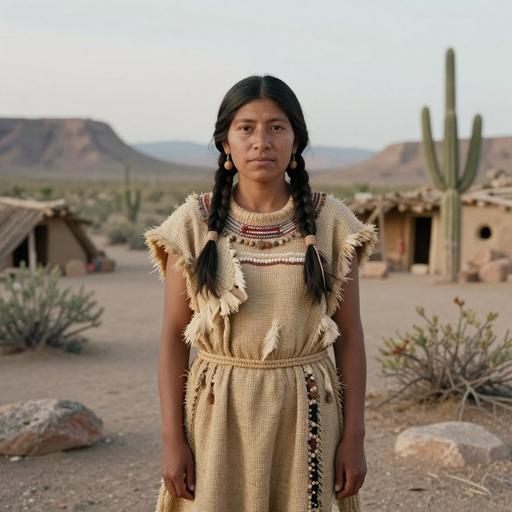
Portrait reconstruction of B-04
Ancient Individual

A woman buried in Mexico in the Ancient North America era

B-04
3000 BCE - 1500 CE
Female
Baja California, Mexico
Mexico
Scroll to begin
Chapter I

Identity

The biological and cultural markers that define this ancient individual

Sample ID

B-04

Date Range

3000 BCE - 1500 CE

Biological Sex

Female

mtDNA Haplogroup

C1b41

Cultural Period

Baja California, Mexico

Chapter II

Place

Where this individual was discovered

Country Mexico
Locality Comondu. Baja
Chapter III

Time

When this individual lived in the broader context of human history

B-04 3000 BCE - 1500 CE
Chapter IV

Story

The narrative of this ancient life

Baja California, a peninsula located in Northwestern Mexico, is intriguing when considered in the context of Mesoamerican civilizations. Unlike other regions of Mesoamerica, which were vibrant centers of advanced civilizations like the Aztecs and Mayans, Baja California presents a unique tapestry of history marked by its rugged landscapes, distinct geography, and diverse indigenous groups.

Geography and Environment:

Baja California is a long, narrow strip of land extending southward from the U.S.-Mexico border, flanked by the Pacific Ocean to the west and the Gulf of California to the east. The peninsula's geography is characterized by coastal plains, rugged mountains, expansive deserts, and isolated oases. This diverse environment significantly influenced the lifestyle, culture, and technological development of the indigenous peoples who inhabited the region. The scarcity of water, arable land, and other resources shaped a culture that was distinct from the more agriculturally affluent centers of Mesoamerica.

Indigenous Peoples and Societies:

Before European contact, the peninsula was home to a variety of indigenous groups, each with their own languages and cultural practices. These included the Cochimi, the Guaycura, the La Huerta, and the Pericu people, among others. These groups were primarily hunter-gatherers and fishermen, adapted to the arid and challenging environment of the region. Unlike their Mesoamerican counterparts, agriculture was not a central part of their lifestyle due to the harsh desert conditions and unpredictability of rainfall.

Cultural Practices and Artifacts:

The indigenous groups of Baja California developed rich cultural traditions that were well-suited to their environment. Rock art, including pictographs and petroglyphs found in the Sierra de San Francisco, provides insight into the region's early inhabitants. These artworks depict anthropomorphic figures, animals, and abstract patterns, and are considered some of the most significant archaeological sites in the region. The purpose of this rock art remains a subject of study, but it is believed to have held spiritual or ritual significance.

Social Organization and Trade:

Social organization in Baja California was largely clan-based, with a flexible social structure that promoted cooperation and resource sharing among groups. Trade was limited compared to other Mesoamerican civilizations, but there is evidence of some interaction with neighboring regions. Shells from the Gulf of California were highly valued for ornamentation and were traded to inland groups, suggesting a network of exchange that connected the peninsula to larger cultural and economic systems.

External Influences and Historical Changes:

European contact and colonization dramatically altered the cultural landscape of Baja California. The arrival of Spanish explorers and missionaries in the 16th and 17th centuries introduced new elements such as Christianity, European agricultural practices, and diseases that devastated the indigenous populations. The Jesuits, Franciscans, and Dominicans established missions throughout the peninsula, aiming to convert and assimilate the indigenous peoples. These missions became centers of community life and significantly impacted the traditional ways of living.

Legacy and Modern Significance:

Today, the legacy of the indigenous cultures of Baja California is evident in the descendants of these groups who persevere in preserving their cultural heritage. Efforts to protect language, traditions, and archaeological sites have gained momentum, providing vital links to the past. Additionally, the region's unique position as a bridge between North American and Mexican cultures has fostered a distinct cultural identity that continues to evolve.

In summary, while Baja California may not have been a nucleus of Mesoamerican civilization in the traditional sense, its cultural narrative is rich and complex. The indigenous peoples of Baja California adapted ingeniously to their environment, developing distinct cultural traditions and social structures that reflect the unique challenges and opportunities presented by the peninsula's geography.

Chapter V

Genetics

The genetic ancestry of this ancient individual

Ancient Genetic Admixture

This analysis compares the DNA profile of B-04 with ancient reference populations, showing the genetic composition in terms of prehistoric ancestral groups.

Ancient Native Americans 67.8%
Ancient Asians 23.4%
Western Steppe Pastoralists 5.9%
Neolithic Farmers 2.9%

Modern Genetic Admixture

This analysis compares the DNA profile with present-day reference populations, showing what percentage of genetic makeup resembles modern populations from different regions.

America 85.4%
America 85.4%
Native American 85.4%
Asia 14.6%
Northern Asian 11.0%
Mongolian 9.3%
Siberian 1.8%
Japanese & Korean 3.5%
Japanese 3.5%

Closest Modern Populations

These are the modern populations showing the closest statistical alignment to A woman buried in Mexico in the Ancient North America era, ranked by genetic distance. Lower distance values indicate closer statistical similarity.

1
Huichol
3.2890
2
Pima
3.3605
3
Zapotec
3.7795
4
Mixe
3.8648
5
Nahua
3.8716
6
Mixtec
3.9811
7
Mayan
4.2523
8
Cachi
5.2435
9
Bolivian Lapaz
5.6750
10
Colla
6.0923
Chapter VI

Context

Other ancient individuals connected to this sample

Sources

References

Scientific publications and genetic data

Scientific Publication

Ancient human parallel lineages within North America contributed to a coastal expansion

Authors Scheib CL, Li H, Desai T
Abstract

Little is known regarding the first people to enter the Americas and their genetic legacy. Genomic analysis of the oldest human remains from the Americas showed a direct relationship between a Clovis-related ancestral population and all modern Central and South Americans as well as a deep split separating them from North Americans in Canada. We present 91 ancient human genomes from California and Southwestern Ontario and demonstrate the existence of two distinct ancestries in North America, which possibly split south of the ice sheets. A contribution from both of these ancestral populations is found in all modern Central and South Americans. The proportions of these two ancestries in ancient and modern populations are consistent with a coastal dispersal and multiple admixture events.

G25 Coordinates

The G25 coordinates for sample B-04 can be used for detailed admixture analysis in our G25 Studio tool.

B-04,0.05445256,-0.32410098,0.108571,0.09093374,-0.11887146,-0.01613196,-0.26655846,-0.31197812,-0.0081176,-0.01163056,0.007071,-9.85E-05,-0.00229688,0.02275424,-0.00725172,-0.0032993,0.00549644,0.00448348,0.00440862,0.00012274,0.0053534,0.00144382,-0.0014317,-0.00351134,-0.00290078
Analyze in G25 Studio
Use code for 40% off Expires Feb 27