Menu
Store
Blog
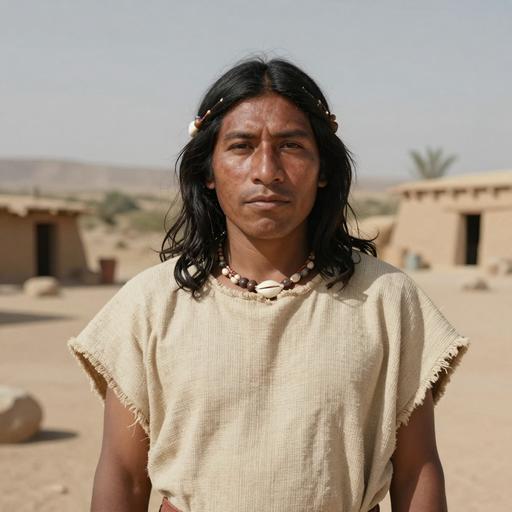
Portrait reconstruction of BC23
Ancient Individual

A man buried in Mexico in the Pre-Columbian Central America era

BC23
1200 CE - 1700 CE
Male
Pericues Culture, Mexico
Mexico
Scroll to begin
Chapter I

Identity

The biological and cultural markers that define this ancient individual

Sample ID

BC23

Date Range

1200 CE - 1700 CE

Biological Sex

Male

mtDNA Haplogroup

B2g1

Y-DNA Haplogroup

Not available

Cultural Period

Pericues Culture, Mexico

Chapter II

Place

Where this individual was discovered

Country Mexico
Locality Piedra Gorda. Las Palmas culture
Chapter III

Time

When this individual lived in the broader context of human history

BC23 1200 CE - 1700 CE
Chapter IV

Story

The narrative of this ancient life

The Pericúes culture refers to the indigenous inhabitants of the southernmost part of the Baja California Peninsula in Mexico, particularly in what is now known as the state of Baja California Sur. This culture occupied the area known as Los Cabos, which includes the modern-day cities of Cabo San Lucas and San José del Cabo. Despite being less well-documented than other Mesoamerican civilizations, the Pericúes represent a significant part of the region's pre-Columbian history.

Geographic and Environmental Context

The Pericúes inhabited a harsh, arid environment characterized by desert landscapes and rugged coastline. The region is bordered by the Pacific Ocean to the west and the Sea of Cortez (Gulf of California) to the east, which influenced the Pericúes' way of life significantly. The coastal and marine environment provided them with rich resources, although the interior's scarcity of water and arable land posed challenges for sustained habitation.

Cultural and Social Structure

The Pericúes were traditionally semi-nomadic people, relying heavily on fishing, hunting, and gathering. They built small, temporary settlements near water sources and resource-rich areas, which they would abandon in pursuit of seasonal resources. Their social structure was likely kin-based, organized into small bands or groups, each led by a chieftain or elders.

The Pericúes culture was not as urbanized or architecturally advanced as other Mesoamerican civilizations such as the Maya or the Aztecs. They did not build large temples or cities but lived in more transient arrangements due to their subsistence lifestyle.

Subsistence and Economy

The Pericúes were skilled fishermen and are believed to have developed simple but effective tools and techniques to exploit marine resources. Their diet was rich in seafood, including fish, shellfish, and marine mammals, supplemented by hunting terrestrial animals like deer and rabbits. Gathering plant resources such as seeds, fruits, and cactus was also practiced.

Trade does not appear to have been as prominent a feature in Pericúes society as in other Mesoamerican cultures. However, there could have been some level of interaction or exchange with neighboring groups, particularly other indigenous communities of the Baja Peninsula.

Material Culture and Technology

The Pericúes are not known for monumental architecture or sophisticated craftsmanship in stone or jade, characteristic of central Mesoamerican cultures. Instead, their material culture was more focused on utilitarian items. They likely crafted tools from readily available materials such as bone, shell, and wood. Pottery is notably absent from their archaeological record, unlike in more settled agrarian cultures.

Spirituality and Rituals

Little is known about the spiritual beliefs and rituals of the Pericúes due to the scant record. However, like many indigenous cultures, they likely had animistic beliefs, venerating natural elements such as the sun, sea, and land, which were crucial for their survival.

Decline and Contact with Europeans

The arrival of European explorers and Jesuit missionaries in the 17th century marked a turning point for the Pericúes. The introduction of diseases to which the Pericúes had no immunity, coupled with colonization efforts and the subsequent cultural upheaval, led to their drastic decline. By the end of the 18th century, after years of resistance and rebellion, the Pericúes population had been largely decimated.

Legacy

Today, there are no known direct descendants of the Pericúes, but their legacy persists in the cultural and historical narrative of the Baja California Peninsula. Their existence is a testament to the diverse array of human civilizations that have thrived in the varied landscapes of Mesoamerica, surviving through adaptation to their environment. Archaeological studies continue to shed light on their lives, contributing to a fuller understanding of the indigenous cultures of Mexico.

Overall, while the Pericúes may not have built the grand cities or left behind the exquisite art typical of other Mesoamerican cultures, their history remains a crucial component of the rich tapestry of indigenous Mexico.

Chapter V

Genetics

The genetic ancestry of this ancient individual

Ancient Genetic Admixture

This analysis compares the DNA profile of BC23 with ancient reference populations, showing the genetic composition in terms of prehistoric ancestral groups.

Ancient Native Americans 43.9%
Western Steppe Pastoralists 26.6%
Ancient Asians 19.9%
Neolithic Farmers 9.6%

Modern Genetic Admixture

This analysis compares the DNA profile with present-day reference populations, showing what percentage of genetic makeup resembles modern populations from different regions.

America 74.5%
America 74.5%
Native American 74.5%
Asia 18.0%
Chinese & Southeast Asian 11.0%
Tibetan 11.0%
Northern Asian 7.0%
Mongolian 7.0%
Europe 6.6%
Northwestern European 6.4%
Africa 0.9%
West African 0.9%
Ghanaian, Liberian, Sierra Leonean 0.9%

Closest Modern Populations

These are the modern populations showing the closest statistical alignment to A man buried in Mexico in the Pre-Columbian Central America era, ranked by genetic distance. Lower distance values indicate closer statistical similarity.

1
Bolivian Pando
4.1920
2
Quechua
5.0271
3
Bolivian Cochabamba
5.2158
4
Mixtec
6.5689
5
Zapotec
6.6502
6
Mayan
6.6785
7
Nahua
7.2947
8
Cachi
7.4738
9
Pima
7.9629
10
Huichol
8.4579
Chapter VI

Context

Other ancient individuals connected to this sample

Sources

References

Scientific publications and genetic data

Scientific Publication

POPULATION GENETICS. Genomic evidence for the Pleistocene and recent population history of Native Americans

Authors Raghavan M, Steinrücken M, Harris K
Abstract

How and when the Americas were populated remains contentious. Using ancient and modern genome-wide data, we found that the ancestors of all present-day Native Americans, including Athabascans and Amerindians, entered the Americas as a single migration wave from Siberia no earlier than 23 thousand years ago (ka) and after no more than an 8000-year isolation period in Beringia. After their arrival to the Americas, ancestral Native Americans diversified into two basal genetic branches around 13 ka, one that is now dispersed across North and South America and the other restricted to North America. Subsequent gene flow resulted in some Native Americans sharing ancestry with present-day East Asians (including Siberians) and, more distantly, Australo-Melanesians. Putative "Paleoamerican" relict populations, including the historical Mexican Pericúes and South American Fuego-Patagonians, are not directly related to modern Australo-Melanesians as suggested by the Paleoamerican Model.

G25 Coordinates

The G25 coordinates for sample BC23 can be used for detailed admixture analysis in our G25 Studio tool.

BC23,0.0574959,-0.24694124,0.08811014,0.07082444,-0.10215994,-0.01623266,-0.25826762,-0.30282814,-0.0077692,-0.0141995,0.00337182,-0.00332936,0.00380718,0.02213838,-0.0053648,0.00041878,0.00215378,0.0031077,0.00236608,0.00065042,0.00233332,0.00741684,-0.00332158,-0.00437872,-0.00575778
Analyze in G25 Studio
Use code for 40% off Expires Feb 26