Menu
Store
Blog
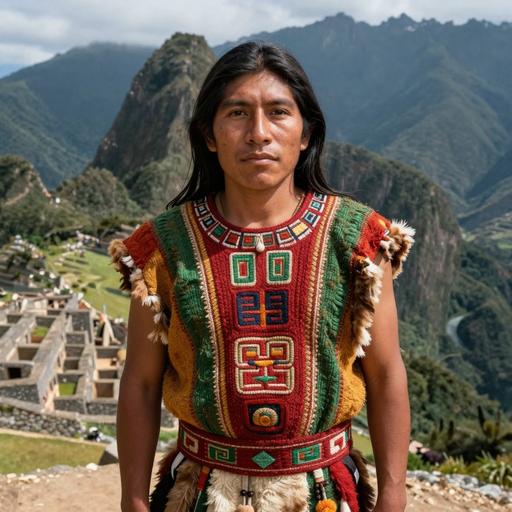
Portrait reconstruction of MOM6
Ancient Individual

A man buried in Mexico in the Pre-Columbian Central America era

MOM6
4000 BCE - 1500 CE
Male
Pre-Columbian Mexico
Mexico
Scroll to begin
Chapter I

Identity

The biological and cultural markers that define this ancient individual

Sample ID

MOM6

Date Range

4000 BCE - 1500 CE

Biological Sex

Male

mtDNA Haplogroup

C1b

Y-DNA Haplogroup

Q-CTS10359

Cultural Period

Pre-Columbian Mexico

Chapter II

Place

Where this individual was discovered

Country Mexico
Locality Sierra Tarahumara
Chapter III

Time

When this individual lived in the broader context of human history

MOM6 4000 BCE - 1500 CE
Chapter IV

Story

The narrative of this ancient life

Pre-Columbian Mexico refers to the period in the history of the Americas and the specific region that is now modern-day Mexico, which existed prior to the arrival of Christopher Columbus in 1492 and the subsequent Spanish conquests. This era is characterized by the rise and fall of various sophisticated indigenous civilizations, each with its distinct culture, architecture, economies, and social structures.

  1. Civilizations and Societies:

    • Olmec Civilization (c. 1500-400 BCE): Often considered the \mother culture" of Mesoamerica, the Olmecs were centered in the tropical lowlands of south-central Mexico. They are renowned for colossal head sculptures and were instrumental in the development of religious and cultural practices that influenced later societies.
    • Teotihuacan (c. 100 BCE - 750 CE): A vast Mesoamerican city located in the Basin of Mexico, known for its large pyramids such as the Pyramid of the Sun and the Pyramid of the Moon. Teotihuacan was one of the largest cities in the world during its heyday and played a major role in trade and cultural dissemination in the region.
    • Maya Civilization (c. 2000 BCE - 1500 CE): Spread across modern-day southeastern Mexico, Guatemala, Belize, and parts of Honduras and El Salvador. The Maya were noted for their advances in writing, astronomy, mathematics, and architecture, with major city-states such as Tikal, Palenque, and Copán.
    • Zapotec Civilization (c. 700 BCE - 1521 CE): Originating in the Oaxaca Valley, the Zapotecs created a socio-political center at Monte Albán with significant contributions to writing and calendar systems.
    • Mixtec Civilization (c. 1500 BCE - 1523 CE): Thriving in Oaxaca, the Mixtecs are known for their codices which reflect a rich tradition of storytelling and record-keeping.
    • Toltec Civilization (c. 900-1150 CE): Emerging after the fall of Teotihuacan, the Toltecs were influential in central Mexico, with their capital at Tula. They are often credited with the introduction of certain cultural and ceremonial aspects that were later adopted by the Aztecs.
    • Aztec Empire (c. 1428-1521 CE): A dominant force in central Mexico by the time of European contact, the Aztecs built their capital at Tenochtitlan on Lake Texcoco. They had a complex societal structure and are known for their elaborate ceremonies and constructions such as the Templo Mayor.
  2. Society and Culture:

    • Social Structure: Many pre-Columbian societies were hierarchically organized with a ruling class that included kings and nobles, a priestly class, a merchant class, and farmers or commoners. Labor could also include slaves and war prisoners.
    • Religion and Mythology: Religion played a central role in pre-Columbian societies, with deities associated with natural elements, fertility, and agriculture. Rituals often included offerings and, in some societies like the Aztecs, human sacrifices.
    • Art and Architecture: Architecture ranged from the monumental pyramids of Teotihuacan and the Maya to the elaborate stone carvings of the Olmecs. Art often depicted deities, myths, and daily life, expressed through pottery, sculptures, and murals.
  3. Scientific and Technological Achievements:

    • Writing and Record Keeping: The Maya developed a hieroglyphic writing system, one of the few fully developed writing systems in pre-Columbian America.
    • Calendars: Complex calendar systems were crucial, most notably the Maya Long Count calendar which was used to track longer periods of time.
    • Agriculture and Economy: Domestication of crops such as maize, beans, and squash formed the basis of agriculture. Complex trade networks connected various civilizations, facilitating the exchange of goods like jade, cacao, and textiles.
  4. Legacy and Influence:

    • The pre-Columbian era left a profound influence on modern Mexican culture, from language and cuisine to traditional practices and festivities.
    • Archaeological sites continue to offer significant insight into these societies, contributing to a broader understanding of human history and development.

Understanding pre-Columbian Mexico is crucial for appreciating the complexity, diversity, and richness of Native American cultures that existed long before the advent of European influences."

Chapter V

Genetics

The genetic ancestry of this ancient individual

Ancient Genetic Admixture

This analysis compares the DNA profile of MOM6 with ancient reference populations, showing the genetic composition in terms of prehistoric ancestral groups.

Ancient Native Americans 68.6%
Ancient Asians 17.7%
Neolithic Farmers 8.7%
Ancient Africans 5.0%

Modern Genetic Admixture

This analysis compares the DNA profile with present-day reference populations, showing what percentage of genetic makeup resembles modern populations from different regions.

America 87.9%
America 87.9%
Native American 87.9%
Asia 7.8%
Chinese & Southeast Asian 7.2%
Chinese 7.2%
Northern Asian 0.5%
Siberian 0.5%
Africa 4.3%
West African 4.3%
Ghanaian, Liberian, Sierra Leonean 4.3%

Closest Modern Populations

These are the modern populations showing the closest statistical alignment to A man buried in Mexico in the Pre-Columbian Central America era, ranked by genetic distance. Lower distance values indicate closer statistical similarity.

1
Pima
2.8649
2
Huichol
3.0562
3
Mixe
3.0793
4
Mayan
3.4614
5
Zapotec
3.4711
6
Mixtec
3.4967
7
Nahua
3.6970
8
Cachi
3.7318
9
Bolivian Lapaz
4.1877
10
Colla
4.4957
Chapter VI

Context

Other ancient individuals connected to this sample

Sources

References

Scientific publications and genetic data

Scientific Publication

POPULATION GENETICS. Genomic evidence for the Pleistocene and recent population history of Native Americans

Authors Raghavan M, Steinrücken M, Harris K
Abstract

How and when the Americas were populated remains contentious. Using ancient and modern genome-wide data, we found that the ancestors of all present-day Native Americans, including Athabascans and Amerindians, entered the Americas as a single migration wave from Siberia no earlier than 23 thousand years ago (ka) and after no more than an 8000-year isolation period in Beringia. After their arrival to the Americas, ancestral Native Americans diversified into two basal genetic branches around 13 ka, one that is now dispersed across North and South America and the other restricted to North America. Subsequent gene flow resulted in some Native Americans sharing ancestry with present-day East Asians (including Siberians) and, more distantly, Australo-Melanesians. Putative "Paleoamerican" relict populations, including the historical Mexican Pericúes and South American Fuego-Patagonians, are not directly related to modern Australo-Melanesians as suggested by the Paleoamerican Model.

G25 Coordinates

The G25 coordinates for sample MOM6 can be used for detailed admixture analysis in our G25 Studio tool.

MOM6,0.04529648,-0.31943968,0.10671654,0.09837952,-0.1114356,-0.02546624,-0.27967592,-0.32710656,-0.01302584,-0.0140225,0.00452778,-0.00025028,-0.00182208,0.02361734,-0.00616956,-0.00172748,0.00575932,0.00379246,0.00286738,-0.00086688,0.00290668,0.0041187,-0.00188664,-0.00424508,-0.00408343
Analyze in G25 Studio
Use code for 40% off Expires Feb 26