Menu
Store
Blog
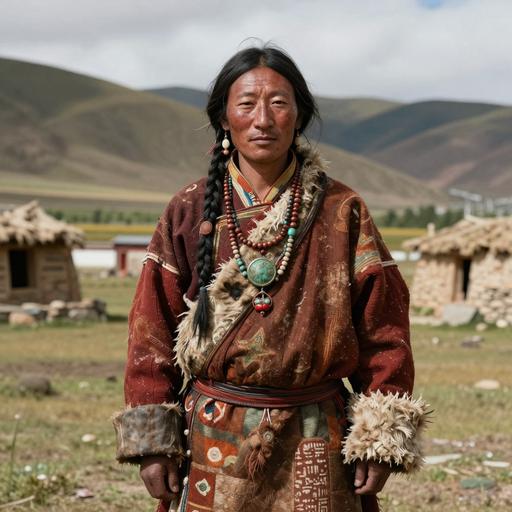
Portrait reconstruction of C3455
Ancient Individual

A man buried in China in the Neolithic era

C3455
364 BCE - 121 BCE
Male
Tibetan Plateau (Jiesang)
China
Scroll to begin
Chapter I

Identity

The biological and cultural markers that define this ancient individual

Sample ID

C3455

Date Range

364 BCE - 121 BCE

Biological Sex

Male

mtDNA Haplogroup

Not available

Y-DNA Haplogroup

O-CTS1642

Cultural Period

Tibetan Plateau (Jiesang)

Chapter II

Place

Where this individual was discovered

Country China
Locality Jiesang (Shannan)
Coordinates 29.2000, 91.8000
Chapter III

Time

When this individual lived in the broader context of human history

C3455 364 BCE - 121 BCE
Chapter IV

Story

The narrative of this ancient life

The pre-Tibetan culture of the Tibetan Plateau, often referred to in historical contexts as the Jiesang Culture, is a fascinating period that predates the Tibetan Empire, offering insights into the earliest human societies occupying this high-altitude region. This era can be defined by its unique adaptation strategies, spiritual practices, and social structures, all developed in response to one of the world's most challenging environments.

Geographic and Environmental Context

The Tibetan Plateau, often termed the \Roof of the World," is the highest and largest plateau on Earth, with an average elevation of around 4,500 meters (14,800 feet). The pre-Tibetan era was characterized by severe climatic conditions, including low oxygen levels, intense sunlight, cold temperatures, and a short growing season. Despite these challenges, the region's unique geography, dotted with isolated valleys and vast grasslands, provided niches for early human settlements.

Archaeological Evidence

The earliest evidence of human occupation in the Tibetan Plateau is traced back over 20,000 years, with the most significant archaeological findings dating to around 3,000-4,500 years ago. Archaeological sites have yielded tools made of stone and bone, remnants of hearths, and domesticated animal remains, indicating the development of early agricultural and pastoral lifestyles. These artifacts suggest a culture that relied heavily on both hunting and herding, with a gradual shift towards the domestication of yaks and goats, which were well-suited to the high-altitude conditions.

Sociocultural Organization

The Jiesang culture, as part of the broader pre-Tibetan societies, was likely organized into small, kin-based groups or tribes. These communities were egalitarian, with leadership roles likely emerging from displays of wisdom or spiritual authority rather than formal political structures. Social cohesion was essential for survival, leading to tightly-knit community bonds and shared responsibilities among group members.

Technological and Economic Practices

The economic activities in pre-Tibetan culture were based on a mix of nomadic pastoralism and rudimentary agriculture. The inhabitants practiced transhumance, moving periodically with their herds between established seasonal pastures to maximize resource use. These movements were guided by an intricate understanding of the landscape and weather patterns. The cultivation of cold-resistant crops such as barley and a reliance on wild foraging supplemented their diet, providing the necessary nutrients in a harsh climate.

Spiritual and Religious Beliefs

Spirituality played a crucial role in the lives of pre-Tibetan societies. While specific details remain elusive due to the scarcity of written records from this period, evidence suggests a deep connection to nature and the landscape. Animistic beliefs likely prevailed, with reverence for natural elements such as the sky, mountains, rivers, and animals. Ritual practices were possibly conducted to appease deities and spirits believed to inhabit the natural world, seeking their favor for protection and prosperity.

Shamans or spiritual leaders might have held significant influence, serving as mediators between the human and spiritual worlds. Their roles probably included healing, prophecy, and leading communal rituals, which were essential for maintaining social harmony and connecting communities with the forces of nature.

Cultural Legacy

While much about the pre-Tibetan cultures remains speculative, their influence is nonetheless evident in the later Tibetan civilization. Many aspects of Tibetan culture, including agricultural practices, social organization, and religious beliefs, have roots in these early societies. The adaptation strategies developed by the pre-Tibetan peoples laid the groundwork for the more complex and well-documented Tibetan civilization that emerged in subsequent centuries.

In conclusion, the pre-Tibetan era on the Tibetan Plateau is marked by resilience and ingenuity, with communities devising creative methods to thrive in a demanding environment. The Jiesang culture exemplifies the enduring human spirit and adaptability, traits that continue to characterize Tibetan society to this day."

Chapter V

Context

Other ancient individuals connected to this sample

Use code for 30% off Expires Apr 04