Menu
Store
Blog
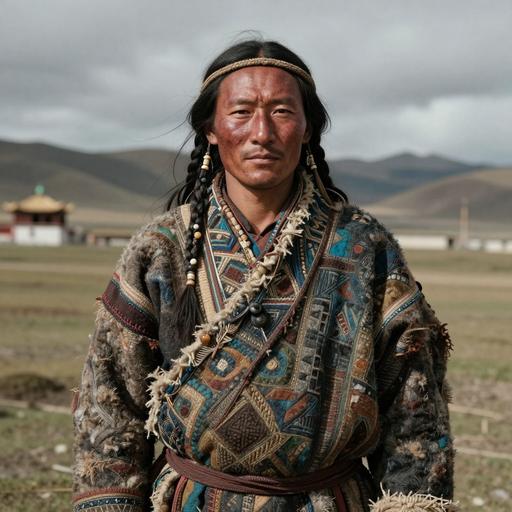
Portrait reconstruction of CSP144
Ancient Individual

A man buried in China in the Iron Age era

CSP144
734 BCE - 403 BCE
Male
Tibetan Plateau (Butaxiongqu) (734 BCE)
China
Scroll to begin
Chapter I

Identity

The biological and cultural markers that define this ancient individual

Sample ID

CSP144

Date Range

734 BCE - 403 BCE

Biological Sex

Male

mtDNA Haplogroup

Not available

Y-DNA Haplogroup

O-M1706

Cultural Period

Tibetan Plateau (Butaxiongqu) (734 BCE)

Chapter II

Place

Where this individual was discovered

Country China
Locality Butaxiongqu (Nagqu)
Coordinates 32.0000, 90.9000
Chapter III

Time

When this individual lived in the broader context of human history

CSP144 734 BCE - 403 BCE
Chapter IV

Story

The narrative of this ancient life

The Tibetan Plateau, often referred to as \the Roof of the World," is a region of significant historical and cultural importance. Around 734 BCE, the area was inhabited by various tribes and clans that contributed to the formation of the early Tibetan culture. This period, although specific historical records are scarce, can be inferred through archaeological findings, oral traditions, and later historical documents.

Geography and Environment

The Tibetan Plateau covers an area of about 2.5 million square kilometers and stands at an average elevation of over 4,500 meters. It is surrounded by the towering ranges of the Himalayas to the south, Kunlun Mountains to the north, and Karakoram Range to the west. The landscape is characterized by vast arid plains, rugged mountain passes, and numerous lakes. The harsh environment, marked by low oxygen levels, cold temperatures, and strong winds, influenced the lifestyle and culture of its inhabitants.

Societal Structure

In 734 BCE, the society on the Tibetan Plateau was composed primarily of nomadic tribes. The social organization was clan-based, with extended families forming the core units of society. These clans were often led by chieftains who held both political and spiritual authority. The tribal confederations would occasionally unite under more powerful leaders to address external threats or for large-scale communal activities such as trade or religious gatherings.

Economy and Livelihood

The economy of the Tibetan Plateau during this era was largely based on pastoralism. The inhabitants relied heavily on yak herding, sheep, and goats for subsistence. These animals provided milk, meat, wool, and pelts, which were vital for survival in the harsh climate. The nomadic lifestyle was complemented by limited agriculture in more viable areas, where barley and other hardy crops could be grown.

Trade with neighboring regions, such as the Indian subcontinent, Central Asia, and China, was significant to the early Tibetan economy. The exchange included salt, wool, and livestock from Tibet, traded for silk, grains, tea, and other goods. This trade fostered cultural exchanges that enriched Tibetan society.

Religion and Belief Systems

Religious practices on the Tibetan Plateau during this time were primarily shamanistic, with an emphasis on animism and ancestor worship. Shamans played a crucial role in mediating between the physical and spiritual worlds, conducting rituals to ensure the well-being of the tribe. Natural features such as mountains, rivers, and lakes were considered sacred and inhabited by spirits.

Although Buddhism had not yet become the dominant religion, early contacts with Indian missionaries might have occurred. These initial interactions possibly laid the groundwork for Buddhism's eventual integration into Tibetan culture.

Language and Writing

The oral tradition was the primary means of preserving history and culture. Storytelling, folklore, and songs were integral in passing down knowledge from generation to generation. The development of the written Tibetan script would occur later, under the influence of neighboring cultures. However, proto-Tibetan language elements were likely present, serving as the basis for later scriptural development.

Art and Culture

Artistic expression in 734 BCE was predominantly through crafting and utilitarian objects, such as pottery, textiles, and metalwork. These often featured intricate designs inspired by natural motifs and spiritual symbolism. Jewelry and ornaments made from bone, horn, and precious metals were common, signifying social status and religious significance.

Political Landscape

The political landscape of the Tibetan Plateau in this era was fragmented, with no central authority presiding over the entire region. Occasional alliances and conflicts between tribes and clans shaped the political dynamics. However, this period laid the groundwork for the later emergence of a unified Tibetan kingdom under the Yarlung dynasty in the 7th century CE.

Conclusion

The Tibetan Plateau around 734 BCE was a land of vibrant cultural traditions, spiritual depth, and adaptive resilience. The interplay between the harsh environment, nomadic lifestyle, and emerging trade networks contributed to the unique identity of early Tibetan culture. While specific historical details from this period are scarce, its legacy remains foundational in understanding the cultural evolution of Tibet in the subsequent centuries."

Chapter V

Context

Other ancient individuals connected to this sample

Use code for 30% off Expires Apr 04