Menu
Store
Blog
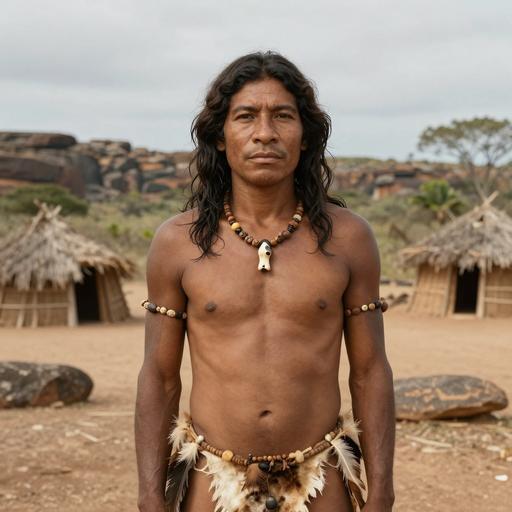
Portrait reconstruction of TDA002
Ancient Individual

A man buried in Brazil in the Archaic era

TDA002
2900 BCE - 2450 BCE
Male
Brazilian Archaic Lagoa de Encantada Hunter-Gatherer
Brazil
Scroll to begin
Chapter I

Identity

The biological and cultural markers that define this ancient individual

Sample ID

TDA002

Date Range

2900 BCE - 2450 BCE

Biological Sex

Male

mtDNA Haplogroup

C1b

Y-DNA Haplogroup

Q-M3

Cultural Period

Brazilian Archaic Lagoa de Encantada Hunter-Gatherer

Chapter II

Place

Where this individual was discovered

Country Brazil
Locality Pedra do Alexandre (Rio Grande du Norde, Carnauba dos Dantas)
Chapter III

Time

When this individual lived in the broader context of human history

TDA002 2900 BCE - 2450 BCE
Chapter IV

Story

The narrative of this ancient life

The Brazilian Archaic Lagoa de Encantada Hunter-Gatherer culture represents a unique and relatively little-known chapter in the history of prehistoric South America. This culture flourished during the Archaic period, which dates from approximately 8000 to 1000 BCE, although the specific timeline concerning the Lagoa de Encantada groups would need to be corroborated by more localized archaeological evidence. The Lagoa de Encantada site is situated in what is now modern-day Brazil, likely within the broader region that comprises the Eastern Athletic Complex or the Brazilian East, an area known for its diverse water bodies and ecological variety that supported early human settlements.

Geographic and Environmental Context

The Lagoa de Encantada culture was primarily located near lagoon and coastal environments, which provided a rich abundance of resources. The region was characterized by a mosaic of biomes, including mangroves, dense rainforests, and savannahs, each offering a variety of faunal and floral resources. These diverse ecosystems supported a wide range of wildlife, including fish, shellfish, birds, and mammals, creating a hospitable environment for hunter-gatherer societies.

Subsistence and Economy

As hunter-gatherers, the Lagoa de Encantada people relied heavily on the exploitation of both terrestrial and aquatic resources. Their diet likely included a mix of marine life such as fish and shellfish, supplemented by hunting terrestrial animals and gathering plant-based foods. This subsistence pattern is identified by an array of archaeological findings, including fish bones, carbonized plant remains, and other waste products indicating shellfish consumption.

The absence of ceramics in their material culture suggests they primarily utilized organic materials for containers and tools, such as carved wood, gourds, or woven baskets, which may not have preserved well in the archaeological record. Stone tools, including scrapers, projectile points, and other lithic artifacts, were essential for hunting and food processing.

Social Structure and Settlement Patterns

The Lagoa de Encantada groups were likely organized into small, mobile bands consisting of extended families. These bands would have moved seasonally, exploiting different ecological zones to make the most of available resources. Evidence of temporary campsites, often found near beneficial water bodies, indicates a pattern of strategic settlement likely dictated by the seasonal availability of resources.

Cultural and Ritual Aspects

While direct evidence of specific cultural or ritual practices is scant due to the lack of durable cultural artifacts like pottery, inference from similar Archaic-period cultures suggests that these people may have engaged in early forms of ritualistic behavior. Burial sites, if discovered in this context, could provide insights into social hierarchies or spiritual beliefs. Moreover, natural features like the lagoons and forests could have held spiritual or symbolic significance, playing roles in shamanistic or animistic traditions that are observed in other indigenous South American cultures.

Interaction and Mobility

Interaction with neighboring groups would have been likely, given the mobile nature of hunter-gatherer societies. Such interactions could lead to trade, the exchange of goods, practices, or matrimonial alliances that strengthened social ties. The exchange networks might have also facilitated the sharing of knowledge and technological innovations, contributing to a broader cultural milieu across regions.

Archaeological Significance

The Lagoa de Encantada culture remains significant in understanding the pre-ceramic cultures of Brazil and their adaptation to diverse environmental niches. As archaeologists continue to uncover and analyze sites associated with this culture, the broader picture of its socio-economic organization and cultural adaptations will emerge, contributing to our understanding of human resilience and ingenuity in archaic periods.

Conclusion

The Brazilian Archaic Lagoa de Encantada Hunter-Gatherer culture exemplifies the adaptability and resourcefulness of early human societies in navigating and thriving within diverse and challenging environments. Further archaeological research is essential to fill the gaps in our current understanding and to appreciate more fully the complexity and richness of these early hunter-gatherer communities.

Chapter V

Context

Other ancient individuals connected to this sample

Sources

References

Scientific publications and genetic data

Scientific Publication

Genomic history of coastal societies from eastern South America

Authors Ferraz T, Suarez Villagran X, Nägele K
Abstract

Sambaqui (shellmound) societies are among the most intriguing archaeological phenomena in pre-colonial South America, extending from approximately 8,000 to 1,000 years before present (yr BP) across 3,000 km on the Atlantic coast. However, little is known about their connection to early Holocene hunter-gatherers, how this may have contributed to different historical pathways and the processes through which late Holocene ceramists came to rule the coast shortly before European contact. To contribute to our understanding of the population history of indigenous societies on the eastern coast of South America, we produced genome-wide data from 34 ancient individuals as early as 10,000 yr BP from four different regions in Brazil. Early Holocene hunter-gatherers were found to lack shared genetic drift among themselves and with later populations from eastern South America, suggesting that they derived from a common radiation and did not contribute substantially to later coastal groups. Our analyses show genetic heterogeneity among contemporaneous Sambaqui groups from the southeastern and southern Brazilian coast, contrary to the similarity expressed in the archaeological record. The complex history of intercultural contact between inland horticulturists and coastal populations becomes genetically evident during the final horizon of Sambaqui societies, from around 2,200 yr BP, corroborating evidence of cultural change.

Use code for 40% off Expires Mar 01