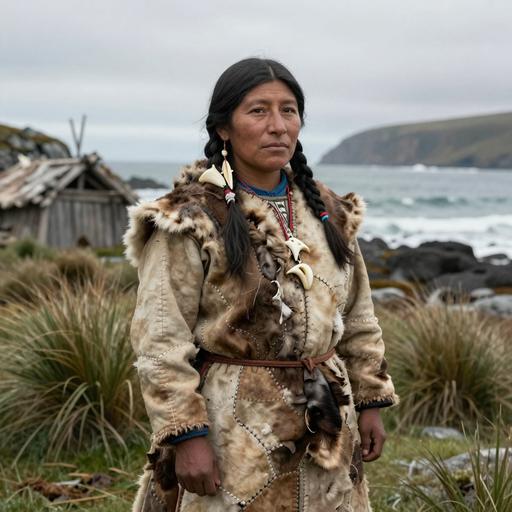
The Kaweskar people, also known as the Alacaluf, have traditionally inhabited the coastal regions and waterways of southern Chile, including the Strait of Magellan. One hundred years ago, in the early 20th century, the Kaweskar culture was in a period of significant transition, affected by both external pressures and internal adaptations.
Geographic Setting
The Strait of Magellan is a natural passage located at the southern tip of Chile, connecting the Atlantic and Pacific Oceans. This harsh and variable climate, characterized by strong winds, cold temperatures, and frequent precipitation, influenced the Kaweskar's way of life. The region’s landscape includes fjords, islands, and narrow channels, which the Kaweskar expertly navigated in their canoes.
Lifestyle and Subsistence
The Kaweskar were traditionally nomadic hunter-gatherers, with a lifestyle closely associated with the maritime environment. They were highly skilled navigators and relied heavily on their canoes, made from the bark of the coigue tree, for transportation, hunting, and fishing. Their diet primarily included marine resources such as seals, sea lions, shellfish, and fish, supplemented by terrestrial resources like guanacos and berries.
Social Structure and Culture
Kaweskar society was organized into small family groups that traveled together. Social organization was relatively egalitarian, with roles defined by skills and experience rather than formal hierarchies. The knowledge of the land and sea was passed down orally through stories, songs, and myths, reflecting their deep spiritual connection to nature.
Shamanism played a vital role in their spiritual life, and shamans were important cultural figures who conducted rituals and ceremonies to maintain the balance between the natural and spiritual worlds. The Kaweskar believed in a multitude of spirits residing in the natural elements around them, and rituals were essential for ensuring safety during voyages and success in hunting.
Clothing and Shelter
The Kaweskar adapted ingeniously to their environment, crafting clothing from animal skins, particularly from sea lions, to protect against the cold and wet conditions. They constructed temporary shelters known as \putas," made from tree branches and covered with furs and skins, designed to be easily assembled and disassembled as they moved along the coast.
Language
The Kaweskar language, part of the Kawesqaran language family, is an essential component of their identity. It was traditionally an oral language with no written script, rich in vocabulary related to their maritime lifestyle. Efforts to preserve the language have become increasingly important in recent decades, as the number of fluent speakers has dwindled.
Challenges and Changes
By the early 20th century, the Kaweskar faced significant challenges from external influences, including European colonization, which brought about cultural disruptions, diseases, and economic changes. Their population drastically declined due to diseases introduced by Europeans and violence. Surviving Kaweskar were often forced to assimilate into the dominant Chilean society, leading to a loss of traditional practices and further reduction in the use of their native language.
Cultural Resilience
Despite these pressures, the Kaweskar have shown remarkable resilience. Efforts to revitalize and preserve their cultural heritage continue, through both local initiatives and collaboration with national and international organizations. Today, the Kaweskar community works to reclaim and honor their traditions, language, and history, ensuring that their rich cultural legacy endures for future generations."