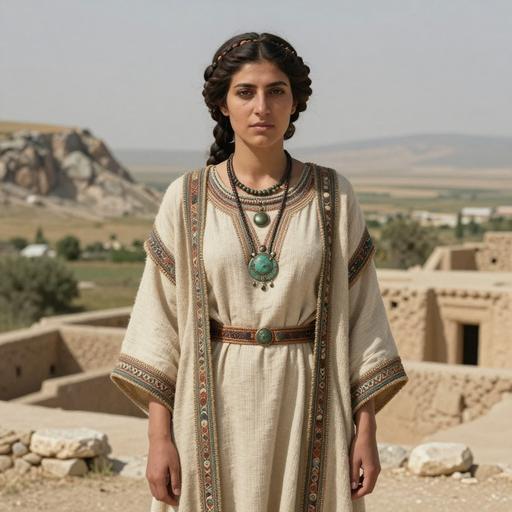
The Early Bronze Age in Anatolia, a region that is now part of modern-day Turkey, is a fascinating period marked by significant cultural, social, and technological developments. This era roughly spans from 3000 to 2000 BCE and is characterized by the emergence of complex societies and the expansion of trade networks, metallurgy, and urbanization.
Geography and Environment
Anatolia, strategically positioned as a bridge between Asia and Europe, is characterized by a diverse geography that includes mountains, plateaus, and coastal regions. This geographic diversity contributed to the development of distinct regional cultures and economies within the broader Early Bronze Age Anatolian civilization.
Societal Structure
During the Early Bronze Age, Anatolia saw the development of increasingly stratified societies. Small villages began to transform into larger, fortified settlements, suggesting the emergence of social hierarchies and centralized authority. The presence of fortified sites like Troy and Alaca Höyük indicates concerns about defense and the protection of resources.
Economy
The economy of Early Bronze Age Anatolia was largely agricultural, supplemented by animal husbandry. The fertile lands, particularly along river valleys, were ideal for farming. Additionally, Anatolia was rich in natural resources such as metals, including copper and, later, tin, which were essential for bronze production. This metallurgical ability allowed Anatolia to engage in extensive trade networks spreading across the Near East.
Metallurgy
The era is distinguished by significant advancements in metallurgy. The introduction and refinement of bronze tools and weapons marked substantial technological progress from the previous Chalcolithic period. Anatolia's access to metal resources facilitated the production and distribution of metal goods, which became highly prized trade items.
Trade
Trade networks expanded considerably during this period. Anatolian traders exchanged raw materials and finished goods, not only within the region but also with neighboring areas such as Mesopotamia, the Aegean, and the Caucasus. The exchange of goods also facilitated cultural and technological exchanges, influencing Anatolian societies.
Settlement Patterns
Early Bronze Age settlements varied in size and complexity. Key sites such as Troy, Kültepe, and Alaca Höyük provide archaeological evidence of urbanization, including well-planned layouts and public buildings. These sites illustrate complex architectural techniques and advanced planning indicative of sophisticated societal organization.
Religion and Culture
Religious practices and cultural expressions during the Early Bronze Age in Anatolia were diverse. Archaeological findings, including figurines, pottery, and burial goods, suggest a society rich in ritual and symbolism. Cemeteries like those at Alaca Höyük reveal burial customs that included elaborate grave goods, indicating beliefs in an afterlife.
Art and Craftsmanship
Art and craftsmanship flourished, with artisans producing intricate pottery, textiles, and metalwork. Pottery from this era, such as the red-slipped and burnished wares, showcases both utilitarian and aesthetic aspects. Artistic motifs often reflected natural themes and religious symbols.
Decline and Transition
By the end of the Early Bronze Age, many of the Anatolian settlements experienced disruptions, which could be attributed to a combination of factors like climate change, internal social upheavals, or external invasions. This transition period eventually led to the Middle Bronze Age, which continued to build on the developments of the Early Bronze Age.
In summary, the Early Bronze Age in Anatolia was a dynamic era that laid the foundations for subsequent cultural and political developments. The advancements in metallurgy, trade, and societal structures established during this period had a lasting impact on the history of Anatolia and surrounding regions.