Menu
Currency
Main
Store
Blog

Loading Report

Preparing your ancestry journey

Connecting to ancient matches...

Preparing your report

Skip to main content
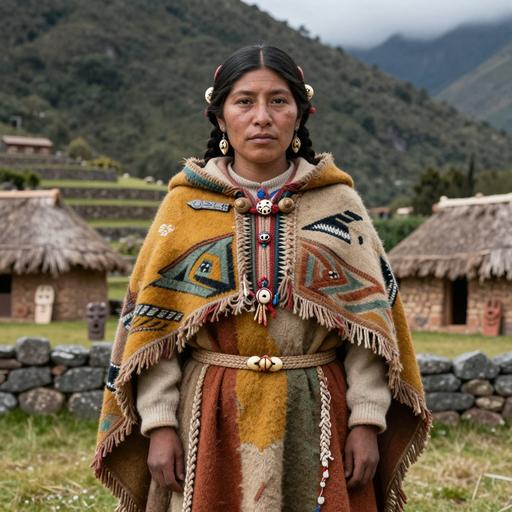
Portrait reconstruction of A woman buried in Peru in the Pre-Columbian South America era
Ancient Individual

A woman buried in Peru in the Pre-Columbian South America era

A woman buried in Peru during the Rio Uncallane, Peru 1,600 Years Ago

A fragment of the ancient world, preserved across millennia in strands of DNA.

IL3
140 CE - 338 CE
Female
Peru
Scroll to begin
Chapter I

Identity

The biological and cultural markers that define this ancient individual

Sample ID

IL3

Date Range

140 CE - 338 CE

Cultural Period

Rio Uncallane, Peru 1,600 Years Ago

Biological Sex

Female

mtDNA Haplogroup

B2

Y-DNA Haplogroup

N/A (Female)

Social Role

Farmer (AI estimate, era-typical)

Chapter II

Place

Where this individual was discovered

Country Peru
Locality Rio Ilave Basin. Rio Uncallane
Chapter III

Time

When this individual lived in the broader context of human history

IL3 140 CE - 338 CE
Chapter IV

Story

The narrative of this ancient life

Overview

The Rio Uncallane phase is used to describe an early period of activity (roughly 300–550 CE) on Peru’s coastal region, associated in archaeology with Tiwanaku-related cultural influence. It represents an era when long-distance connections were expressed in local material culture while valley-based economies remained central.

Region & Environment

This sequence is tied to Peru’s southern coastal and valley environments, where farming depended on irrigation from river systems and where marine resources could complement agriculture. The arid coastal setting made water control and proximity to productive zones essential for sustaining settlements.

Historical Context

During Late Antiquity, the broader Tiwanaku world is archaeologically recognized across parts of the Andes and nearby regions. The Rio Uncallane record is placed within this context, suggesting that coastal communities experienced or adopted aspects of Tiwanaku-related practices during the early centuries of the common era.

Populations & Lifeways

Populations were likely organized around irrigated agriculture in valley settings, with fishing and gathering contributing to diets. Household economies would have included farming, food processing, and routine craft production, while participation in exchange networks provided access to goods and materials with wider affiliations.

Archaeology & Material Culture

Material culture evidence for Rio Uncallane typically relies on ceramic and other durable artifacts that can be compared to Tiwanaku-associated stylistic traits. In many such contexts, archaeology highlights both local continuity and the presence of non-local or shared technological and stylistic elements.

Culture & Society

Social life in valley settings required coordinated labor for irrigation and maintenance of settlement areas. Tiwanaku-related influence—when present—would have been mediated through networks of trade, artisanship, and shared cultural practices, shaping local identities without eliminating local lifeways.

Legacy & Transition

The Rio Uncallane sequence provides an early baseline for understanding later developments in the region’s cultural landscape. Over subsequent centuries, shifting political and economic connections helped set the stage for later coastal Late Intermediate patterns.

Context

Related Samples

This individual exists within a broader network of ancient samples. No ancient genome stands alone.

Sample ID Culture/Period Date Location Action
IL2 Rio Uncallane, Peru 1,800 Years Ago 100 CE Rio Ilave Basin. Rio Uncallane, Peru View
IL3 Rio Uncallane, Peru 1,600 Years Ago 140 CE Rio Ilave Basin. Rio Uncallane, Peru View
IL7 Rio Uncallane, Peru 1,600 Years Ago 120 CE Rio Ilave Basin. Rio Uncallane, Peru View
IL5 Rio Uncallane, Peru 1,600 Years Ago 225 CE Rio Ilave Basin. Rio Uncallane, Peru View
IL4 Rio Uncallane, Peru 1,600 Years Ago 417 CE Rio Ilave Basin. Rio Uncallane, Peru View
K1 Unknown Period Kaillachuro, Peru 6000 BCE Rio Ilave Basin. Kaillachuro, Peru View
SMP5 Soro Mikaya Patjxa, Peru 6,800 Years Ago 4987 BCE Rio Ilave Basin. Soro Mik’aya Patjxa, Peru View
IL2 100 CE Rio Ilave Basin. Rio Uncallane, Peru View
IL3 140 CE Rio Ilave Basin. Rio Uncallane, Peru View
IL4 417 CE Rio Ilave Basin. Rio Uncallane, Peru View
IL5 225 CE Rio Ilave Basin. Rio Uncallane, Peru View
IL7 120 CE Rio Ilave Basin. Rio Uncallane, Peru View
K1 6000 BCE Rio Ilave Basin. Kaillachuro, Peru View
SMP5 4987 BCE Rio Ilave Basin. Soro Mik’aya Patjxa, Peru View
Sample ID Culture/Period Date Location Action
IL3 Rio Uncallane, Peru 1,600 Years Ago 140 CE Rio Ilave Basin. Rio Uncallane, Peru View
IL7 Rio Uncallane, Peru 1,600 Years Ago 120 CE Rio Ilave Basin. Rio Uncallane, Peru View
IL5 Rio Uncallane, Peru 1,600 Years Ago 225 CE Rio Ilave Basin. Rio Uncallane, Peru View
IL4 Rio Uncallane, Peru 1,600 Years Ago 417 CE Rio Ilave Basin. Rio Uncallane, Peru View
Sources

References

Scientific publications and genetic data that inform this profile.

Scientific Publication

The genetic prehistory of the Andean highlands 7000 years BP though European contact

Authors Lindo J, Haas R, Hofman C, Apata M, Moraga M et al.
Abstract

The peopling of the Andean highlands above 2500 m in elevation was a complex process that included cultural, biological, and genetic adaptations. Here, we present a time series of ancient whole genomes from the Andes of Peru, dating back to 7000 calendar years before the present (BP), and compare them to 42 new genome-wide genetic variation datasets from both highland and lowland populations. We infer three significant features: a split between low- and high-elevation populations that occurred between 9200 and 8200 BP; a population collapse after European contact that is significantly more severe in South American lowlanders than in highland populations; and evidence for positive selection at genetic loci related to starch digestion and plausibly pathogen resistance after European contact. We do not find selective sweep signals related to known components of the human hypoxia response, which may suggest more complex modes of genetic adaptation to high altitude.

Use code for 25% off Expires Jul 27