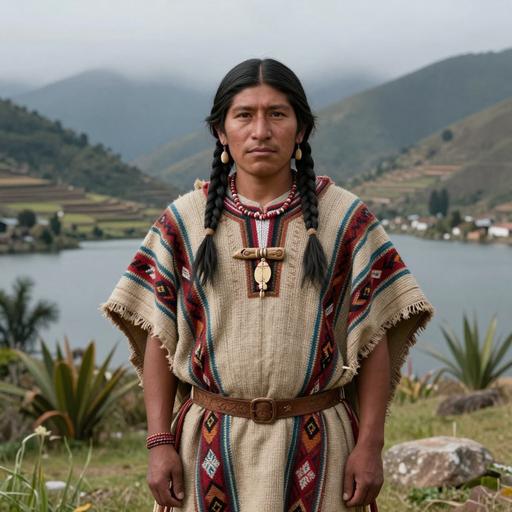
Overview
The Rio Uncallane phase is used to describe an early period of activity (roughly 300–550 CE) on Peru’s coastal region, associated in archaeology with Tiwanaku-related cultural influence. It represents an era when long-distance connections were expressed in local material culture while valley-based economies remained central.
Region & Environment
This sequence is tied to Peru’s southern coastal and valley environments, where farming depended on irrigation from river systems and where marine resources could complement agriculture. The arid coastal setting made water control and proximity to productive zones essential for sustaining settlements.
Historical Context
During Late Antiquity, the broader Tiwanaku world is archaeologically recognized across parts of the Andes and nearby regions. The Rio Uncallane record is placed within this context, suggesting that coastal communities experienced or adopted aspects of Tiwanaku-related practices during the early centuries of the common era.
Populations & Lifeways
Populations were likely organized around irrigated agriculture in valley settings, with fishing and gathering contributing to diets. Household economies would have included farming, food processing, and routine craft production, while participation in exchange networks provided access to goods and materials with wider affiliations.
Archaeology & Material Culture
Material culture evidence for Rio Uncallane typically relies on ceramic and other durable artifacts that can be compared to Tiwanaku-associated stylistic traits. In many such contexts, archaeology highlights both local continuity and the presence of non-local or shared technological and stylistic elements.
Culture & Society
Social life in valley settings required coordinated labor for irrigation and maintenance of settlement areas. Tiwanaku-related influence—when present—would have been mediated through networks of trade, artisanship, and shared cultural practices, shaping local identities without eliminating local lifeways.
Legacy & Transition
The Rio Uncallane sequence provides an early baseline for understanding later developments in the region’s cultural landscape. Over subsequent centuries, shifting political and economic connections helped set the stage for later coastal Late Intermediate patterns.