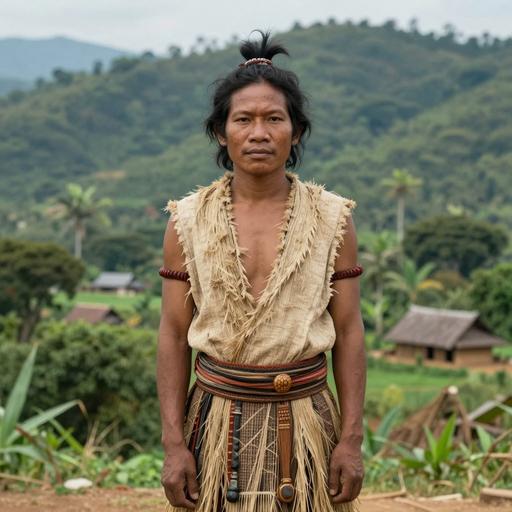
The \Unknown Era" in Laos, though a term not typically used in academic literature, can be imagined as a period prior to the well-documented historical epochs of the region. If we consider this era as one that might predate significant written records and major historical accounts, it would be closely tied to the prehistoric and early historic developments in Southeast Asia, particularly focusing on the cultural, archaeological, and anthropological aspects that shaped early Laotian civilizations.
Geographical Context
Laos is a landlocked country in Southeast Asia, sharing borders with Thailand, Vietnam, Cambodia, China, and Myanmar. Its varied topography, dominated by mountains, forested hills, and river valleys, particularly the Mekong River, has played a crucial role in the cultural and economic development of the region. The river would have served as a vital source of water, a means of transportation, and a fertile ground for agricultural development, encouraging early settlement patterns.
Archaeological Evidence
The prehistoric era of Laos can be traced back to the presence of human activity during the Paleolithic era, with evidence of stone tools and early human remains suggesting that the region was inhabited by hunter-gatherer communities. Over time, these communities began to transition into more settled agricultural societies with the advent of rice cultivation, which likely played a pivotal role in the social and cultural development of the area.
Early Cultures and Influences
Bronze and Iron Age Cultures: The Bronze Age in Southeast Asia saw the emergence of complex societies marked by advancements in metallurgy, pottery, and agriculture. In Laos, sites like Ban Chiang provide insights into the material culture of the period, reflecting a society skilled in bronze production, which would have facilitated trade and interaction with neighboring regions.
Dong Son Culture: This influential culture, centered in present-day Vietnam, likely extended its influence into Laos. Known for their sophisticated bronze drums, the Dong Son people contributed to the development of regional trade networks and cultural exchanges, introducing new agricultural techniques, religious practices, and artistic styles.
Contact with Indian Civilization: By the first few centuries CE, the spread of Indian civilization brought considerable influence through trade and the dissemination of cultural and religious practices. Buddhism and Hinduism introduced complex religious and philosophical ideas, which began to shape local cultures.
Cultural and Societal Development
The transition from prehistoric to historic periods in Laos involved the transformation from small, tribal communities into more organized political entities. Early forms of statehood likely emerged as a result of increased agricultural surplus, population growth, and the need for defense and resource management.
Language and Communication: The linguistic landscape of the Unknown Era would have been diverse, with Austroasiatic and Tai-Kadai language families dominating. Oral traditions and possibly pictographic forms of communication could have been prevalent, serving as the main vehicle for cultural transmission.
Religious Practices: Indigenous belief systems, including animism and ancestor worship, would have characterized early religious life. The introduction of Indian religions later on added layers of complexity, contributing to the region’s rich spiritual tapestry.
Art and Architecture: Early Laotian societies likely expressed their cultural identity through art forms such as pottery, weaving, and metallurgy. The influence of neighboring cultures and the eventual introduction of Theravada Buddhism would have been reflected in evolving artistic motifs and emerging architectural structures, such as stupas and temples.
Conclusion
While the "Unknown Era" of Laos is characterized by limited direct historical evidence, the amalgamation of archaeological findings, linguistic studies, and regional influences provides a framework to understand the early cultural landscape of Laos. This era laid the foundational elements for the eventual rise of organized states such as Lan Xang and contributed to the rich tapestry of Laotian heritage, which continues to be celebrated today."