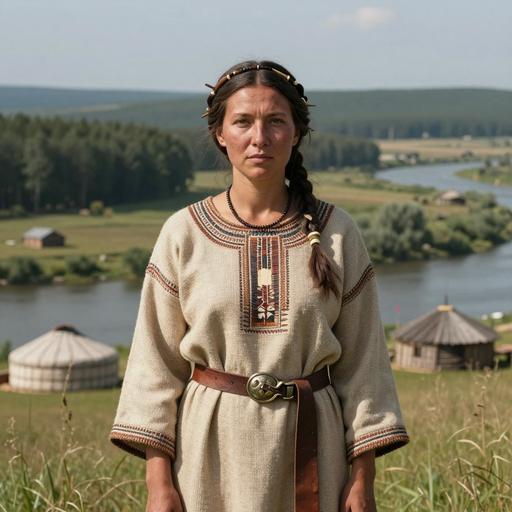
The Early Bronze Age Ust-Belaya culture, located in the Siberian region of Russia, represents a fascinating era marked by the transition from the Neolithic lifestyle to more complex societal structures characterized by the usage of bronze. This cultural epoch is named after the village of Ust-Belaya, where significant archaeological findings have contributed to our understanding of the area's early human inhabitants.
Geographic and Environmental Context
Ust-Belaya is situated in the far eastern part of Siberia, a region known for its harsh climatic conditions, including long, severe winters and short, cool summers. The area's geography, dominated by vast taigas and numerous rivers, shaped the lifestyle and survival strategies of its ancient inhabitants. The presence of the Belaya River would have provided not only a source of water but also a means of transport and communication, fostering connections with neighboring communities and facilitating the exchange of goods and cultural practices.
Cultural and Societal Structure
The Ust-Belaya culture of the Early Bronze Age is characterized by the gradual development of more complex social structures compared to the preceding Neolithic period. Society was likely organized into small, kin-based groups or clans, which cooperated in activities such as hunting, fishing, and later agricultural practices. The beginnings of social stratification might be observed in the burial practices, where some individuals were interred with more elaborate grave goods than others, indicating their higher status or role within the community.
Economic Activities
The economy of the Ust-Belaya culture was primarily based on a subsistence lifestyle. Hunting and fishing would have been significant, utilizing the abundant wildlife of the Siberian taigas and rivers. Evidence of early agriculture has been found in the form of basic cultivation tools and plant remains, suggesting a mixed economy where farming began to play a more prominent role.
The advent of bronze metallurgy marks this culture as part of the Early Bronze Age. The people of Ust-Belaya began to utilize this new technology in tools and weapons, which were crucial for both daily survival and potential conflicts or status demonstration. Access to metal resources, however, was likely limited and highly valued, resulting in trade with distant areas that had more abundant metallurgical supplies.
Material Culture and Technological Developments
Archaeological findings from Ust-Belaya reveal a variety of artifacts that shed light on the technological and artistic capabilities of this culture. Pottery, often undecorated or only minimally adorned, served both practical and ceremonial purposes. Tools and weapons crafted from bronze suggest a growing proficiency in metallurgy, while stone and bone tools continued to be used for a variety of functions.
Artifacts such as adornments and jewelry, possibly made from local semi-precious stones and metals, indicate a developing sense of personal identity and aesthetics, reflecting a culture that valued not only utility but also artistic expression.
Religious Beliefs and Practices
While direct evidence of religious practices from the Ust-Belaya culture is limited, it is likely that the people held animistic beliefs, as was common among many early Siberian and Eurasian cultures. Natural elements and animals might have been revered or associated with spiritual significance. Burial practices offer some insight into their belief system, suggesting a concern with the afterlife and the role of the deceased within the community.
Interaction and Trade
The strategic location of Ust-Belaya along river routes facilitated communication and trade with other cultures and neighboring regions. This exchange would have allowed for the transfer of goods such as furs, stones, and metals, as well as the sharing of technological innovations and cultural ideas. The interactions with other groups might have contributed to the development of more advanced societal structures and technological progress.
Conclusion
The Early Bronze Age Ust-Belaya culture in Siberia represents a crucial phase in human history, where the foundations of more complex social, economic, and technological systems were laid. Through adaptation to their challenging environment and interactions with neighboring cultures, the people of Ust-Belaya played a vital role in the broader narrative of human development in the vast and diverse landscape of Siberia. The archaeological record, though incomplete, continues to offer valuable insights into their way of life, innovations, and cultural legacy.