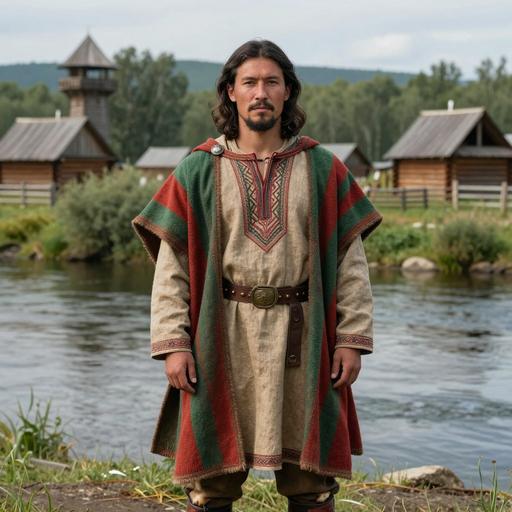
Medieval Yana, located in what is now considered the eastern part of the historical Slavic territories in Russia, presents a fascinating chronicle of cultural, social, and political transformations. The period, which stretches roughly from the early 9th century to the late 15th century, is marked by the integration of East Slavic tribes, the adoption of Orthodox Christianity, and the interactions with various nomadic tribes and empires.
Geographical and Historical Context
Yana, during the medieval period, was part of a broader area occupied by East Slavic tribes, extending over the forested and steppe regions of Eastern Europe. This region's critical geographical features included vast forests, fertile plains, and numerous rivers, like the Volga and Dnieper, serving as vital trade routes that connected the northern territories with Byzantine and other southern cultures.
Socio-Political Structure
The socio-political landscape of Medieval Yana was characterized by a mix of tribal governance and evolving principalities. Influenced by the Varangian (Viking) rulers who established the Kievan Rus' state, the regional governance structure included powerful local leaders known as princes or knyaz. These rulers were part of loose confederations and engaged in both alliances and conflicts to consolidate power across different territories. With time, power began to centralize around major principalities such as Novgorod and Kiev, which also influenced the Yana region.
Cultural and Religious Evolution
The cultural tapestry of Medieval Yana was richly woven with Slavic paganism initially, characterized by the worship of a pantheon of gods, such as Perun and Dazhbog, whose significance was closely tied to nature and warfare. However, the pivotal moment in cultural shift occurred in 988 AD with the Christianization of Kievan Rus', when Vladimir the Great officially adopted Orthodox Christianity. This conversion influenced much of Yana, gradually replacing pagan traditions and integrating the region into the Eastern Orthodox cultural sphere, fostering ties with Byzantium.
Economy and Trade
The economy of Medieval Yana was significantly agrarian, with agriculture forming the bedrock of the local economy. The commercial activities were boosted by its strategic position along the trade routes between Scandinavia, the Byzantine Empire, and the Middle East. Key commodities traded included furs, wax, honey, and later, grains. The presence of rivers facilitated both internal communications and trade exchanges with the broader European and Asian worlds.
Artistic and Intellectual Life
In terms of artistic expression, Medieval Yana was notably influenced by Byzantine styles, especially visible in church architecture and religious iconography. The construction of Orthodox churches with their distinctive onion domes and decorative frescoes became prominent. The invention of Cyrillic script in the 10th century, credited to Saints Cyril and Methodius, spurred the growth of literacy and documentation in the region, leading to the creation of important historical texts such as the Primary Chronicle.
Interactions with Neighboring Cultures
Throughout its medieval history, Yana interacted with numerous cultures, primarily through trade and conflict. To the east and south, the region encountered Turkic nomadic tribes such as the Pechenegs and Cumans, often resulting in militarized skirmishes or alliances. The Mongol invasion in the 13th century marked another significant epoch, leading to the establishment of the Mongol yoke under the Golden Horde, which exerted control over the region for several generations, impacting political structures and economic practices.
Legacy
The legacy of Medieval Yana is integral to the broader East Slavic cultural and political identity that eventually evolved into the modern Russian state. The region's history serves as a testament to the adaptability and resilience of the East Slavic peoples, reflecting a synthesis of indigenous traditions with foreign influences. This era laid the foundational stones for future developments in Russian society, governance, religion, and culture. The resilience and melding of old and new during this period illustrate a dynamic progression that would shape the identity and direction of Russia for centuries to follow.