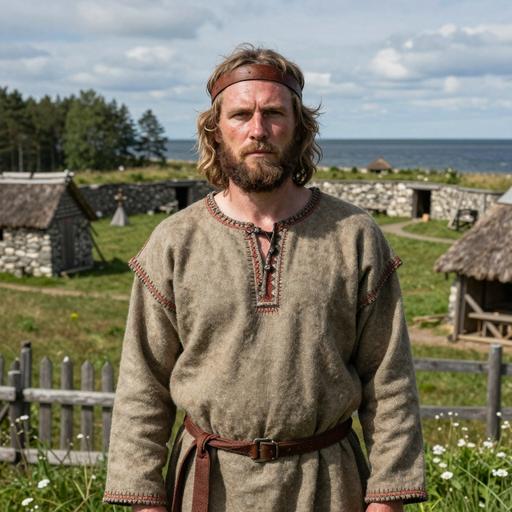
snb010 - A man buried in Sweden in the Iron Age era

Download PDF creates a visual, rasterized copy. Use Print for selectable text and better assistive-technology support.

Menu
Currency
Main
Store
Blog

Loading Report

Preparing your ancestry journey

Connecting to ancient matches...

Preparing your report

Skip to main content
Portrait reconstruction of A man buried in Sweden in the Iron Age era
Ancient Individual

A man buried in Sweden in the Iron Age era

A man buried in Sweden during the Southern Swedish Pre-Viking Culture

A fragment of the ancient world, preserved across millennia in strands of DNA.

snb010
450 CE - 500 CE
Male
Sweden
Scroll to begin
Chapter I

Identity

The biological and cultural markers that define this ancient individual

Sample ID

snb010

Date Range

450 CE - 500 CE

Cultural Period

Southern Swedish Pre-Viking Culture

Biological Sex

Male

mtDNA Haplogroup

K2a

Y-DNA Haplogroup

I-Y4766

Social Role

Farmer (AI estimate, era-typical)

Chapter II

Place

Where this individual was discovered

Country Sweden
Locality Sandby Borg (Kalmar län, Mörbylånga)
Coordinates 56.5500, 16.6300
Chapter III

Time

When this individual lived in the broader context of human history

snb010 450 CE - 500 CE
Chapter IV

Story

The narrative of this ancient life

Overview

Southern Swedish Pre-Viking Culture describes the Iron Age interval immediately preceding the Viking Age, within a broad Germanic context. In this period, communities in southern Sweden maintained established settlement traditions while participating in wider exchange and stylistic networks.

Region & Environment

Southern Sweden’s landscapes provided productive farmland and access to waterways that supported movement of people and goods. Coastal and river routes helped link inland farms with coastal communities and with seaborne exchange.

Environmental conditions in the late first millennium CE supported continued mixed farming, with local ecosystems providing supplementary resources such as fish and game.

Historical Context

The years 550–793 CE fall within the later Iron Age in Scandinavia, often discussed as a phase of increasing regional interaction that culminated in the Viking Age. Across Northern Europe, changing political and economic conditions influenced patterns of wealth display, craft specialization, and long-distance contact.

In southern Sweden, these pressures are most visible archaeologically through material styles and the distribution of higher-status objects.

Populations & Lifeways

Populations were primarily rural, with household-based farming and seasonal rhythms shaping daily life. Subsistence likely combined cereal cultivation with animal husbandry, supplemented by local hunting and fishing.

Crafting and processing activities—such as metalworking, tool production, and woodworking—were important components of lifeways and would have been organized at different scales, from households to specialized workshops.

Archaeology & Material Culture

Archaeological evidence for this era commonly includes grave goods and domestic artifacts. Metalwork—especially in iron and bronze contexts—can reveal both local production practices and imported or inspired items.

Settlement remains, where preserved, may include structural features such as post-built houses and ancillary buildings, along with everyday utensils. The presence of weapon-related items and valued personal ornaments (where documented) indicates social differentiation and participation in broader exchange networks.

Culture & Society

Social life in the pre-Viking period can be approached through patterns of burial practice, artifact distribution, and evidence for wealth display. Communities were likely organized in networks of kin and local alliances, with status communicated through objects and craft access.

The material culture also suggests ongoing interaction across the Baltic and Scandinavian regions, visible through stylistic similarities and potentially through movement of people and goods.

Legacy & Transition

This pre-Viking interval reflects foundations that the Viking Age would expand: established routes, craft traditions, and networks of exchange. Transition into the Viking Age is seen archaeologically in changes in object types, burial practices, and the intensity or visibility of long-distance contact.

Studying the pre-Viking centuries helps explain how Scandinavian societies became positioned—economically and culturally—for later maritime expansion.

Context

Related Samples

This individual exists within a broader network of ancient samples. No ancient genome stands alone.

Sample ID Culture/Period Date Location Action
wes003 Medieval Northern Swedish Culture 1016 CE Vasterhus (Jämtlands län, Östersund), Sweden View
wes004 Medieval Northern Swedish Culture 1016 CE Vasterhus (Jämtlands län, Östersund), Sweden View
snb017 Southern Swedish Pre-Viking Culture 450 CE Sandby Borg (Kalmar län, Mörbylånga), Sweden View
snb018 Southern Swedish Pre-Viking Culture 450 CE Sandby Borg (Kalmar län, Mörbylånga), Sweden View
kro004 Southern Swedish Post-Medieval Culture 1676 CE Kronan (Kalmar län, Mörbylånga), Sweden View
kro006 Southern Swedish Post-Medieval Culture 1676 CE Kronan (Kalmar län, Mörbylånga), Sweden View
wes005 Medieval Northern Swedish Culture 1016 CE Vasterhus (Jämtlands län, Östersund), Sweden View
wes007 Medieval Northern Swedish Culture 1163 CE Vasterhus (Jämtlands län, Östersund), Sweden View
gam872 Late Viking Age Culture of Central Sweden 950 CE Gammelbyn Börstil (Uppsala län, Östhammar), Sweden View
kro010 Southern Swedish Post-Medieval Culture 1676 CE Kronan (Kalmar län, Mörbylånga), Sweden View
kro011 Southern Swedish Post-Medieval Culture 1676 CE Kronan (Kalmar län, Mörbylånga), Sweden View
kvi001 Viking Age Gotlanders 800 CE Eksta Kvie (Gotlands län, Gotland), Sweden View
lau001 Pre-Viking Gotland Culture 600 CE Gannor (Gotlands län, Gotland), Sweden View
vls696 Late Viking Age Culture of Central Sweden 996 CE Norrsunda (Stockholms län, Sigtuna), Sweden View
wes001 Medieval Northern Swedish Culture 1016 CE Vasterhus (Jämtlands län, Östersund), Sweden View
ven001_viking Vendel Culture 560 CE Vendel (Uppsala), Sweden View
als010 Late Viking Age Culture of Central Sweden 950 CE Alsike (Uppsala län, Knivsta), Sweden View
als015 Late Viking Age Culture of Central Sweden 800 CE Alsike (Uppsala län, Knivsta), Sweden View
frc007 Northern Swedish Viking Culture 950 CE Frösön (Jämtlands län, Östersund), Sweden View
ful001 Vendel Culture 242 CE Fullero (Uppsala län, Uppsala), Sweden View
kro001 Southern Swedish Post-Medieval Culture 1676 CE Kronan (Kalmar län, Mörbylånga), Sweden View
kro002 Southern Swedish Post-Medieval Culture 1676 CE Kronan (Kalmar län, Mörbylånga), Sweden View
kro012 Southern Swedish Post-Medieval Culture 1676 CE Kronan (Kalmar län, Mörbylånga), Sweden View
kro013 Southern Swedish Post-Medieval Culture 1676 CE Kronan (Kalmar län, Mörbylånga), Sweden View
gor164 Late Viking Age Culture of Central Sweden 1000 CE Gorla (Stockholms län, Norrtälje), Sweden View
gor358 Late Viking Age Culture of Central Sweden 750 CE Gorla (Stockholms län, Norrtälje), Sweden View
rtp001 Northern Swedish Pre-Viking Culture 450 CE Romback (Västernorrlands län, Ånge), Sweden View
rtp003 Northern Swedish Pre-Viking Culture 450 CE Romback (Västernorrlands län, Ånge), Sweden View
lov001 Vendel Culture 475 CE Lovö (Stockholms län, Ekerö), Sweden View
kro008_viking Southern Swedish Post-Medieval Culture 1676 CE Kronan (Kalmar län, Mörbylånga), Sweden View
kro009_viking Southern Swedish Post-Medieval Culture 1676 CE Kronan (Kalmar län, Mörbylånga), Sweden View
snb010 Southern Swedish Pre-Viking Culture 450 CE Sandby Borg (Kalmar län, Mörbylånga), Sweden View
snb012 Southern Swedish Pre-Viking Culture 450 CE Sandby Borg (Kalmar län, Mörbylånga), Sweden View
bro100 Late Viking Age Culture of Central Sweden 750 CE Sasta (Stockholms län, Täby), Sweden View
hav001 Late Viking Age Culture of Gotland 1000 CE Hablingbo Havor (Gotlands län, Gotland), Sweden View
snb019 Southern Swedish Pre-Viking Culture 450 CE Sandby Borg (Kalmar län, Mörbylånga), Sweden View
stg018 Late Viking Age Culture of Central Sweden 892 CE Sigtuna (Stockholms län, Upplands-Bro), Sweden View
enb508 Late Viking Age Culture of Central Sweden 950 CE Enbacken (Örebro län, Örebro), Sweden View
snb013 Southern Swedish Pre-Viking Culture 450 CE Sandby Borg (Kalmar län, Mörbylånga), Sweden View
snb014 Southern Swedish Pre-Viking Culture 450 CE Sandby Borg (Kalmar län, Mörbylånga), Sweden View
kro014 Southern Swedish Post-Medieval Culture 1676 CE Kronan (Kalmar län, Mörbylånga), Sweden View
kro015 Southern Swedish Post-Medieval Culture 1676 CE Kronan (Kalmar län, Mörbylånga), Sweden View
wes008 Medieval Northern Swedish Culture 1016 CE Vasterhus (Jämtlands län, Östersund), Sweden View
wes056 Northern Swedish Viking Culture 1016 CE Vasterhus (Jämtlands län, Östersund), Sweden View
hvr009 Northern Norwegian Pre-Viking Culture 60 CE Nordland, Alstahaug, Norway View
als001 Vendel Culture 575 CE Alsike (Uppsala län, Knivsta), Sweden View
als007 Late Viking Age Culture of Central Sweden 950 CE Alsike (Uppsala län, Knivsta), Sweden View
sal002 Late Viking Age Culture of Central Sweden 950 CE Sala (Västmanlands län, Sala), Sweden View
Sample ID Culture/Period Date Location Action
snb017 Southern Swedish Pre-Viking Culture 450 CE Sandby Borg (Kalmar län, Mörbylånga), Sweden View
snb018 Southern Swedish Pre-Viking Culture 450 CE Sandby Borg (Kalmar län, Mörbylånga), Sweden View
snb010 Southern Swedish Pre-Viking Culture 450 CE Sandby Borg (Kalmar län, Mörbylånga), Sweden View
snb012 Southern Swedish Pre-Viking Culture 450 CE Sandby Borg (Kalmar län, Mörbylånga), Sweden View
snb019 Southern Swedish Pre-Viking Culture 450 CE Sandby Borg (Kalmar län, Mörbylånga), Sweden View
snb013 Southern Swedish Pre-Viking Culture 450 CE Sandby Borg (Kalmar län, Mörbylånga), Sweden View
snb014 Southern Swedish Pre-Viking Culture 450 CE Sandby Borg (Kalmar län, Mörbylånga), Sweden View
Sources

References

Scientific publications and genetic data that inform this profile.

Scientific Publication

The genetic history of Scandinavia from the Roman Iron Age to the present

Authors Rodríguez-Varela R, Moore KHS, Ebenesersdóttir SS, Kilinc GM, Kjellström A et al.
Abstract

We investigate a 2,000-year genetic transect through Scandinavia spanning the Iron Age to the present, based on 48 new and 249 published ancient genomes and genotypes from 16,638 modern individuals. We find regional variation in the timing and magnitude of gene flow from three sources: the eastern Baltic, the British-Irish Isles, and southern Europe. British-Irish ancestry was widespread in Scandinavia from the Viking period, whereas eastern Baltic ancestry is more localized to Gotland and central Sweden. In some regions, a drop in current levels of external ancestry suggests that ancient immigrants contributed proportionately less to the modern Scandinavian gene pool than indicated by the ancestry of genomes from the Viking and Medieval periods. Finally, we show that a north-south genetic cline that characterizes modern Scandinavians is mainly due to the differential levels of Uralic ancestry and that this cline existed in the Viking Age and possibly earlier.

Use code for 25% off Expires Jul 29