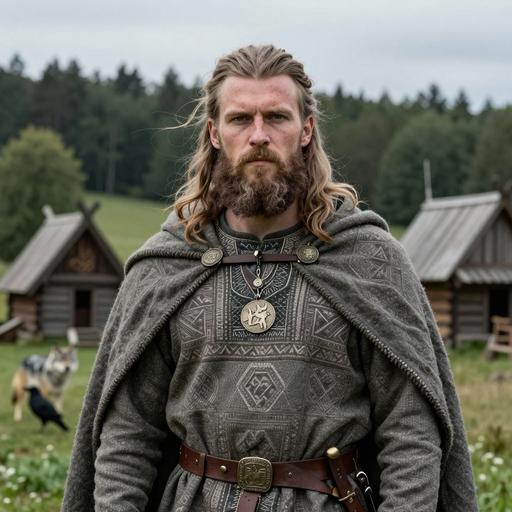
ven001_viking - A man buried in Sweden in the Pre-Viking era

Download PDF creates a visual, rasterized copy. Use Print for selectable text and better assistive-technology support.

Menu
Currency
Main
Store
Blog

Loading Report

Preparing your ancestry journey

Connecting to ancient matches...

Preparing your report

Skip to main content
Portrait reconstruction of A man buried in Sweden in the Pre-Viking era
Ancient Individual

A man buried in Sweden in the Pre-Viking era

A man buried in Sweden during the Vendel Culture

A fragment of the ancient world, preserved across millennia in strands of DNA.

ven001_viking
560 CE - 620 CE
Male
Sweden
Scroll to begin
Chapter I

Identity

The biological and cultural markers that define this ancient individual

Sample ID

ven001_viking

Date Range

560 CE - 620 CE

Cultural Period

Vendel Culture

Biological Sex

Male

mtDNA Haplogroup

Not available

Y-DNA Haplogroup

R-BY18087

Social Role

Laborer (AI estimate, era-typical)

Chapter II

Place

Where this individual was discovered

Country Sweden
Locality Vendel (Uppsala)
Coordinates 60.1600, 17.5900
Chapter III

Time

When this individual lived in the broader context of human history

ven001_viking 560 CE - 620 CE
Chapter IV

Story

The narrative of this ancient life

The Vendel Culture represents a significant era in the early medieval Scandinavian history, roughly spanning from the late 6th century to the early 8th century, primarily located in what is now modern-day Sweden. This period serves as a precursor to the well-documented Viking Age and is particularly notable for its rich archaeological finds, which provide insights into the social structure, economy, craft, and warfare of the time.

Geographic and Temporal Context

The Vendel Culture is named after the village of Vendel in Uppland, Sweden, where a wealth of archaeological materials have been discovered. The era is marked by the transition from the Migration Period to the Viking Age, sharing characteristics with other Germanic societies across Europe but exhibiting unique traits specific to Scandinavia.

Archaeological Evidence

The Vendel period is most vividly represented by the opulent boat graves found in various Uppland sites, most prominently at Vendel and Valsgärde. These burials contained not only the remains of the deceased but also a plethora of grave goods, which include weapons, helmets, shields, and ornate horse tack. These items provide critical evidence for understanding the material culture and social stratification of the time.

Grave Goods and Symbolism

The artifacts discovered in Vendel graves feature intricate designs and craftsmanship, showcasing ornamental styles that include interlacing animal art. Helmets with decorative nose guards and cheek plates, often inlaid with precious metals and gemstones, indicate a sophisticated metalworking tradition. The presence of weapons and armor signifies a warrior elite, while the placement of goods suggests beliefs in an afterlife where such possessions were deemed necessary.

Social Structure

The Vendel period society was hierarchical, with chieftains or leaders exerting control. The elaborate boat burials demonstrate the existence of a warrior aristocracy. These leaders were likely supported by a retinue of warriors, and their status was reinforced by martial prowess and wealth as reflected in their burials. Below the warrior class were free farmers and artisans who formed the backbone of the economy.

Economy and Trade

Economic activity during the Vendel period was largely agrarian, with farming and animal husbandry playing crucial roles. However, archaeological evidence points to a burgeoning trade network connecting Scandinavia to the broader European and even Eurasian world. Luxury items found in tombs, such as Byzantine or Eastern goods, indicate that trade routes were extensive and facilitated the exchange of ideas and technology.

Religion and Ritual

The religious practices of the Vendel Culture were polytheistic, with reverence for the pantheon of Norse gods that would later feature prominently in Viking spirituality. Ritualistic elements can be observed in burial practices, suggesting sophisticated beliefs about death and the afterlife. The prominence of certain symbols might indicate evolving mythologies or the importance of divine favor in legitimizing authority.

Influence and Legacy

The Vendel Culture significantly influenced the later Viking Age, both in terms of material culture and socio-political organization. Its emphasis on seafaring, metalwork, and martial traditions laid the groundwork for the expansionist activities of the Vikings. Moreover, elements of Norse mythology that began to take shape during this period were later codified in the Icelandic sagas and other lore.

Conclusion

In summary, the Vendel Culture of Norse Scandinavia is a crucial yet often underrepresented period that bridges the gap between the Migration Period and the Viking Age. Through its archaeological remains, the era provides a fascinating glimpse into the lives of a complex society that would be pivotal in shaping medieval Northern Europe. The wealth of burial finds, artistic development, and evidence of trade and social structure all contribute to our understanding of this formative time in Scandinavian history.

Context

Related Samples

This individual exists within a broader network of ancient samples. No ancient genome stands alone.

Sample ID Culture/Period Date Location Action
wes003 Medieval Northern Swedish Culture 1016 CE Vasterhus (Jämtlands län, Östersund), Sweden View
wes004 Medieval Northern Swedish Culture 1016 CE Vasterhus (Jämtlands län, Östersund), Sweden View
snb017 Southern Swedish Pre-Viking Culture 450 CE Sandby Borg (Kalmar län, Mörbylånga), Sweden View
snb018 Southern Swedish Pre-Viking Culture 450 CE Sandby Borg (Kalmar län, Mörbylånga), Sweden View
kro004 Southern Swedish Post-Medieval Culture 1676 CE Kronan (Kalmar län, Mörbylånga), Sweden View
kro006 Southern Swedish Post-Medieval Culture 1676 CE Kronan (Kalmar län, Mörbylånga), Sweden View
wes005 Medieval Northern Swedish Culture 1016 CE Vasterhus (Jämtlands län, Östersund), Sweden View
wes007 Medieval Northern Swedish Culture 1163 CE Vasterhus (Jämtlands län, Östersund), Sweden View
gam872 Late Viking Age Culture of Central Sweden 950 CE Gammelbyn Börstil (Uppsala län, Östhammar), Sweden View
kro010 Southern Swedish Post-Medieval Culture 1676 CE Kronan (Kalmar län, Mörbylånga), Sweden View
kro011 Southern Swedish Post-Medieval Culture 1676 CE Kronan (Kalmar län, Mörbylånga), Sweden View
kvi001 Viking Age Gotlanders 800 CE Eksta Kvie (Gotlands län, Gotland), Sweden View
lau001 Pre-Viking Gotland Culture 600 CE Gannor (Gotlands län, Gotland), Sweden View
vls696 Late Viking Age Culture of Central Sweden 996 CE Norrsunda (Stockholms län, Sigtuna), Sweden View
wes001 Medieval Northern Swedish Culture 1016 CE Vasterhus (Jämtlands län, Östersund), Sweden View
ven001_viking Vendel Culture 560 CE Vendel (Uppsala), Sweden View
als010 Late Viking Age Culture of Central Sweden 950 CE Alsike (Uppsala län, Knivsta), Sweden View
als015 Late Viking Age Culture of Central Sweden 800 CE Alsike (Uppsala län, Knivsta), Sweden View
frc007 Northern Swedish Viking Culture 950 CE Frösön (Jämtlands län, Östersund), Sweden View
ful001 Vendel Culture 242 CE Fullero (Uppsala län, Uppsala), Sweden View
kro001 Southern Swedish Post-Medieval Culture 1676 CE Kronan (Kalmar län, Mörbylånga), Sweden View
kro002 Southern Swedish Post-Medieval Culture 1676 CE Kronan (Kalmar län, Mörbylånga), Sweden View
kro012 Southern Swedish Post-Medieval Culture 1676 CE Kronan (Kalmar län, Mörbylånga), Sweden View
kro013 Southern Swedish Post-Medieval Culture 1676 CE Kronan (Kalmar län, Mörbylånga), Sweden View
gor164 Late Viking Age Culture of Central Sweden 1000 CE Gorla (Stockholms län, Norrtälje), Sweden View
gor358 Late Viking Age Culture of Central Sweden 750 CE Gorla (Stockholms län, Norrtälje), Sweden View
rtp001 Northern Swedish Pre-Viking Culture 450 CE Romback (Västernorrlands län, Ånge), Sweden View
rtp003 Northern Swedish Pre-Viking Culture 450 CE Romback (Västernorrlands län, Ånge), Sweden View
lov001 Vendel Culture 475 CE Lovö (Stockholms län, Ekerö), Sweden View
kro008_viking Southern Swedish Post-Medieval Culture 1676 CE Kronan (Kalmar län, Mörbylånga), Sweden View
kro009_viking Southern Swedish Post-Medieval Culture 1676 CE Kronan (Kalmar län, Mörbylånga), Sweden View
snb010 Southern Swedish Pre-Viking Culture 450 CE Sandby Borg (Kalmar län, Mörbylånga), Sweden View
snb012 Southern Swedish Pre-Viking Culture 450 CE Sandby Borg (Kalmar län, Mörbylånga), Sweden View
bro100 Late Viking Age Culture of Central Sweden 750 CE Sasta (Stockholms län, Täby), Sweden View
hav001 Late Viking Age Culture of Gotland 1000 CE Hablingbo Havor (Gotlands län, Gotland), Sweden View
snb019 Southern Swedish Pre-Viking Culture 450 CE Sandby Borg (Kalmar län, Mörbylånga), Sweden View
stg018 Late Viking Age Culture of Central Sweden 892 CE Sigtuna (Stockholms län, Upplands-Bro), Sweden View
enb508 Late Viking Age Culture of Central Sweden 950 CE Enbacken (Örebro län, Örebro), Sweden View
snb013 Southern Swedish Pre-Viking Culture 450 CE Sandby Borg (Kalmar län, Mörbylånga), Sweden View
snb014 Southern Swedish Pre-Viking Culture 450 CE Sandby Borg (Kalmar län, Mörbylånga), Sweden View
kro014 Southern Swedish Post-Medieval Culture 1676 CE Kronan (Kalmar län, Mörbylånga), Sweden View
kro015 Southern Swedish Post-Medieval Culture 1676 CE Kronan (Kalmar län, Mörbylånga), Sweden View
wes008 Medieval Northern Swedish Culture 1016 CE Vasterhus (Jämtlands län, Östersund), Sweden View
wes056 Northern Swedish Viking Culture 1016 CE Vasterhus (Jämtlands län, Östersund), Sweden View
hvr009 Northern Norwegian Pre-Viking Culture 60 CE Nordland, Alstahaug, Norway View
als001 Vendel Culture 575 CE Alsike (Uppsala län, Knivsta), Sweden View
als007 Late Viking Age Culture of Central Sweden 950 CE Alsike (Uppsala län, Knivsta), Sweden View
sal002 Late Viking Age Culture of Central Sweden 950 CE Sala (Västmanlands län, Sala), Sweden View
Sample ID Culture/Period Date Location Action
ven001_viking Vendel Culture 560 CE Vendel (Uppsala), Sweden View
ful001 Vendel Culture 242 CE Fullero (Uppsala län, Uppsala), Sweden View
lov001 Vendel Culture 475 CE Lovö (Stockholms län, Ekerö), Sweden View
als001 Vendel Culture 575 CE Alsike (Uppsala län, Knivsta), Sweden View
Sources

References

Scientific publications and genetic data that inform this profile.

Scientific Publication

The genetic history of Scandinavia from the Roman Iron Age to the present

Authors Rodríguez-Varela R, Moore KHS, Ebenesersdóttir SS, Kilinc GM, Kjellström A et al.
Abstract

We investigate a 2,000-year genetic transect through Scandinavia spanning the Iron Age to the present, based on 48 new and 249 published ancient genomes and genotypes from 16,638 modern individuals. We find regional variation in the timing and magnitude of gene flow from three sources: the eastern Baltic, the British-Irish Isles, and southern Europe. British-Irish ancestry was widespread in Scandinavia from the Viking period, whereas eastern Baltic ancestry is more localized to Gotland and central Sweden. In some regions, a drop in current levels of external ancestry suggests that ancient immigrants contributed proportionately less to the modern Scandinavian gene pool than indicated by the ancestry of genomes from the Viking and Medieval periods. Finally, we show that a north-south genetic cline that characterizes modern Scandinavians is mainly due to the differential levels of Uralic ancestry and that this cline existed in the Viking Age and possibly earlier.

Use code for 25% off Expires Jul 29