Ingria Iron Age: Tarand Graves & Genes

Download PDF creates a visual, rasterized copy. Use Print for selectable text and better assistive-technology support.

Skip to main content
Civilization Spotlight

Ingria Iron Age: Tarand Graves & Genes

Six tarand-burials from Ingria (43 BCE–300 CE) where archaeology meets ancient DNA

43 BCE - 300 CE
Ingria, northwestern Russia

The Story

Archaeological contexts from Kerstovo I and Malli in Ingria (43 BCE–300 CE) paired with six ancient genomes reveal a tentative northern Iron Age genetic profile. Limited sample size makes conclusions preliminary, but Y and mtDNA hints align with regional Iron Age variation.

Time Period

43 BCE – 300 CE

Region

Ingria, northwestern Russia

Common Y-DNA

R (2 samples)

Common mtDNA

U (2), T (1), H (1), H3h (1)

Timeline

43 BCE

Beginning of sampled burial range

Earliest radiocarbon-calibrated context among the sampled tarand burials in Ingria, marking the start of the 43 BCE–300 CE sequence.

Origins & Emergence

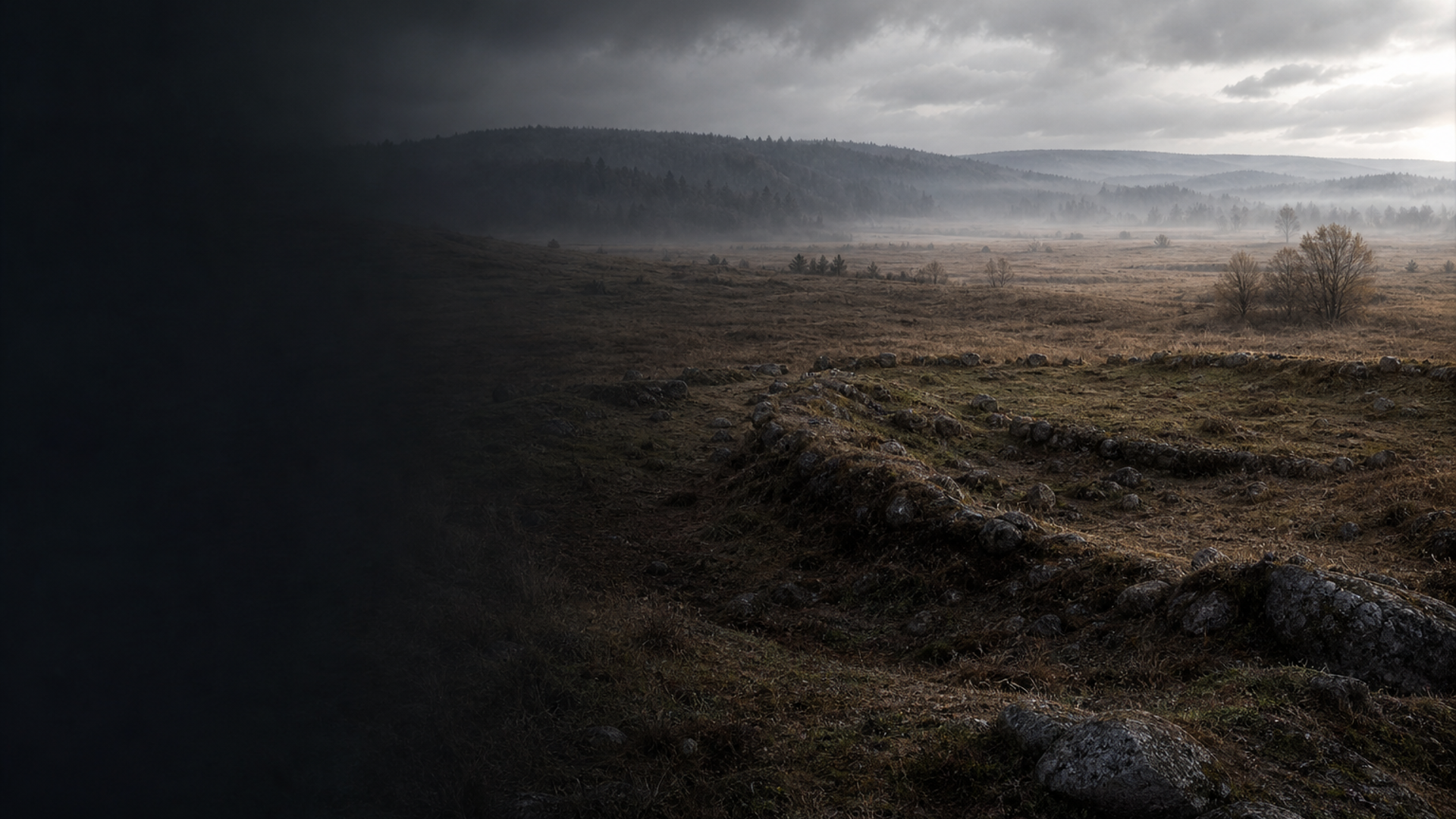
The tarand burial tradition visible at Kerstovo I and Malli in Ingria is a stark, evocative part of the region’s Iron Age landscape. Archaeological data indicates stone-built rectangular enclosures (tarands) containing inhumations; the sampled contexts include Malli (eastern tarand, square 84/73 horizon 2; square 87/74 horizon 2) and Kerstovo I (tarand 2 square 116/236 horizon 3; tarand 3 squares 118/230 and 114/234; tarand 2 square 116/234 horizon above bedrock). Radiocarbon-calibrated contexts place these burials between the late 1st century BCE and c. 300 CE, a period of intensified coastal settlement and long-distance contacts in the southern Gulf of Finland.

Limited evidence suggests these tarand enclosures were focal points for community funerary practice rather than isolated elite monuments. The stone tarand architecture, together with associated bone and organic remains recorded in excavation reports, points to a continuity of local mortuary behavior from the Late Iron Age into the Roman period. Archaeological traces alone cannot resolve the full story of cultural origins: environmental change, mobility along waterways, and regional interaction all likely influenced the emergence of this local expression. Because only six genomes are available, any model of population movement or cultural transmission must remain cautious and provisional.

  • Tarand graves at Kerstovo I and Malli in Ingria (specific squares/horizons recorded)
  • Date range: 43 BCE–300 CE, linked to regional Iron Age developments
  • Evidence suggests local funerary continuity with external contacts

Daily Life & Society

Material traces from tarand burial deposits and surrounding settlement layers evoke a coastline-adapted lifeway. Archaeological data indicates economies combining fishing, hunting, small-scale agriculture, and craft production, with stone-built tarands marking communal rituals of remembrance. Grave assemblages from similar Ingrian contexts often include worked bone, fragments of pottery and traces of organic materials; in the Kerstovo I and Malli deposits the emphasis is on inhumation positions and the architecture of enclosures rather than ostentatious metal wealth.

Socially, tarands may reflect kin-based groups using shared enclosures across generations — a cinematic image of families returning to the same stony rectangles on the marshy shore. Funerary variability between horizons at the sampled squares (horizon 2, horizon 3, and bedrock contexts) hints at chronological layering or shifting practices through the first centuries CE. Seasonal mobility along rivers and the Gulf of Finland likely structured household calendars, networks of exchange, and the movement of ideas. Yet archaeological preservation in wet northern soils is uneven; absence of certain artifact types should not be taken as proof they never existed.

  • Economy: fishing, hunting, small-scale agriculture, and local crafts
  • Tarand enclosures likely used by kin groups across generations

Genetic Profile

Six genomes from Kerstovo I and Malli offer a first genetic glimpse into Iron Age Ingria, but the small sample count demands caution. Y-chromosome lineages include haplogroup R in two male individuals; R is widespread in Eurasia and does not by itself specify precise ancestry streams. Mitochondrial diversity among the six samples includes U (two individuals), T (one), H (one) and the subclade H3h (one), indicating maternal lineages that are common in northern and eastern European prehistories.

Archaeogenetic interpretation should emphasize the provisional nature of conclusions: with n = 6, patterns may reflect local kin groups or capture a narrow social segment of the population buried in tarands. Nonetheless, the presence of mtDNA U alongside H and T is consistent with a mixed maternal heritage that echoes other Iron Age and earlier northern European datasets — a blend of lineages associated with both Mesolithic/Neolithic continuities and subsequent Iron Age dynamics. Genome-wide analyses (when available) would be required to quantify admixture, assess affinities with neighbouring Baltic and Finnic-speaking groups, and test for possible gene flow along maritime routes. Until larger sample sets are analyzed, genetic signals from these six individuals should be treated as informative but preliminary.

  • Y-DNA: R in 2 of 6 males — broad Eurasian distribution, interpret cautiously
  • mtDNA diversity (U, T, H, H3h) suggests mixed maternal ancestry common in northern Europe

Legacy & Modern Connections

The tarand burials of Ingria leave a tangible imprint on the landscape and on genetic continuity studies of northwestern Russia. Archaeological continuity in funerary architecture and the presence of maternal lineages common to broader northern Europe suggest threads that may link past inhabitants to later regional populations. Genetic signals from these six samples tentatively echo patterns seen across Iron Age northern Europe, but they cannot alone map direct ancestry to any modern group.

For modern genetic studies, these genomes function as early anchor points: they help calibrate models of population turnover, maritime connectivity, and local persistence. Future sampling at greater numbers and from settlement contexts—combined with careful stratigraphic control—will be necessary to move from evocative snapshots to robust demographic narratives. Until then, Ingria’s tarands remain compelling loci where stone, sea, and DNA together tell a cautious, captivating story of Iron Age life on the Gulf of Finland.
  • Provides preliminary genetic anchors for regional demographic models
  • Current samples are insufficient for direct claims about modern ancestry

AI Assistant

AI Assistant by DNAGENICS

Unlock this feature
Ask questions about the Ingria Iron Age: Tarand Graves & Genes culture. Our AI assistant can explain genetic findings, historical context, archaeological evidence, and modern connections.

Sample AI Analysis

The Ingria Iron Age: Tarand Graves & Genes culture represents a fascinating chapter in human history...

Genetic analysis reveals connections to earlier populations while showing evidence of unique adaptations and cultural innovations. The ancient DNA samples provide insights into migration patterns, social structures, and the biological relationships between ancient populations.

This is a preview of the AI analysis. Unlock the full AI Assistant to explore detailed insights about:

  • Genetic composition and ancestry
  • Migration patterns and origins
  • Daily life and cultural practices
  • Modern genetic legacy
Use code for 30% off • Expires Nov 14




