Mezhovskaya Echoes

Download PDF creates a visual, rasterized copy. Use Print for selectable text and better assistive-technology support.

Skip to main content
Civilization Spotlight

Mezhovskaya Echoes

Bronze Age lives from Kapova Cave revealed through stones, bones and DNA

1531 CE - 800 BCE
Russia (Kapova Cave, southern Ural)

The Story

Archaeological and genetic glimpses from three Mezhovskaya samples (1531–800 BCE) from Kapova Cave, Russia. Limited but evocative evidence links steppe-associated Y lineages with mixed maternal ancestries, hinting at complex interactions on the southern Ural frontier.

Time Period

1531-800 BCE

Region

Russia (Kapova Cave, southern Ural)

Common Y-DNA

R (2 of 3 samples)

Common mtDNA

M, I5c, J (each in 1 sample)

Timeline

1531 BCE

Earliest dated Kapova sample

One of three Kapova Cave individuals dates to c.1531 BCE, anchoring Mezhovskaya presence in the mid-2nd millennium BCE.

800 BCE

Latest dated Kapova sample

The most recent sampled individual dates to c.800 BCE, placing the assemblage into the later Bronze Age horizon.

Origins & Emergence

The Mezhovskaya horizon occupies a shadowed edge of Bronze Age Eurasia — a zone where forest, steppe and riverine corridors meet. Archaeological data indicates human activity in the Kapova Cave area across the late second to early first millennium BCE, a period of shifting climates and mobile lifeways. Limited evidence suggests the Mezhovskaya cultural identity formed through interactions between local forest-steppe groups and broader steppe networks that transmitted metalwork styles, pottery types, and funerary rites.

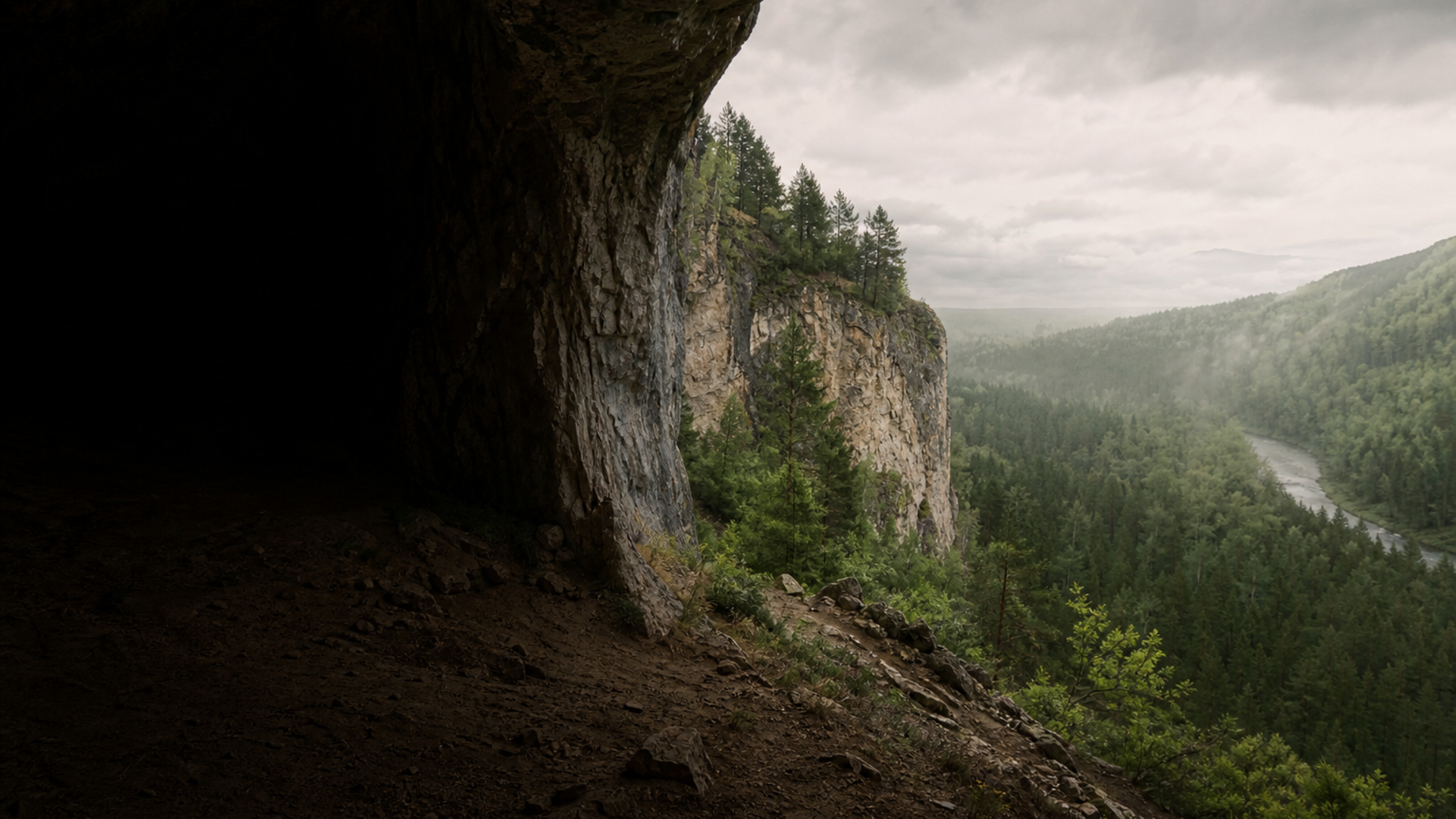
Kapova Cave (Bashkortostan, southern Urals) preserves both material traces and skeletal remains that provide a cinematic, if fragmentary, view: charcoal-dark hearths, chipped tools, and burial deposits echoing seasonal movement. Radiocarbon-associated dates for the DNA-bearing individuals fall between 1531 and 800 BCE, situating these people within a dynamic Bronze Age landscape of herding, hunting, and long-distance exchange.

Caution is essential: with only three genomic samples, patterns remain provisional. Archaeological parallels link Mezhovskaya artifacts to neighboring horizons, but the degree to which this reflects migration, diffusion, or shared practice is unresolved. Ongoing excavation and larger genetic samplings are needed to transform evocative snapshots into a fuller picture of origins and cultural emergence.

  • Located at the forest-steppe junction of the southern Urals
  • Dates for sampled individuals: 1531–800 BCE
  • Evidence points to interaction between local and steppe traditions

Daily Life & Society

Archaeological data indicates Mezhovskaya communities lived in a landscape of mixed economies: seasonal herding on open grasslands, foraging and small-scale cultivation in woodland margins, and specialized hunting along river valleys. Material remains from the wider Mezhovskaya horizon include metal artifacts consistent with Bronze Age metallurgy, simple ceramics, and personal ornaments — all suggesting communities practicing craft, exchange, and mobility rather than dense urban settlement.

Burial practices preserved at sites like Kapova are modest but telling: inhumations and isolated deposits imply social differentiation by age, sex, or status, though the record is patchy. Tools and animal bone assemblages hint at a diet combining domesticated herds and wild game, while wear patterns on teeth and tools reflect strenuous daily tasks. The cave itself may have served multiple roles — shelter, ritual place, and a repository for curated objects.

Because the archaeological horizon is unevenly sampled, many aspects of social organization remain conjectural. Limited excavation vectors and the small genomic sample set mean that reconstructions of kinship, residence patterns, or social hierarchy should be treated as hypotheses rather than settled fact.

  • Mixed economy: herding, hunting, and woodland resources
  • Kapova Cave used for shelter, ritual deposits, and burials

Genetic Profile

Three sequenced individuals from Kapova Cave provide a slender but informative genetic window. Two individuals carry broad Y-chromosome lineage classified as R — a paternal marker widely distributed across Bronze Age Eurasia and commonly associated with steppe-derived populations. On the maternal side, the three mitochondrial haplogroups are diverse: M, I5c, and J. This mix suggests the presence of both eastern (M) and western (I5c, J) maternal ancestries within the same cultural horizon.

Taken together, the genetic signal is consistent with admixture scenarios often seen on Eurasian frontiers: steppe-linked paternal lines coupled with heterogeneous maternal inputs from both western and eastern sources. However, the sample count is three (<10), so any population-level inference is preliminary. Archaeogenetic context cautions that haplogroup labels are broad: R encompasses multiple sublineages (e.g., R1a, R1b) with different histories, and isolated mtDNA types do not alone define ancestry proportions.

Genetic data from Kapova therefore offers a cinematic glimpse of mobility and mixing — men carrying a steppe-linked Y signature, women tracing diverse maternal roots — but robust demographic models will require larger, well-dated series from Mezhovskaya and neighboring horizons.

  • Two of three males carry Y-haplogroup R, linking to steppe-related paternal lineages
  • mtDNA diversity (M, I5c, J) indicates mixed eastern and western maternal ancestries

Legacy & Modern Connections

The material and genetic traces from Mezhovskaya at Kapova Cave resonate into later prehistory but must be read cautiously. Archaeological parallels connect Mezhovskaya communities with wider Bronze Age exchange networks across the Urals and into western Siberia, suggesting these people contributed to the cultural tapestry that preceded Iron Age transformations.

Genetically, the combination of steppe-associated paternal lineages and mixed maternal haplogroups hints at processes—migration, marriage exchange, and assimilation—that helped shape the Eurasian genetic landscape. Limited evidence suggests these small Mezhovskaya groups were part of a broader pattern in which male-mediated migrations mixed with local female lineages, a dynamic echoed elsewhere in Bronze Age Eurasia. Yet with only three samples, links to specific modern populations remain speculative. Future, larger datasets will clarify how these Bronze Age lives contributed to the genetic ancestry of contemporary communities in the Ural and Volga regions.

  • Part of broader Bronze Age exchange across the Urals
  • Preliminary genetic links suggest male-biased steppe input with diverse maternal roots

AI Assistant

AI Assistant by DNAGENICS

Unlock this feature
Ask questions about the Mezhovskaya Echoes culture. Our AI assistant can explain genetic findings, historical context, archaeological evidence, and modern connections.
Sample AI Analysis

The Mezhovskaya Echoes culture represents a fascinating chapter in human history...

Genetic analysis reveals connections to earlier populations while showing evidence of unique adaptations and cultural innovations. The ancient DNA samples provide insights into migration patterns, social structures, and the biological relationships between ancient populations.

This is a preview of the AI analysis. Unlock the full AI Assistant to explore detailed insights about:

  • Genetic composition and ancestry
  • Migration patterns and origins
  • Daily life and cultural practices
  • Modern genetic legacy
Use code for 30% off • Expires Nov 14




