A man buried in Poland in the era

Download PDF creates a visual, rasterized copy. Use Print for selectable text and better assistive-technology support.

Loading Report

Preparing your ancestry journey

Preparing the available report content...

Your report will open automatically.

Skip to main content
Reference library / Sample profile

A man buried in Poland in the era

Explore the recorded context, genetic comparisons and research behind this reference sample.

PolandMiddle Neolithic Central Europe

A reference profile describes this sample. It does not establish a personal or family relationship.

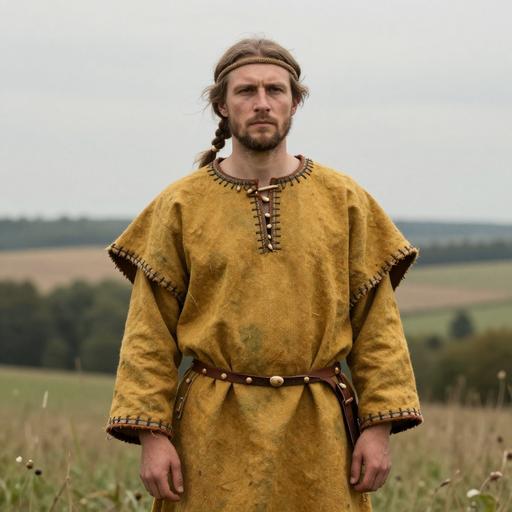
AI portrait reconstruction for A man buried in Poland in the  era
AI-generated artistic reconstruction, not a photograph of the individual.
Record

Sample details

Recorded details and available lineage markers.

Individual

Ceu Mn individual, Poland

Sample ID: N20

Date Range

3633 BCE - 3377 BCE

Cultural Period

Middle Neolithic Central Europe

Biological Sex

Male

mtDNA Haplogroup

H3t

Y-DNA Haplogroup

C-PH428

Social Role

Farmer (AI estimate, era-typical)

Geography

Location

Where this individual was discovered

Country Poland
Locality Pikutkowo
Coordinates 52.6200, 18.9600
Chronology

Date range

When this individual lived in the broader context of human history

Ceu Mn individual, Poland 3633 BCE - 3377 BCE
Context

Historical context

Background information associated with the reference record.

Interpreting the early Neolithic in Central Europe requires attention to regional variability: farming and herding did not arrive everywhere at once, and local communities adopted domestic economies with different tempos and degrees of continuity. The archaeological record for early Neolithic horizons emphasizes settlement organization, pottery traditions, and farm-related toolkits.

Region & Environment

Central Europe includes diverse environments—river valleys, fertile plains, and forested margins—where access to arable soils and water mattered for cultivation and livestock. Changes in land cover and river dynamics through the early Holocene affected where and how communities established fields and managed resources.

Historical Context

This timeframe belongs to the broader Neolithization processes in which domestic plants and animals became increasingly important. Rather than implying immediate uniformity, early Neolithic contexts show gradual adoption, interaction, and development of farming practices over generations.

Populations & Lifeways

Populations increasingly organized life around agricultural and herding cycles, including the processing of cereals and the management of livestock. While farming was central, hunting and gathering could continue as supplementary strategies depending on local ecology and cultural practice.

Archaeology & Material Culture

Key evidence often includes ceramic assemblages with recognizable decorative and technological traits, along with ground stone tools used for food processing and agricultural tasks. Lithic toolkits remain relevant, and settlement features—such as pits, post structures, or other traces—help reconstruct how communities organized domestic space.

Culture & Society

Cultural identity is typically inferred from stylistic patterning in pottery, the distribution of artifact types, and settlement organization. These signals suggest community networks that shared conventions while also maintaining local traditions, including how households structured work and shared knowledge.

Legacy & Transition

Early Neolithic developments created the foundations for later Neolithic diversification and, eventually, Bronze Age trajectories. Continued investment in settlement infrastructure, agriculture, and exchange relationships helped sustain population growth and cultural change over subsequent centuries.

Analysis

Genetic comparisons

These comparisons show genetic similarity, not identity or origin. The populations listed are those whose genomes show statistical alignment to this ancient individual.

Similarity reflects shared history, not shared identity. These are analytical comparisons, not claims about who this person was.

Modern Genetic Admixture

This analysis compares the DNA profile with present-day reference populations, showing statistical similarity to modern reference populations from different regions. The excavation site records where this individual was found, not a fixed modern genetic identity.

Europe 100.0%
Southern European 100.0%
Iberian 39.0%
Italian 30.5%
Sardinian 21.2%
Balkan 9.2%

Closest Modern Populations

These are the modern populations showing the closest statistical alignment to A man buried in Poland in the era, ranked by genetic distance. Lower distance values indicate closer statistical similarity. Cross-region similarity can reflect shared ancestry, population movement, continuity, or later admixture.

1
Sardinian
3.1751
2
French Corsica
5.1831
3
Spanish La Rioja
5.5834
4
Spanish Castilla La Mancha
5.8499
5
Spanish Castello
5.8871
6
Spanish Menorca
5.9198
7
Spanish Murcia
5.9421
8
Spanish Pirineu
5.9454
9
Spanish Aragon
5.9773
10
Spanish Cantabria
5.9909
Context

Related Samples

This individual exists within a broader network of ancient samples. No ancient genome stands alone.

Individual Culture/Period Date Location Action
European Neolithic individual, Poland Brześć Kujawski Group, Poland 4600 BCE Oslonki, Poland View
Indo-European individual, Poland Early Bronze Age Poland 2020 BCE Gustorzyn, Poland View
Indo-European individual, Poland Corded Ware Culture, Poland 2600 BCE Pikutkowo, Poland View
European Neolithic individual, Poland Brześć Kujawski Group, Poland 4335 BCE Konary, Poland View
Indo-European individual, Poland Corded Ware Culture, Poland 2600 BCE Pikutkowo, Poland View
Indo-European individual, Poland Globular Amphora Culture, Poland 3307 BCE Brzesc Kujawski, Poland View
Indo-European individual, Poland Corded Ware Culture, Poland 2571 BCE Pikutkowo, Poland View
European Neolithic individual, Poland Funnel Beaker Culture, Poland 3636 BCE Pikutkowo, Poland View
European Neolithic individual, Poland Brześć Kujawski Group, Poland 4600 BCE Oslonki, Poland View
European Neolithic individual, Poland Brześć Kujawski Group, Poland 4600 BCE Konary, Poland View
European Neolithic individual, Poland Funnel Beaker Culture, Poland 3632 BCE Pikutkowo, Poland View
European Neolithic individual, Poland Brześć Kujawski Group, Poland 4442 BCE Brzesc Kujawski, Poland View
European Neolithic individual, Poland Brześć Kujawski Group, Poland 4327 BCE Oslonki, Poland View
European Neolithic individual, Poland Brześć Kujawski Group, Poland 4251 BCE Oslonki, Poland View
European Neolithic individual, Poland Funnel Beaker Culture, Poland 3633 BCE Pikutkowo, Poland View
European Neolithic individual, Poland Brześć Kujawski Group, Poland 4233 BCE Oslonki, Poland View
Poland Eba individual, Poland 2020 BCE Gustorzyn, Poland View
Ceu Mn individual, Poland 3632 BCE Pikutkowo, Poland View
Anglian individual, Poland 3636 BCE Pikutkowo, Poland View
Ceu Mn individual, Poland 3633 BCE Pikutkowo, Poland View
Poland N individual, Poland 4442 BCE Brzesc Kujawski, Poland View
Poland N individual, Poland 4600 BCE Oslonki, Poland View
Poland N individual, Poland 4335 BCE Konary, Poland View
Poland N individual, Poland 4600 BCE Oslonki, Poland View
Poland N individual, Poland 4251 BCE Oslonki, Poland View
Poland N individual, Poland 4327 BCE Oslonki, Poland View
Poland N individual, Poland 4600 BCE Konary, Poland View
Globular Amphora individual, Poland 3307 BCE Brzesc Kujawski, Poland View
Poland N individual, Poland 4233 BCE Oslonki, Poland View
Corded Ware individual, Poland 2571 BCE Pikutkowo, Poland View
Corded Ware individual, Poland 2600 BCE Pikutkowo, Poland View
Page 1
Individual Culture/Period Date Location Action
Ceu Mn individual, Hungary 5286 BCE Garadna, Hungary View
Ceu Mn individual, Poland 3632 BCE Pikutkowo, Poland View
Ceu Mn individual, Poland 3633 BCE Pikutkowo, Poland View
Ceu Mn individual, Hungary 5286 BCE Garadna, Hungary View
Page 1
Sources

References

Scientific publications and genetic data that inform this profile.

G25 Coordinates

These coordinates represent a position in genetic space, a tool for comparison, not a conclusion. You can use these to perform custom admixture analysis in G25 Studio.

N20,0.12046064,0.158707,0.02946998,-0.03229012,0.05648868,-0.01685308,-0.00182714,0.00502092,0.03589626,0.06316788,-0.00486112,0.01430282,-0.02535386,-0.01370334,-0.00646106,0.0031204,0.00829632,-0.00029878,-0.00031462,-0.00360722,0.00089162,0.00432336,-0.01193756,-0.01627716,0.00355704
Continue in G25 Studio
Use code for 30% off • Expires Nov 16